
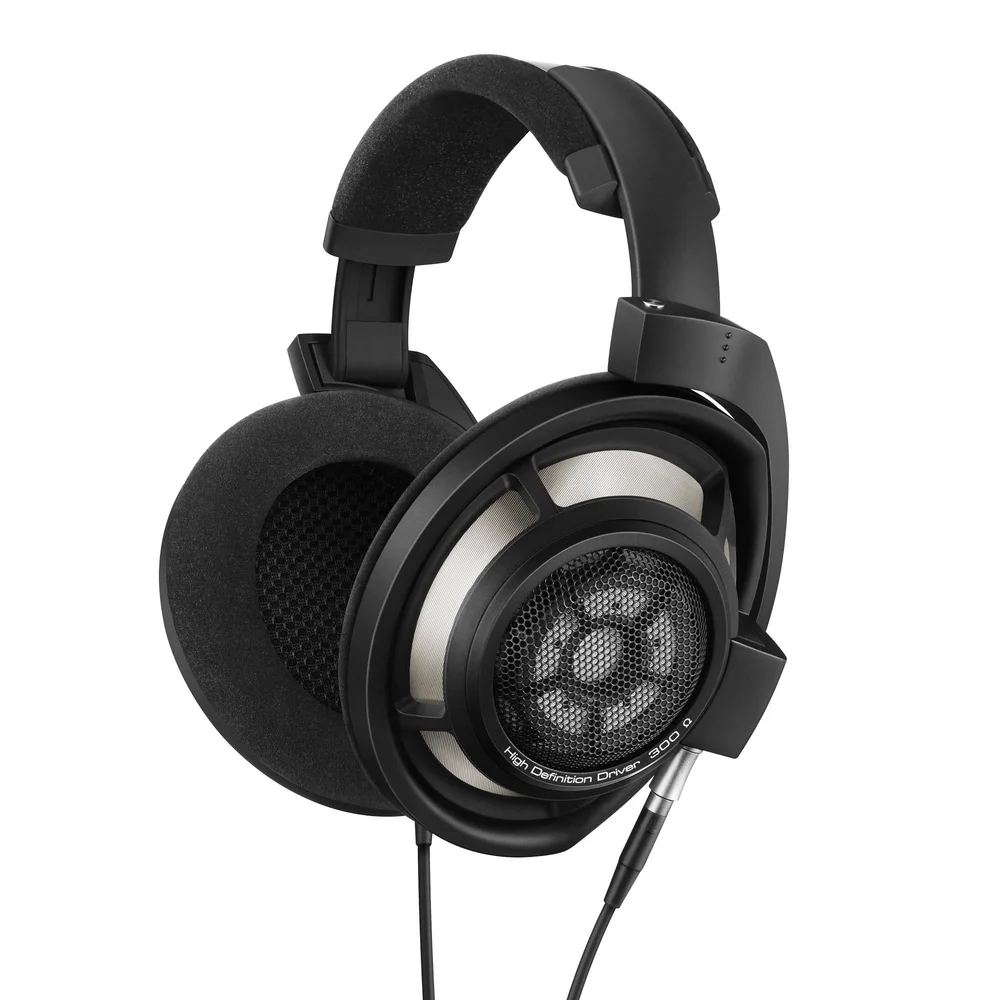
What to know first
- Open-back design with ring radiator drivers built for a wide, spacious soundstage rather than isolation
- Released December 12, 2015 and still Sennheiser's current flagship reference model, with no confirmed successor yet
- Owners consistently praise the soundstage and detail retrieval, especially when paired with a dedicated amp
- Stock tuning can sound bright or thin to some ears; many owners apply EQ to smooth the treble and add bass
- Fit and clamping force draw mixed feedback: some find it comfortable for long sessions, others say it's too loose
- Comes with a balanced cable, though owners should confirm current bundle contents before buying
Sennheiser's answer to headphones that sound closed-in
Most headphones trade soundstage for convenience. Seal the ear cup, and you get isolation and bass punch, but everything collapses toward the center of your head. The HD 800 S goes the other direction entirely: an open-back design with large ring radiator drivers meant to throw sound outward, giving instruments room to sit apart from each other instead of stacking on top of one another.
That approach only works if you're listening somewhere quiet, alone, with no need to block outside noise. This isn't a headphone for open offices or transit. It's a headphone for a desk, a chair, and a room where nobody minds hearing your music leak out through the earcups.
Sennheiser has kept the HD 800 S in its lineup since a December 2015 release, and as of early 2026 it's still the current version, still sold new by Sennheiser and major retailers. A successor, sometimes referred to as the HD 900 S, has been rumored but never confirmed, which means anyone buying today is buying a decade-proven design rather than a placeholder waiting to be replaced.
What owners keep coming back to: the soundstage
Ask long-term owners what justifies the price and the answer is almost always the same word: soundstage. One owner who'd been listening to the same albums for close to 40 years said the HD 800 S pulled out detail and spatial placement he'd never noticed before, even on recordings he thought he knew cold. Another described it as an immersive experience that lets you lose yourself in a performance rather than just hear it.
That's a real advantage over closed-back headphones in this price range, which tend to prioritize impact and isolation over separation. The HD 800 S isn't trying to hit you in the chest. It's trying to put a drummer four feet behind a vocalist and let you hear the difference.
The trade-off is that this performance is heavily dependent on what you're feeding it. Multiple owners note the HD 800 S is amp and source dependent in a way that punishes a weak setup. Pair it with a capable DAC and amplifier and the detail owners describe becomes obvious. Plug it into a phone and you're hearing a fraction of what the driver is capable of.
Living with it: EQ is part of the setup, not an afterthought
Out of the box, the HD 800 S's stock tuning splits opinion. Some owners say they don't find it as shrill as its reputation suggests. Others report a treble peak that stands out until the ear adjusts, and describe the sound as flat or thin without correction. The consistent advice across owners is to apply an EQ curve, whether a published curve built specifically for this headphone or your own adjustments through a DAC or software player, to smooth the top end and add low-end warmth that the stock tuning under-delivers.
This isn't a headphone you set and forget. It's one you tune, the way a photographer adjusts white balance rather than trusting a camera's default. Owners running it through dedicated DAC/amp combinations with EQ applied describe the sound as detailed and spatial in ways that surprised them even after years in the hobby.
Comfort is a mixed bag. Several owners say the fit is comfortable enough for long sessions, but at least one flagged insufficient clamping force, saying the headphones slip off when reclining. If a snug, secure fit matters to you more than a light touch on your head, try these on before committing if you can.
The headphone ships with a balanced cable, useful if your amp supports balanced output, but be aware that bundle contents have shifted over the years; one owner noted the balanced XLR cable was no longer included and had to be purchased separately. Confirm what's in the box with your specific retailer before buying.
The catch: this only works with the right gear
The single biggest caveat here is amplification. This isn't a headphone that sounds merely okay from a laptop and great from an amp. Multiple owners describe it as needing a dedicated amp to unlock what it's capable of, and without one, you're likely to end up in the camp that finds it flat or disappointing rather than the camp that finds it revelatory.
Build quality complaints show up occasionally too, alongside at least one report of a earpiece developing distortion after a few weeks of use. That's not evidence of a widespread reliability problem, but it's worth knowing that not every review of this headphone is glowing, and a small number of owners have run into hardware issues worth watching for during any return window.
If you want a headphone that sounds complete and satisfying straight out of the box with no EQ, no amp shopping, and no tuning required, this isn't that. The HD 800 S rewards people willing to build a system around it, and it can frustrate people who just want to put on headphones and press play.
The specs that matter
This driver design is central to how the HD 800 S produces its wide, spacious soundstage rather than a more centered, closed-in sound.
Open-back construction lets sound pass through the earcups in both directions, improving soundstage but offering no noise isolation and letting your music leak into the room.
A balanced cable can improve performance with amps that support balanced output, but bundle contents have reportedly changed over time, so confirm what's included before you buy.
Owners consistently report the HD 800 S sounds thin or underwhelming from a phone or laptop alone and needs stronger amplification to show its detail and soundstage.
Many owners apply EQ to tame a treble peak and add bass weight; if you're not willing to EQ, factor that into your expectations of stock sound.
This is a long-standing, mature design rather than a new release, which means a decade of owner feedback and third-party EQ profiles exist to help you get the most out of it.
Buyers don't need to worry about buying into a soon-to-be-discontinued generation; Sennheiser continues to sell this as its current flagship.
Who this product fits
You already own a dedicated headphone amp and DAC
This is the buyer the HD 800 S was built for. Feed it from a proper amp and apply an EQ curve, and owners describe a level of detail and spatial separation that outperforms what closed-back headphones at similar prices can do.
You want to use headphones straight from a laptop or phone with no other gear
Skip this one. Multiple owners say the HD 800 S sounds flat or underwhelming without stronger amplification, and you'd be paying for reference-level engineering without hearing what it's capable of.
You listen mostly in shared spaces like an office or on transit
The open-back design leaks sound in both directions, so anyone nearby hears your music and you hear the room. This is strictly a private, quiet-room headphone.
You're comfortable tuning your own EQ curve
Owners who apply an EQ profile designed for this headphone consistently report better balance, with the shrill treble tamed and more bass weight added, closing the gap between the stock sound and what the driver is actually capable of.
What else to compare
If isolation, portability, or plug-and-play convenience matter more than a wide open-back soundstage, look at closed-back reference headphones instead.
Sennheiser HD 800 S Over-The-Ear Audiophile Reference Headphones FAQ
Does the Sennheiser HD 800 S need an amplifier?
It benefits significantly from one. Owners repeatedly describe it as amp and source dependent, sounding thin or flat from a phone or laptop and much more detailed when paired with a dedicated DAC and headphone amp.
Is the HD 800 S good for noisy environments or commuting?
No. Its open-back design lets outside noise in and your music out, so it's built for quiet, private listening rooms rather than offices, trains, or planes.
Do I need to EQ the HD 800 S?
Many owners choose to, applying a curve to smooth a treble emphasis some find sharp and to add bass weight the stock tuning doesn't emphasize. It's not mandatory, but owner feedback suggests it noticeably improves the listening experience.
Is the HD 800 S still worth buying in 2026?
Sennheiser still sells it as the current version, with no confirmed successor, so you're not buying into an outdated generation. A decade of owner experience and third-party EQ profiles also make it easier to get the most out of it than it was at launch.
How is the fit and comfort?
Feedback is mixed. Some owners find it comfortable for long listening sessions, while at least one report describes insufficient clamping force, with the headphones slipping when reclining.
Worth it if you'll finish the setup
The Sennheiser HD 800 S isn't a headphone that meets you halfway. It asks for a real amplifier, a willingness to EQ, and a quiet room to listen in, and in exchange it delivers a soundstage that owners across years of ownership keep describing as unmatched in their collection. That's not a small thing to promise, and the consistency of that feedback over a decade is why this headphone still holds its place as Sennheiser's current reference model.
If you're shopping for something that sounds finished the moment you plug it into a phone, or you need isolation for a commute, keep looking. But if you already have or are willing to build a proper source and amp chain, and you care more about hearing space and separation in a recording than about bass slam, the HD 800 S remains one of the clearer ways to get there.