
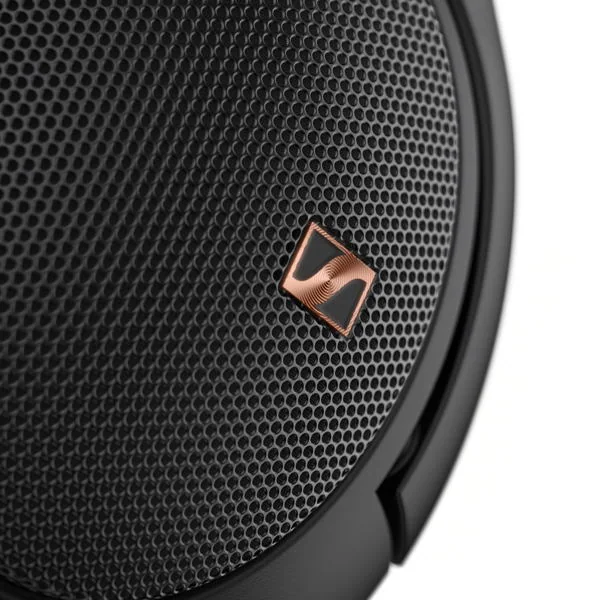
What to know first
- Open-back design with metal mesh earcup covers leaks sound both ways, so it's a home or private-room headphone, not a commute one
- 120-ohm transducer built in Sennheiser's Tullamore, Ireland facility, tuned for an analytical, detail-forward sound signature
- Weighs 237 grams and uses the same chassis as the long-running HD 500 series, a design known for all-day comfort
- Ships with a detachable 1.8m cable, a 3.5mm plug, a 6.3mm adapter, and a drawstring bag
- User-swappable cables and earpads let the headphone grow with a listener's setup, including balanced sources later
- Frequency response is rated 12 Hz to 38,500 Hz with total harmonic distortion under 0.2%
Where the HD 505 sits in Sennheiser's lineup
Sennheiser positions the HD 505 as the on-ramp to its audiophile line, the headphone you buy right before you start seriously considering the HD 650 or something above it. It shares its chassis with the long-running HD 500 series, a family built around comfort and modularity rather than flashy design, and it's meant to be the first serious step up from whatever came bundled with your laptop or phone.
That positioning shows up in the price and the spec sheet. A 120-ohm transducer, an open earcup design, and a frequency response stretching down to 12 Hz and up past 38 kHz aren't numbers aimed at casual listeners. They're aimed at someone who's started noticing that their current headphones smear detail together, especially in busy mixes, and wants to hear instruments as separate objects in space rather than a wall of sound.
Announced in February 2025 with no named successor yet, the HD 505 reads as Sennheiser's current answer to a specific question: how do you get someone into genuinely revealing sound without asking them to buy a separate amplifier or spend four figures first.
The angled-driver trick that creates a soundstage
Most headphones fire sound straight into your ear canal. The HD 505 angles its transducers forward inside the open earcups, a layout meant to mimic how a pair of nearfield studio monitors sit in a triangle in front of a listener. The practical effect, according to Sennheiser, is a wider sense of space: a saxophone player sitting slightly left of center, a piano further to the right, rather than everything collapsed into the middle of your head the way cheaper closed-back headphones tend to sound.
This matters most on recordings that were actually mixed with spatial separation in mind. A dense, loud, heavily compressed pop mix won't show off this trick nearly as well as a jazz trio or an orchestral recording where instruments were captured with real distance between them. That's not a flaw in the headphone so much as a mismatch between the tool and the material.
Independent audio writers who've spent time with Sennheiser's HD 650 describe the HD 505 as a genuine taste of that higher-end sound at a lower price, built with solid but not premium materials. That's a fair way to think about it: you're not getting flagship parts, but you are getting the design philosophy that makes the flagship worth its price.
What it's actually like to wear and drive
At 237 grams with cushy earpads and a synthetic leather headband, the HD 505 is built for sessions that run long, not quick fifteen-minute listens. Sennheiser's own materials lean on this point hard, and it lines up with the general reputation of the HD 500 series chassis for comfort over hours rather than minutes.
The included 1.8m detachable cable ends in a 3.5mm plug with a 6.3mm adapter, so it'll plug into a phone with a dongle or straight into a headphone amp, sound card, or A/V receiver. Because the cable and earpads are swappable without tools, you can replace a worn cable, add one with an inline microphone, or move toward a balanced cable later if you upgrade your source gear. That's a meaningfully different ownership model than sealed, non-serviceable headphones: parts wear out, and Sennheiser has built this one to be repaired rather than replaced.
One real caveat on the driving side: a 120-ohm impedance rating means the HD 505 won't necessarily sound its best straight out of a phone or laptop headphone jack. It'll play, but getting the full detail and dynamic range the headphone is built for benefits from a dedicated headphone amp or a source with more power behind it. Budget for that if you don't already own one.
The open-back trade-off nobody should skip
Open-back construction is the whole point of the sound signature here, and it's also the thing that rules this headphone out for a lot of common listening situations. Sound leaks out through the metal mesh earcup covers in both directions: people nearby will hear what you're listening to, and you'll hear them right back. An open office, a shared apartment, a train, or a flight are all bad environments for this headphone.
There's no active noise cancellation and no wireless option, so this isn't a headphone that adapts to your day the way a pair of ANC earbuds might. It's a fixed-purpose tool for a quiet room, a desk, or a dedicated listening chair.
Independent audio writers have also noted the HD 505 uses solid, not premium, build materials, which is a fair trade for the price but worth knowing going in if you're comparing it against Sennheiser's more expensive open-back models.
The specs that matter
Higher impedance headphones generally need more power to sound their best. A phone or laptop can drive this headphone, but a dedicated headphone amp will likely get more detail and dynamic range out of it.
That's a wider range than most consumer headphones claim, extending below what most people can consciously hear and well above it, which supports the extended, airy treble Sennheiser is going for.
Lower distortion generally means the sound coming out matches the signal going in more faithfully, which is part of why this headphone is marketed as analytical rather than colored or bassy.
Open-back headphones create a more spacious, natural soundstage but leak sound in both directions, so they're a poor fit for shared spaces or commuting.
Lighter than many over-ear headphones, which matters directly for comfort during long listening or gaming sessions.
A detachable, standard cable means you can replace it if it wears out or swap in one with an inline microphone or balanced connector without buying a new headphone.
This platform has a track record for long-term comfort and light weight, and parts availability tends to be broader for established Sennheiser series.
Who this product fits
Upgrading from bundled or budget headphones for home music listening
The jump from a typical closed, bass-heavy consumer headphone to the HD 505's open, detail-forward tuning will likely be the most noticeable audio upgrade this listener has experienced in years, provided they're listening in a quiet room and feeding it from a reasonably capable source.
Gaming at a desk where positional audio matters
The angled transducer and wide soundstage are aimed squarely at exactly this use case. Footsteps and directional cues in games benefit from the same spatial trick Sennheiser designed for music, and the open-back build is fine for a private home office setup.
Commuting or working in a shared office
This is the wrong tool. Open-back headphones leak sound both ways, so co-workers will hear your music and you'll hear the room. A closed-back or noise-cancelling headphone serves this need far better.
Building a long-term listening setup
Because cables and earpads are user-replaceable without tools, a buyer planning to eventually add a headphone amp, a balanced cable, or different earpads can start here and grow the setup over time rather than replacing the whole headphone.
What else to compare
A few other paths are worth knowing before you commit to the HD 505.
Sennheiser HD 505 FAQ
Is the Sennheiser HD 505 good for noise cancellation or commuting?
No. It's an open-back wired headphone with no active noise cancellation, and its design intentionally lets sound pass in and out of the earcups. It's built for quiet home or desk listening, not noisy environments.
Do I need an amplifier for the Sennheiser HD 505?
Its 120-ohm transducer will technically play from a phone or laptop with an adapter, but a dedicated headphone amp will likely unlock more of the detail and dynamic range the headphone is tuned to deliver.
How does the HD 505 compare to the Sennheiser HD 650?
Sennheiser positions the HD 505 as an entry point beneath the HD 650, using more affordable materials and construction while sharing the same design philosophy of open-back, detail-forward sound.
Can I replace the cable or earpads on the HD 505?
Yes. Like other HD 500 series headphones, the cable and earpads are user-swappable without tools, so you can replace worn parts or change accessories as your setup evolves.
Is the HD 505 wireless?
No, it's a wired headphone only. It ships with a detachable 1.8m cable ending in a 3.5mm plug, along with a 6.3mm adapter for amps, receivers, and audio interfaces.
Is the Sennheiser HD 505 comfortable for long listening sessions?
At 237 grams with cushioned earpads and a synthetic leather headband built on the HD 500 series chassis, it's designed specifically for extended wear, a point Sennheiser and other reviewers both emphasize.
Who actually needs this headphone
Nobody buys an open-back, wired, amp-hungry headphone by accident. If you've landed on the HD 505, you're probably already past the stage of wanting convenience and into the stage of wanting to hear more than you currently do. That's exactly the listener Sennheiser built it for, and at its price point, it's a legitimate way to sample the kind of analytical, spacious sound usually reserved for pricier gear.
Skip it if your listening happens on trains, in open offices, or anywhere you can't have sound leaking freely in both directions. For a quiet room, a decent source, and a listener ready to hear the parts of a mix they've been missing, the HD 505 does exactly the job Sennheiser designed it to do.