
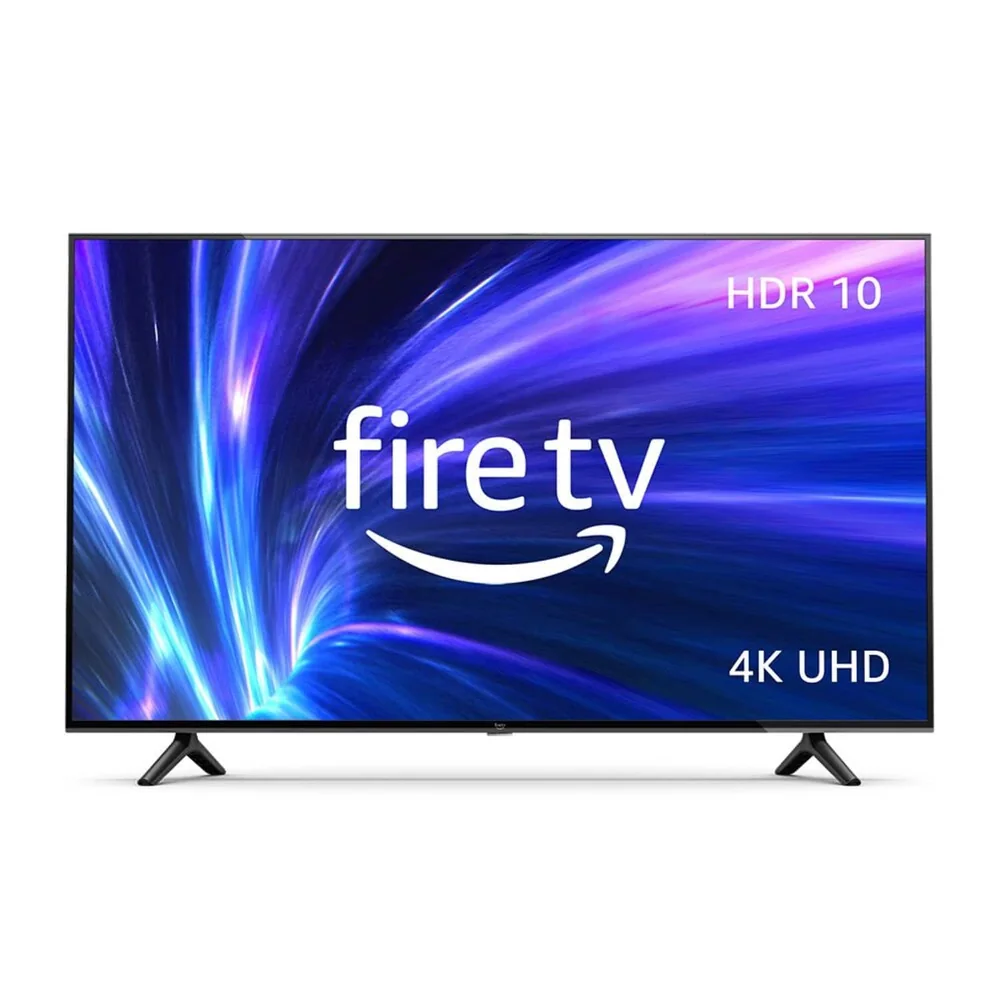
What to know first
- 43-inch 4K UHD panel with HDR10 and HLG support for brighter, wider-range color on compatible streaming content
- Runs Amazon's Fire TV smart platform with an Alexa Voice Remote for voice search and control
- First available May 7, 2025 and still sold as a current model, not a discontinued closeout unit
- No published refresh rate or HDMI 2.1 spec, so treat it as a streaming-first TV rather than a gaming display
- Best suited to secondary rooms or budget-conscious main rooms rather than as a home theater centerpiece
Where the 4-Series fits in Amazon's TV lineup
Amazon builds the 4-Series as its entry point into 4K, the tier where the company gets the Fire TV platform onto a screen without asking buyers to also pay for premium panel technology. The 43-inch size sits in the sweet spot for a bedroom or a smaller living room, not the wall-filling centerpiece some buyers picture when they hear "4K TV."
The Fire TV interface, the Alexa remote, and the tuner all live in one box, so there's one power cord, one remote, and one software update cycle to manage instead of stacking a dongle behind the TV.
It was first available in May 2025 and Amazon continues to sell and promote it into 2026, so this isn't old inventory being cleared out. It's the current version of Amazon's budget 4K tier, which matters if you're worried about buying something already replaced.
The case for buying the TV and the remote together
The strongest reason to consider this set over a generic no-name 4K TV is the Alexa Voice Remote. Saying "find a comedy from the 90s" out loud and having the TV actually search across apps saves real time compared to typing on an on-screen keyboard with arrow buttons, which is still how a lot of budget smart TVs make you search.
HDR10 and HLG support means the panel can accept high dynamic range signals from services and live broadcasts that use those formats, expanding the brightness range and color depth beyond what a standard dynamic range feed delivers. That's a genuine step up from a plain 1080p or non-HDR 4K set, though it's worth being direct: this TV isn't listed with Dolby Vision, which some streaming libraries use for their best HDR encodes. If Dolby Vision is a checkbox you care about, this isn't the model that checks it.
Where the Fire TV platform earns its keep is the home screen itself, which surfaces content across services instead of forcing you to hop between separate app icons to figure out what to watch. It's a smoother daily experience than hunting through five different apps, even if it also means Amazon's own content gets prime real estate on that home screen.
Living with it day to day
Setup on a Fire TV set follows the same pattern as an Amazon tablet or Fire Stick: sign in with your Amazon account, and most of your preferences and installed apps sync automatically if you've used Fire TV before. That's a real convenience if you're replacing an older Fire TV device rather than starting from zero.
Day to day, most of the interaction happens through the remote and voice search rather than digging through settings menus. That's a plus for anyone who wants channel-surfing simplicity, and it's a minus if you're the type who likes fine-tuning display calibration, since a budget panel like this doesn't come with the accuracy or connectivity that home theater enthusiasts look for.
One thing worth planning around: some secondary listings for this model note complications with setup or missing remotes on refurbished units, a reminder that if you're buying anything other than a new unit, it's worth confirming the box includes the original Alexa remote, since the smart features depend on it.
What the spec sheet doesn't tell you
Amazon hasn't published a refresh rate figure for this model, which is a meaningful omission if you're comparing it against 120Hz sets aimed at gaming or sports. Without that number available, the safest assumption is that this TV is built for standard streaming speeds, not fast motion, and buyers who care about that should look at a higher tier.
Port count and whether any HDMI input supports HDMI 2.1 (the standard that unlocks 4K at higher frame rates for newer game consoles) also isn't documented here. If you're planning to connect a current-generation console and expect the smoothest possible gaming performance, verify HDMI 2.1 support before buying rather than assuming it, since budget tiers commonly skip it.
The "cinema-quality picture" language you'll see in marketing for TVs at this price point is worth reading skeptically. Out-of-the-box settings on budget sets are usually calibrated for retail shelf appeal, meaning oversaturated color and boosted brightness rather than accurate reproduction. Plan to spend a few minutes adjusting picture mode after setup if accurate color matters to you.
The specs that matter
Fits comfortably in a bedroom or smaller living room without dominating the wall, and keeps the price down compared to 55-inch and larger sets.
Four times the detail of standard 1080p, which is most noticeable on larger screens or when sitting closer to the TV.
Expands brightness and color range on compatible streaming content and live broadcasts, though it stops short of Dolby Vision, which some services use for their high-end HDR encodes.
Puts voice search and Amazon's content-first home screen front and center, which speeds up finding something to watch but favors Amazon's own catalog placement.
Confirms this is Amazon's active budget 4K tier rather than an outgoing model being phased out.
A universal remote can handle basic power and volume, but full voice search and Alexa commands generally need the original Fire TV remote.
Who this product fits
Furnishing a guest room or dorm on a budget
This is close to an ideal fit: a 4K panel with a built-in streaming platform means no separate streaming stick to buy, no extra remote to lose, and Alexa voice search for guests who don't know your app layout.
Replacing an old Fire TV Stick setup
Since your Amazon account and many app preferences carry over, moving to this TV from a Fire Stick on an older television should feel familiar almost immediately, with the bonus of not needing a separate streaming device anymore.
Building a gaming-focused living room setup
Skip this one. Without published high refresh rate or confirmed HDMI 2.1 support, a current-generation console won't get the smooth, high frame rate output that gaming-focused buyers want, so a mid-tier or gaming-specific TV is the better call.
What else to compare
If gaming performance or Dolby Vision support matters more than price, it's worth looking at a step-up tier before settling on this one.
Amazon Fire TV 43" 4-Series 4K UHD smart TV FAQ
Does the Amazon Fire TV 43" 4-Series support Dolby Vision?
No. The listed HDR support is HDR10 and HLG, not Dolby Vision, so streaming content mastered specifically for Dolby Vision won't get that particular enhancement on this set.
Is this a good TV for gaming?
Amazon hasn't published a refresh rate or HDMI 2.1 spec for this model, so it's best treated as a streaming-first TV rather than one built for fast-motion gaming or the smoothest console performance.
Do I need the original remote to use Alexa features?
Generally yes. Full voice search and Alexa voice commands are built around the included Alexa Voice Remote, and a generic universal remote typically won't replicate those features even if it handles basic power and volume.
Is this an older, discontinued model?
No. It was first available in May 2025 and Amazon continues to sell and promote it as a current model, so it isn't outgoing inventory.
What size room does the 43-inch size suit best?
It fits comfortably in a bedroom, dorm, or smaller living room. If you want a wall-filling centerpiece for a larger living room, look at a bigger size in the same lineup.
Worth it for the price, not for the specs sheet
Judge this TV by what it's actually trying to be: an affordable 4K screen with Amazon's streaming platform baked in, not a home theater flagship. On that measure, the HDR10 and HLG support plus the Alexa remote integration deliver real, usable convenience for a secondary room or a budget-conscious household.
Buyers chasing smooth sports motion, high-end gaming performance, or Dolby Vision compatibility should look at a higher tier where those specs are actually published and confirmed. Everyone else, particularly anyone replacing an aging non-4K TV or adding a screen to a bedroom or guest space, gets a straightforward, current-generation set that does the fundamentals without asking for a premium price.