
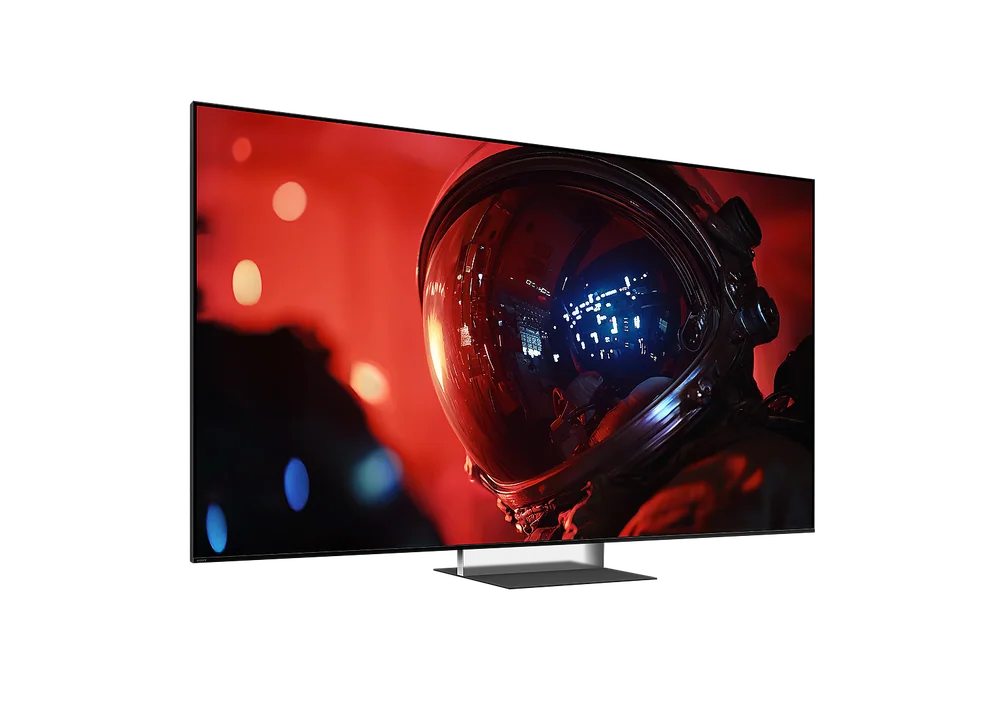
What to know first
- True RGB LED backlighting aims to combine QD-OLED-level color with Mini LED brightness, per Sony
- Supports 4K at 120Hz over HDMI 2.1 with VRR and low input lag for gaming
- Runs Google TV with Gemini built in for voice assistant and smart home control
- HDR support includes HDR10, HLG, and Dolby Vision
- One independent evaluation raised a reliability concern worth weighing against the high price
Sony's flagship, not its OLED replacement
Announced May 27, 2026, the BRAVIA 9 II sits at the top of Sony's current lineup as what RTINGS calls Sony's premium flagship 4K TV for the year, succeeding the original Bravia 9. It isn't an OLED, and Sony isn't pretending otherwise. Instead it uses what the company brands True RGB LED, a backlighting approach meant to close the color gap with OLED while keeping the brightness advantage LED backlighting has always had.
That distinction matters if you're comparison shopping against Sony's own OLED sets. An OLED panel from Sony will still deliver the deepest blacks in a dark room, but it caps out at a lower peak brightness than a well-built Mini LED design can reach. The BRAVIA 9 II is Sony's attempt to make you choose brightness and color together instead of picking one.
The XR processor and Google TV software carry over familiar Sony strengths: image processing tuned for motion and upscaling, plus a smart platform now built around Gemini for voice control and smart home integration. None of that is new to this generation, but it's the backbone that makes the panel technology usable day to day.
Brightness where OLED usually backs off
The core sell is right there in Sony's own product copy: QD-OLED color range with Mini LED brightness. If that claim holds up in a bright living room, it solves a real problem. OLED TVs have always struggled a little in rooms with big windows or overhead lighting, where their peak brightness can look dim compared to a good LED set. A TV that keeps OLED-grade color saturation while pushing brighter highlights is solving for exactly that scenario.
Gaming is the other place this set separates itself from a budget alternative. It supports 4K at 120Hz over HDMI 2.1, along with variable refresh rate and low input lag, which is the full spec sheet a current-generation console or gaming PC owner wants to see. Fast-panning shooters and racing games benefit directly: less motion blur, less screen tearing, and less delay between a controller input and what shows up on screen.
Four size options, from 65 inches up to a 115-inch flagship, mean the same picture technology scales from a bedroom upgrade to a genuine home theater centerpiece. That range is unusual at this price tier and gives shoppers room to match screen size to room size without switching technologies.
Living with Google TV and Gemini on a flagship screen
Day to day, the interface is Google TV, which means a familiar app grid, voice search, and now Gemini handling assistant duties. If you already use Google's ecosystem for smart home devices, that integration is a real convenience: asking the TV to dim connected lights or check a calendar happens without reaching for a phone.
Connections matter more on a TV this size and price, since it's likely to anchor a home theater setup with a soundbar, a game console, and maybe a streaming box or Blu-ray player all fighting for HDMI ports. HDMI 2.1 support on the gaming-capable ports is the detail to confirm matches your setup before buying, especially if you're running more than one high frame rate device.
At 85 inches and up, this becomes a two-person installation and a piece of furniture you plan a room around, not something you casually swap out next year. Buyers at the larger sizes should think of this as a five-to-seven-year purchase rather than a two-year upgrade cycle.
The reliability question nobody can fully answer yet
One independent reviewer reported being extremely disappointed with the reliability of a purchased unit, expecting more from a premium television at this price. That's a single account, not a documented pattern across multiple sources, and it shouldn't be read as a verdict on the whole product line.
New panel technology carries some of that risk by nature. True RGB LED is a newer approach than the Mini LED and OLED backlighting methods that have had years to mature, and early adopters of any new display tech sometimes absorb growing pains that get ironed out in later production runs.
If reliability is your top concern, an extended warranty or store protection plan is a reasonable hedge at this price point, and it's worth asking about return windows before the purchase rather than after a problem shows up.
The specs that matter
This is the entire reason to consider this set over a standard OLED or Mini LED TV: it targets the brightness-versus-color trade-off buyers have lived with for years.
Pricing scales steeply with size, so match the size to your room and viewing distance rather than defaulting to the biggest option available.
Broad format support means most streaming services and 4K Blu-rays will get full HDR treatment, though Sony's out-of-box picture settings still typically need calibration for accurate color rather than showroom punch.
This is the full current-generation gaming spec sheet, meaning fast motion stays smooth and controller response stays tight on both console and PC.
Daily interaction happens through this interface, and Gemini integration is a real convenience if you're already using Google's smart home ecosystem, less so if you aren't.
Handles upscaling and motion processing behind the scenes, which affects how well lower-resolution content and fast camera pans look on a large screen.
Who this product fits
A bright living room with big windows
Standard OLEDs can look washed out here during the day. The BRAVIA 9 II's stated brightness advantage over typical OLED, combined with wide color range, is aimed directly at this room type.
A console gamer upgrading from an older 60Hz TV
4K at 120Hz with VRR and low input lag turns fast-paced games noticeably smoother and more responsive, a difference that's obvious within the first play session.
A shopper deciding between this and a Sony OLED model
Choose the BRAVIA 9 II for a brighter room or mixed-use family room; choose an OLED if the room stays dark and the deepest possible blacks matter more than peak brightness.
A buyer nervous about spending flagship money on new technology
The single reliability complaint on record is a reason to add an extended warranty to the budget rather than a reason to avoid the TV outright, but it's worth weighing seriously given the price.
What else to compare
Shoppers wary of new panel technology at this price should also look at Sony's established OLED lineup before deciding.
Sony BRAVIA 9 II FAQ
What is True RGB LED and how is it different from Mini LED or OLED?
It's Sony's newer backlighting approach, described by the company as combining QD-OLED-style color range with Mini LED brightness. It's not OLED and not standard Mini LED, but a distinct technology aimed at avoiding the usual trade-off between the two.
Is the Sony BRAVIA 9 II good for gaming?
Yes. Sony states it supports 4K at 120Hz over HDMI 2.1, along with VRR and low input lag, which covers what current-generation consoles and gaming PCs need for smooth, responsive play.
How much does the Sony BRAVIA 9 II cost?
Is the BRAVIA 9 II reliable?
It's too early to say with confidence. One independent reviewer reported reliability disappointment with a purchased unit, but that's a single account rather than a broad pattern, and buyers concerned about risk should consider an extended warranty.
Does the BRAVIA 9 II support Dolby Vision?
Yes, along with HDR10 and HLG, so most major streaming services and 4K disc formats will deliver their intended HDR experience on this set.
What smart platform does it run?
Google TV, with Gemini built in for voice assistant duties and smart home control, which is a meaningful convenience if you already use Google's ecosystem elsewhere in your home.
Is Sony's True RGB bet worth the flagship price?
Sony is asking buyers to trust a new panel technology at a price that leaves little room for disappointment. The pitch, color range close to QD-OLED paired with Mini LED brightness, addresses a real and long-standing frustration with OLED TVs in bright rooms, and the gaming spec sheet is fully current. Google TV with Gemini rounds out a set that feels considered rather than rushed to market.
What keeps this from being an easy, unreserved recommendation is the lack of a long track record and the single reliability concern raised by an independent reviewer. If you can budget for a warranty and you value the brightness-and-color combination this technology promises, the BRAVIA 9 II earns its place at the top of Sony's lineup. If you'd rather bet on a display technology with years of proven durability behind it, Sony's OLED models remain the safer flagship choice.