
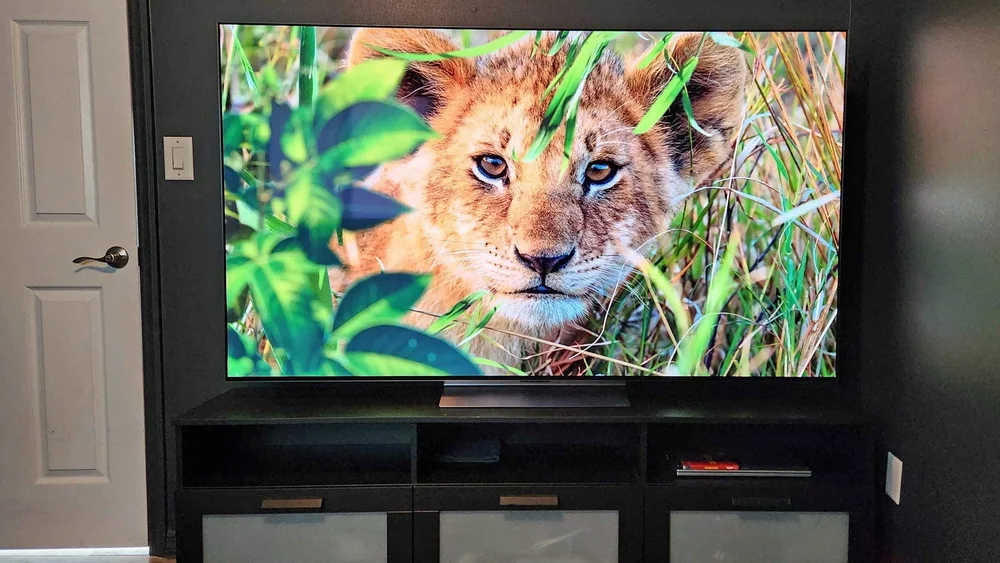
What to know first
- Brightness Booster Pro is rated by LG at up to 3.2x brighter pixel output versus a standard OLED, a manufacturer specification worth knowing before you compare it to last year's set
- 120Hz native refresh with VRR up to 165Hz makes this a legitimate option for PC gaming, not just console play
- The Alpha 11 AI Processor Gen3 is LG's newest chip, positioned above the processor in the outgoing C5
- Available in 77-inch and 83-inch class sizes with confirmed specs, so this isn't a compact-room TV
- Announced March 4, 2026, and designed as LG's current-generation OLED replacing the 2025 C5
LG's answer to the daytime OLED complaint
The C6H sits in LG's OLED evo lineup for 2026, and its job is straightforward: take the contrast and color OLED has always done well and stop losing that advantage the moment sunlight hits the screen. LG's own materials lean hard on this, branding the improvement Hyper Radiant Color Tech and pairing it with Brightness Booster Pro.
It replaces the 2025 C5 as LG's current mainstream premium OLED, according to coverage of the March 2026 announcement. That succession matters for anyone comparison shopping: if a retailer is discounting last year's C5 alongside the C6H, you're choosing between an already excellent picture at a lower price and a newer chip with a brighter panel at full price.
LG lists this generation with over 8.3 million self-lit pixels, the same self-emissive foundation that makes OLED's black levels a non-issue in dark scenes. What's new for the C6H is what happens when the lights come on.
The brightness claim, and what it actually changes
LG specifies that Brightness Booster Pro can make individual pixels shine up to 3.2x brighter than a standard OLED implementation. That's a manufacturer number, and it hasn't been independently verified in the published product information, so treat it as LG's stated ceiling rather than a guaranteed real-world multiplier. Still, even a fraction of that gain would be noticeable if you've ever squinted at an OLED screen during a 2pm football game and wished it looked like it did at night.
The Alpha 11 AI Processor Gen3 backs that panel work. LG calls it their most powerful AI processor to date, which plausibly means better upscaling of older or lower-resolution content and steadier motion handling, since that's the processor's job on every LG OLED generation. There's no independently measured processing benchmark here, so the honest takeaway is that it's newer silicon doing the same fundamental job, likely a bit better.
Gamers get a real, spec-sheet-confirmed reason to care: 120Hz native refresh with VRR up to 165Hz. That headroom above 120Hz is specifically useful if you're running a gaming PC capable of pushing frame rates that high, since console gaming typically tops out at 120Hz anyway. If your setup is Xbox Series X or PS5 only, the practical ceiling is still 120Hz and the extra VRR range won't do much for you.
Sound gets a similar treatment through Precision Sound Master Pro, which LG positions around dialogue clarity and surround imaging built into the TV itself. It won't replace a dedicated soundbar for movie night, but it's a reasonable step up from flat, built-in TV audio for daily viewing.
Living with webOS, Wi-Fi 6E, and the Magic Remote
Day to day, this is a webOS television, which means the smart platform experience is the same one LG has been refining for years: app rows, LG Channels for free ad-supported content, and a gaming portal that surfaces cloud gaming services without needing a console plugged in. If you've used a recent LG TV, the C6H won't feel unfamiliar.
Wi-Fi 6E support is a quiet but useful inclusion if your home network already has a 6E router, since it opens up a less congested band for 4K and HDR streaming without competing with every other device in the house. If your router is older, this spec sits unused until you upgrade.
The Metallic Magic Remote is LG's pointer-style clicker, letting you navigate the home screen like a cursor instead of button-mashing through a grid. It's a small ergonomic win that shows up every single time you turn the TV on, which is more than can be said for some of the flashier picture specs.
What LG hasn't independently confirmed yet
Every headline spec here, the 3.2x brightness figure, the AI processor's real-world speed, the HDR accuracy of Precision HDR Master Pro, comes from LG's own materials. That's normal for a TV this newly announced, but it means the actual on-screen improvement over the C5 hasn't been independently measured in what's available here. Buyers who want confirmed numbers before spending should expect that verification to arrive as the set reaches more homes.
Screen size is also a real limitation for some shoppers. The confirmed sizes are 77-inch and 83-inch class models. If you're furnishing a smaller room or wanted something in the 55 to 65-inch range, those sizes aren't documented here, and you may need to look at a different LG model or wait for additional size variants to be confirmed.
One LG listing for a slightly different model number quotes the brightness multiplier at 3x rather than 3.2x. The gap is small, but it's a reminder that even within the C6H naming, exact suffixes (like HUP versus HUA) can carry minor spec differences. Check the specific model number before you buy, not just the C6H name.
The specs that matter
This generation is built for big-room viewing. If your space calls for something smaller, you'll want to check whether LG adds additional sizes to the C6H line or look at a different series.
120Hz keeps fast motion clean for sports and console gaming. The extra VRR headroom to 165Hz only matters if you're connecting a gaming PC that can actually push frame rates that high.
This is LG's manufacturer-stated ceiling for pixel brightness versus a standard OLED, aimed directly at rooms with daytime glare that have historically been OLED's weak spot.
Newer processing generally means better upscaling of non-4K content and steadier motion handling, though the exact improvement over the previous generation hasn't been independently benchmarked.
This is the self-emissive pixel structure that gives OLED its per-pixel black levels, the reason dark scenes look convincingly deep rather than washed with backlight bleed.
Useful for smoother 4K streaming on a crowded home network, but you'll only see the benefit if your router also supports the 6E band.
Point-and-click navigation instead of directional button presses, which speeds up everyday menu browsing more than any spec sheet number will.
Who this product fits
The sunlit living room upgrader
If your current TV looks great at night and disappointing during the day, the C6H's brightness-focused engineering is aimed squarely at you. The Brightness Booster Pro spec exists to solve exactly this complaint.
The PC gamer chasing high frame rates
With VRR support up to 165Hz, the C6H can keep pace with a gaming PC pushing frame rates well past what most consoles output, making it one of the more future-proof choices for a gaming setup rather than just a living room screen.
The current C4 or C5 owner
If you bought an LG OLED in the last year or two and your room isn't especially bright, the honest advice is to hold onto what you have. The generational leap here is real on paper but concentrated in a spec that may not change your specific viewing conditions much.
What else to compare
A few other paths are worth knowing before you settle on the C6H.
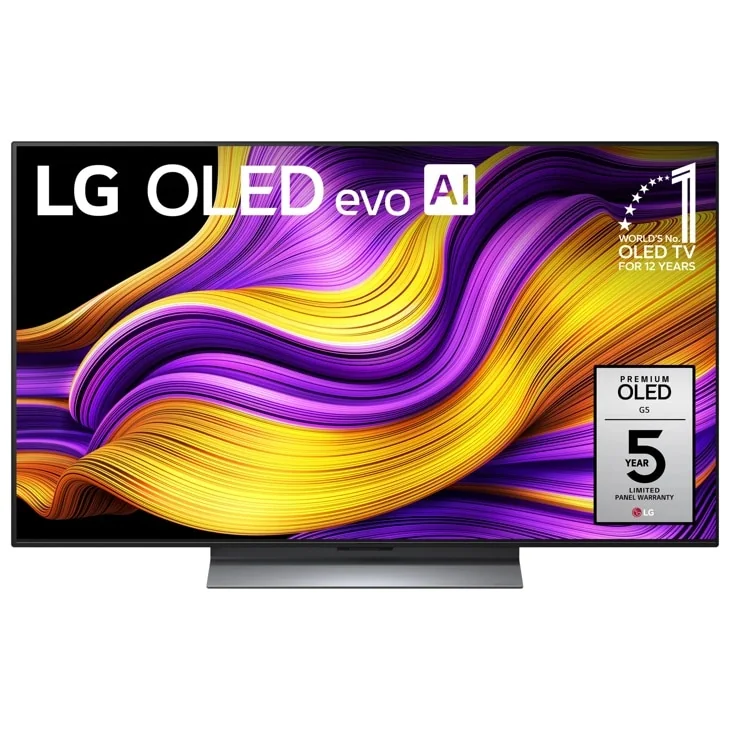
LG C6H OLED 4K TV FAQ
What screen sizes does the LG C6H OLED come in?
LG's official listings confirm 77-inch and 83-inch class models for the C6H. Smaller sizes aren't documented in current specifications, so shoppers wanting a compact OLED should look elsewhere in LG's lineup.
Is the LG C6H good for gaming?
Yes. It supports a 120Hz native refresh rate with variable refresh rate up to 165Hz, which is enough headroom for high-frame-rate PC gaming as well as standard 120Hz console play.
How much brighter is the LG C6H than previous LG OLEDs?
LG specifies that Brightness Booster Pro can push pixel brightness up to 3.2x higher than a standard OLED, though this is a manufacturer figure rather than an independently measured result, so treat it as a ceiling rather than a guaranteed everyday gain.
Does the LG C6H replace the LG C5?
Yes. Coverage of LG's March 2026 announcement describes the C6H as the current-generation successor to the 2025 C5 in LG's OLED lineup.
What smart platform does the LG C6H use?
It runs LG's webOS platform, the same smart TV system LG has used across recent OLED generations, with app support, LG Channels, and a built-in gaming portal.
Worth the newest badge, or time to buy last year's OLED?
LG made a specific bet with the C6H: that brightness, not black levels, is the thing still holding OLED back for a lot of living rooms. The Brightness Booster Pro spec, the 165Hz VRR ceiling, and the new Alpha 11 processor all point toward a TV built for exactly that problem, and none of those claims contradict what LG has been building toward for several generations.
Shoppers coming from a non-OLED set or an OLED that's several years old have the clearest case to buy in now. Anyone sitting on a C4 or C5 in a moderately lit room should ask whether that brightness gain is solving a problem they actually have, because the rest of the experience, from webOS to the Magic Remote to the picture quality in dark scenes, hasn't fundamentally changed.