
What to know first
- This is a modular, built-in cooktop family meant to be combined into a custom layout, not a single all-in-one cooktop.
- The Vario concept includes both everyday modules (gas and induction) and specialty modules (grill, Teppan Yaki, steamer, deep fryer).
- Gaggenau positions these modules in compact built-in sizes, which is useful for tailored island and wall runs.
- Plan around cutouts and clearances early. “Modular” does not mean “universal fit.”
- Fuel and power planning matters: gas still needs electricity, and electric or induction needs the right circuit.
What the Gaggenau Modular Cooktop Family is
The Gaggenau Modular Cooktop Family is a set of built-in cooktop modules designed to sit next to each other in your countertop. Instead of buying one cooktop with a fixed layout, you choose the modules you want and build a lineup that matches how you cook and how your kitchen is designed.
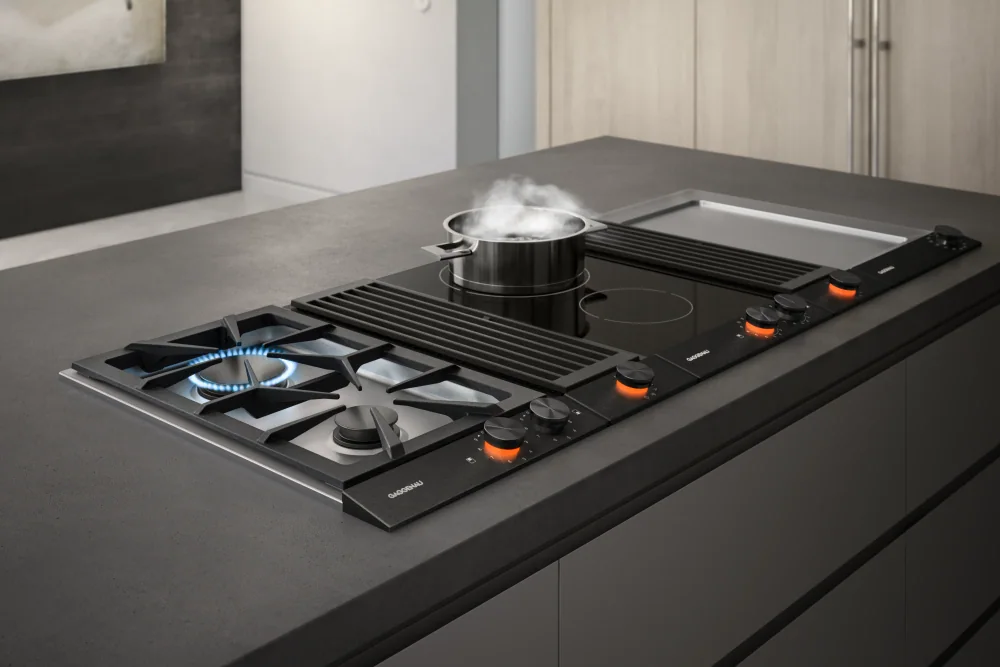
Gaggenau describes this as its Vario modular system, shown across 200 series and 400 series materials. The point is consistency: whichever modules you choose, they’re meant to look like they belong together and install as a coordinated run.
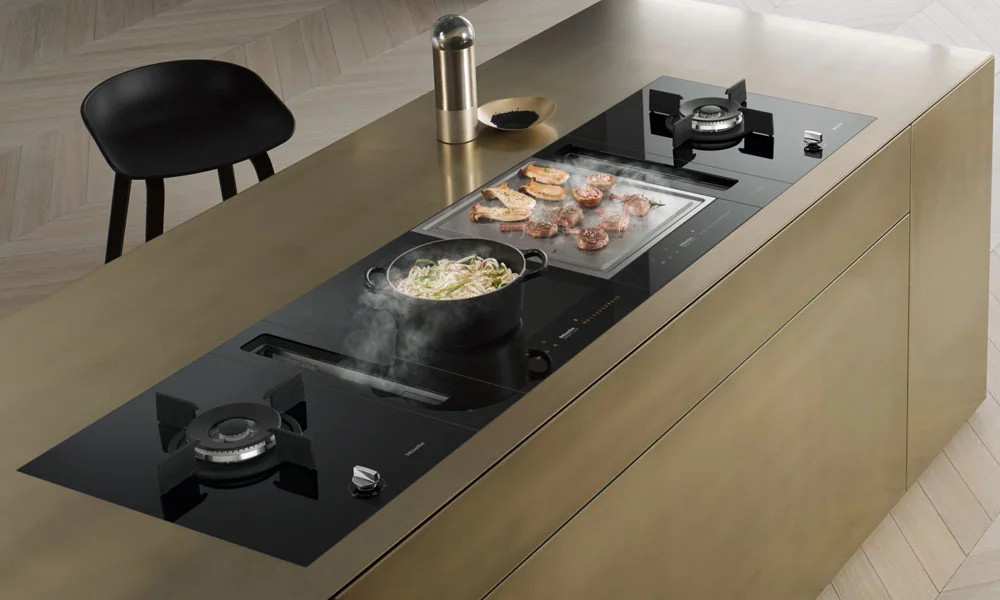
What makes this family different from most cooktops is the menu of options. Along with standard cooking formats like gas and induction, the lineup includes specialty modules such as a grill, Teppan Yaki, steamer, and deep fryer. If those are techniques you actually use, having them built into the counter can change how your kitchen works day to day.
Why it stands out
The main strength here is how far the modular concept goes. Many “domino” style cooktops stop at a couple of basic formats. Gaggenau’s Vario lineup is built to let you mix everyday cooking with specialized modules in the same design language, which is exactly what you want in a high-end custom kitchen.
It also fits the way real remodels happen. If you are designing an island run or a long wall of base cabinets, modular cooktops let you place functions where they make sense for your workflow. For example, you can plan for a dedicated specialty surface alongside a more conventional gas or induction module, rather than trying to force everything into one fixed burner layout.
Finally, this family is current and actively offered in 2026, which matters for a built-in system. When you are cutting stone and committing to a layout, you want a lineup that is still being presented as available and supported as a family of modules.
What it is like to own
Ownership with a modular cooktop is less about learning one appliance and more about living with a planned system. You will make decisions up front that affect daily convenience: where the high-heat cooking happens, where you want a specialty surface, and how much room you need around each module for cookware and safe clearances.
Because these are built-in modules, installation planning is part of the product experience. The practical win is that you can tailor the cooking lineup to your habits. The practical cost is that you need to match the countertop cutouts and cabinet base planning to the exact modules you choose. A “30-inch cooktop replacement” mindset does not apply here.
Hookups are also part of day-to-day reality. Gas modules still need electricity for ignition and controls, and electric or induction modules need the right voltage and amperage circuit. If you are mixing fuel types across modules, plan for that early so you do not end up compromising your layout later.
What to know before you buy
First, modular does not mean plug-and-play. Width and cutout size are the make-or-break details for any built-in cooktop, and modular systems add more of them. Even if a module is described in a certain width class, the countertop opening is not automatically “standard,” especially when you are combining multiple modules into one run.
Second, be honest about which specialty modules you will actually use. A built-in grill, Teppan Yaki, steamer, or deep fryer can be fantastic in the right kitchen, but if you mostly boil pasta and scramble eggs, you may be paying for capability you do not need. In that case, a simpler modular setup focused on gas or induction can make more sense.
Third, think about ventilation and heat management. Powerful cooking and specialty surfaces can generate more heat, steam, and odors. Gas in particular benefits from strong ventilation. A beautiful modular run is less enjoyable if your hood or downdraft setup cannot keep up with how you cook.
The specs that matter
You are not locked into a single burner layout. You can build a cooktop run around your cooking habits, but you also need to plan the countertop cutouts and cabinet base around the exact modules you choose.
You can choose the cooking style you prefer, or mix styles across a longer run. Just remember that gas and induction have different hookup needs.
This is the real reason to consider Gaggenau for a custom modular setup. If you will use these techniques, built-in specialty modules can replace countertop appliances and make your kitchen feel purpose-built.
If you care about a consistent, integrated look across modules, you want a family that is designed to match itself across the lineup.
Compact modules make it easier to design a tailored run, especially in an island or a space where you want to allocate countertop width to specific functions instead of one big cooktop.
For built-in appliances, long-term lineup continuity matters. You are more comfortable committing to a custom cutout plan when the family is current.
Who this product fits
You are designing a luxury island and want a custom cooking lineup
The Gaggenau Modular Cooktop Family lets you build an island run that matches how you cook, mixing a standard gas or induction module with a specialty surface like Teppan Yaki or a grill, all in a coordinated built-in look.
You cook with specialty techniques and want them built in
If you actually use a grill surface, Teppan-style cooking, steaming, or deep frying, this family is designed to put those functions into the countertop instead of relying on separate countertop appliances.
You want a cohesive, architectural cooktop wall
For a long wall run, modular modules let you distribute cooking functions across the counter in a deliberate way, rather than crowding everything into one fixed burner layout.
What else to compare
If you like the modular idea but want a different balance of planning simplicity, flexibility, or price, consider these options.
Gaggenau Modular Cooktop Family FAQ
What is the Gaggenau Modular Cooktop Family?
It’s a built-in modular cooktop system (Gaggenau’s Vario concept) where you combine multiple cooktop modules into a custom countertop layout. The lineup includes standard cooking formats like gas and induction, plus specialty modules such as a grill, Teppan Yaki, steamer, and deep fryer.
Is this a good choice for a normal 30-inch cooktop replacement?
Usually not. Modular cooktops depend on matching the exact cutout and clearance requirements for each module, and a “30-inch” label does not guarantee a universal opening. This family makes the most sense when you are already planning a custom countertop layout.
Do Gaggenau modular cooktops require special electrical or gas hookups?
Plan for utilities based on the modules you choose. Gas cooktops still need electricity for ignition and controls, and electric or induction modules need the correct voltage and amperage circuit. If you mix module types, you may be planning for both gas and electrical requirements.
Which modules are available in the Vario system?
Gaggenau describes modules that include gas, induction, grill, Teppan Yaki, steamer, and deep fryer. Availability can vary by the specific series and configuration, so the right approach is to start with the functions you want and design the run around them.
What should I plan first with a modular cooktop like this?
Start with the countertop cutout plan and clearances, then confirm your utility requirements for the modules you want. With modular systems, the physical fit and hookups can drive the entire layout more than they would with a single standard cooktop.
Should you buy the Gaggenau Modular Cooktop Family?
Buy the Gaggenau Modular Cooktop Family if you are building a design-forward kitchen where the cooktop run is part of the architecture, and you want the freedom to combine everyday cooking with specialty modules like a grill, Teppan Yaki, steamer, or deep fryer. That mix of options is what makes this family stand out.
Skip it if your goal is a simple replacement or you are not going to use the specialty surfaces. Modular systems reward careful planning, but they also demand it. If you are ready to design the countertop and hookups around your cooking style, Gaggenau’s Vario lineup is built for exactly that kind of project.