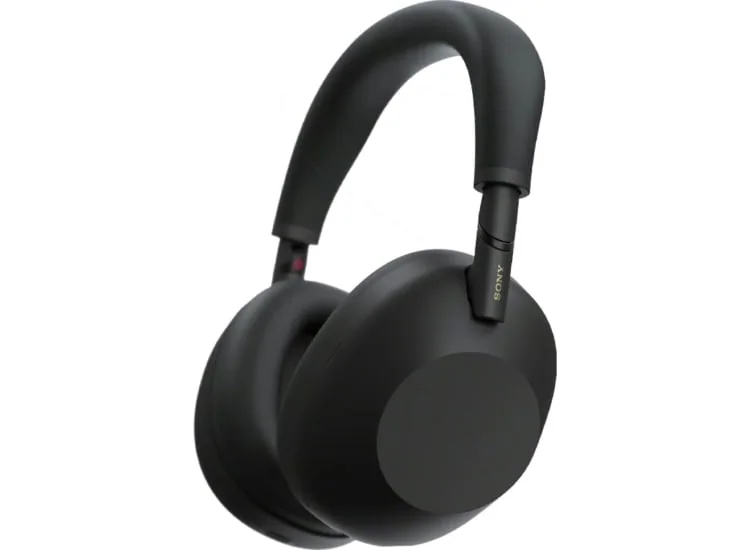
Learn which headphone battery figures predict a full day of listening and which ones are mostly packaging math.
Nothing is more annoying than reaching for earbuds before a commute and finding a nearly empty case, or watching over-ear headphones give up halfway through a flight. Battery claims look reassuringly large until you notice they may combine several case recharges, assume modest volume, or leave noise cancellation switched off. The useful number is the runtime from one charge in the mode you actually use. For earbuds, the case total still matters, but it is backup power, not the answer to whether they will survive your train ride, workout, calls, and trip home.
Reading time: 8 minutesBest for: Wireless headphone and earbud shoppers who want fewer charging surprises
Single-charge time versus total case battery
For wireless headphones, start with the number that tells you whether listening will stop at an inconvenient moment: single-charge runtime. That is how long the headphones or earbuds can play before they need a cable or, in the case of earbuds, a return to their case. If your round-trip commute, lunch walk, and evening gym session add up to four hours, a claimed six-hour earbud runtime leaves some breathing room. A 24-hour total that includes the case does not help much if the buds themselves run flat before dinner.
Earbud makers often lead with a large combined figure, such as 24 or 30 hours. That number usually means the earbuds can be recharged several times by a fully charged case. It is useful for a weekend away or for people who top up between uses, but it is not continuous playback. Over-ear wireless headphones generally do not have a charging case, so their stated runtime is usually the one number that matters. Compare like with like: earbuds on one charge against earbuds on one charge, and total case capacity only after that.
How ANC and volume affect runtime
Active noise cancellation, usually called ANC, uses microphones and electronic processing to reduce steady outside sound such as airplane rumble, train noise, and office HVAC. That processing consumes power. A pair rated for eight hours with ANC off may run for noticeably less with it on, and the ANC-on figure is the one a frequent traveler should treat as real. Transparency mode, which uses microphones to bring outside sound into your ears, can also affect battery life because those microphones and processing remain active.
Volume changes the picture too. Louder playback asks the drivers, the tiny speakers inside headphones, to work harder. Calls, spatial audio, adaptive sound modes, and a weak Bluetooth connection can add their own drain. You do not need to predict every percentage point. Just avoid treating the longest advertised number as your personal result. If you listen loudly on a noisy commute with ANC enabled, use the manufacturer's ANC-on estimate as a ceiling rather than a promise.
Why call time can be shorter
Music playback is a relatively simple job: receive audio, process it, and play it. A call adds microphones, voice processing, and a two-way wireless connection. The headphones must capture your voice while continuing to play the other person's, often while trying to reduce wind, traffic, keyboard clatter, or café noise. That extra work is why call time can be shorter than music-listening time, even when the product page gives both figures equal visual weight.
This matters most if your headphones double as work gear. Someone who listens to music for an hour and takes a few short calls may never notice the difference. Someone who spends half a day in video meetings should look for a stated talk-time figure, then leave a margin. A case can rescue earbuds between meetings, but only if you have enough of a break to put them away. For long, uninterrupted calls, over-ear wireless headphones or a wired headset can be less stressful than tiny earbuds living charge to charge.
Fast charging and what it is useful for
Fast charging is the emergency feature, not a substitute for enough battery in the first place. It describes how much listening time a short charge can restore, often after a few minutes on a cable or in an earbud case. It is genuinely handy when you discover a low battery while getting dressed, before boarding, or between meetings. A quick boost that covers a commute is more useful than a huge total-battery claim that requires an hour near an outlet.
Read the fine print around the boost. The advertised result may assume a particular charging method, a low or moderate volume, and certain features turned off. Wireless charging is convenient for overnight routines, but it is often slower than a cable and may not be the best answer when time is tight. For travel, pack the cable that fits the headphones and confirm whether the case uses USB-C, Lightning, or another connector. A fast-charge feature is only fast if you have the right cable and power source with you.
What Headphone Battery Life Numbers Really Mean 5
Battery capacity fades with age. Rechargeable lithium-ion batteries gradually hold less energy after repeated charging cycles and exposure to heat. That does not mean a pair becomes useless overnight, but the generous margin you had in year one can shrink. Earbuds are especially easy to notice because their small batteries begin with less room for error. A pair that once handled a long commute may later need a case top-up before the return trip.
You cannot stop battery aging, but a few habits reduce needless strain. Avoid leaving headphones in a hot car or direct sun, and do not store them for months completely empty. Keep earbud charging contacts clean so the buds actually recharge when placed in the case. If one earbud repeatedly dies first, check for debris on its contacts and make sure it seats properly. Persistent uneven drain can also point to a battery or charging fault, which is a better reason to seek support than endlessly changing settings.
What Headphone Battery Life Numbers Really Mean 6
Turn battery claims into a simple schedule before you buy. For a two-hour daily commute, a five-hour single-charge estimate may be enough if you can recharge at your desk or in the case. For a cross-country flight, aim for an ANC-on rating that covers the flight with room for boarding delays and a connection. For workouts, a shorter runtime can be perfectly sensible if the case is reliably charged and the earbuds return to it after every session.
Do not overlook the source of the problem when battery life feels poor. A phone searching for a distant Bluetooth connection, a headphone app running extra processing, or an earbud that never fully charges can make a healthy product seem weak. Check the battery level of both earbuds and the case, update the companion app if the maker provides one, and test at your normal volume with your usual features enabled. The goal is not to chase the biggest number. It is to make charging disappear from the part of your day when you want to listen.
What this guide helps you understand
Treat single-charge runtime in your preferred mode, especially ANC-on runtime, as the deciding battery number. Case totals and fast charging are valuable backup, but they cannot make earbuds last through a stretch when they are in your ears.
Check the stated single-charge runtime with ANC on if you commute, fly, or work in noisy places.
For earbuds, compare the case total separately from the runtime of the earbuds themselves.
Confirm the charging connector and pack a compatible cable for travel.
If calls are a major use, look for talk-time information rather than relying on music-playback claims.
Technique notes
A large total-battery claim for earbuds usually includes several recharges from the case.
High volume, calls, transparency mode, spatial audio, and unstable Bluetooth can reduce runtime.
Clean earbud charging contacts when one side seems to drain or charge unevenly.
Safety note: Do not wear headphones at a volume that blocks important warnings, traffic, or announcements when awareness is needed.