Deep Fryer vs. Pot Frying: What Changes in a Home Kitchen?
Published Updated
A countertop deep fryer adds temperature control and contained oil handling, while a pot offers flexibility and takes less dedicated storage space.
Reading time: 9 minutesBest for: Home cooks deciding whether a dedicated countertop fryer fits their cooking habits and kitchen space
Temperature Control Changes the Cooking Routine
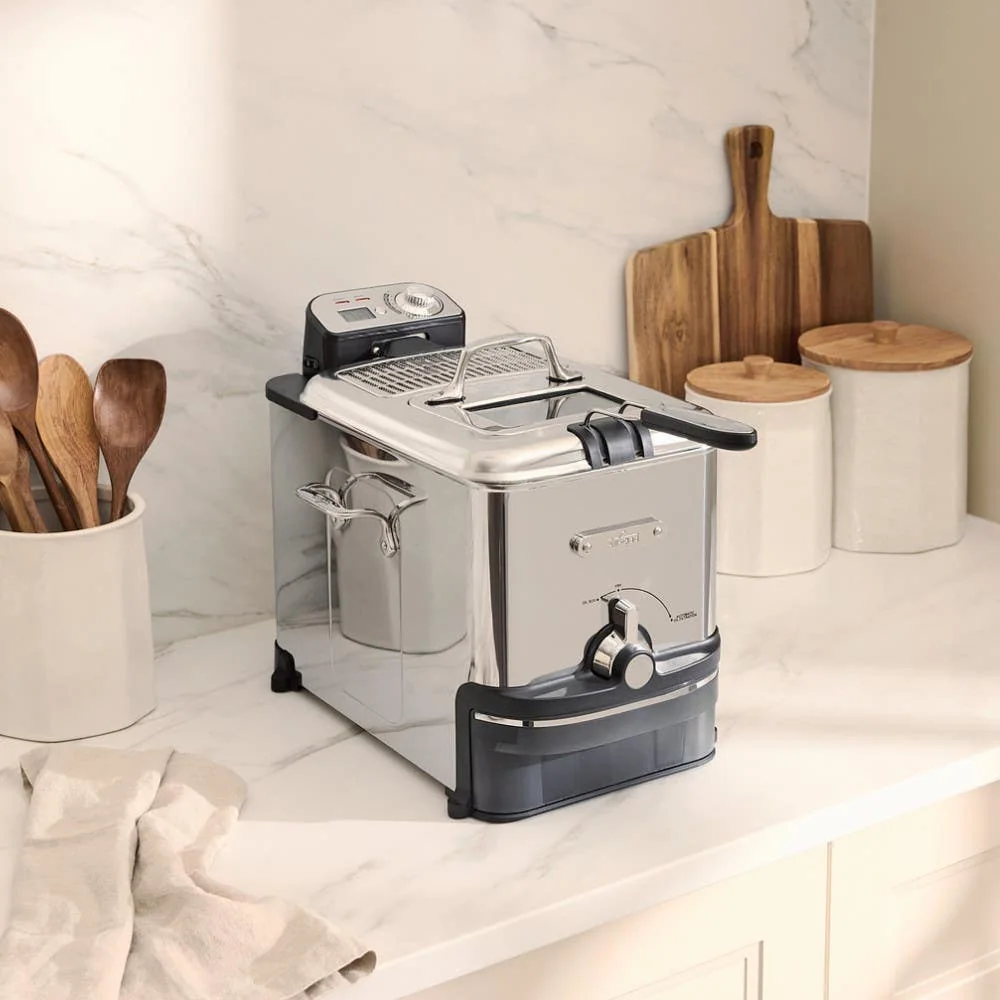
A countertop deep fryer has a thermostat, which is the control that cycles the heating element to hold the oil near a selected temperature. That removes much of the stove adjustment required with a pot. Set the temperature, allow the oil to heat, and give it time to recover between batches. This is especially helpful for foods that need repeated batches, such as fries, breaded shrimp, or wings.
A pot responds to the burner beneath it, so the oil temperature can rise or fall as the burner setting, pot material, food load, and room conditions change. A clip-on thermometer helps you see what is happening rather than guessing. Pot frying can be very effective, but it requires more attention to heat changes. If the oil cools after food goes in, wait for it to return to the cooking temperature before starting the next batch.
Capacity Is About Usable Batches, Not Just Volume
A deep fryer basket gives food a defined space, which can make portioning easier. Its limits are also fixed. A compact fryer may hold enough oil for a small serving, but its basket can become crowded quickly. Food needs room for hot oil to circulate around it. When pieces are packed together, the oil temperature drops more sharply and steam cannot escape as easily, leading to softer crusts.
A pot can hold more oil and accommodate larger foods if the pot is wide and deep enough, but that does not mean it should be filled high with oil. You need generous empty space above the oil for bubbling and foam when food enters. A pot is often more flexible for large chicken pieces, doughnuts, or a bigger one-time batch. A countertop fryer is usually easier for controlled, repeatable portions.
Cleanup and Oil Storage Are Different Jobs
With a deep fryer, the basket, lid, and some removable parts may be easier to wash than a pot and loose utensils. The main cleanup task remains the oil. Once it has cooled completely, it must be filtered if you plan to reuse it, then stored in a sealed container or disposed of properly. Crumbs left in the reservoir can burn during later cooking and make the oil darken and taste stale sooner.
A pot has fewer appliance parts, but transferring cooled oil out of a heavy pot can be messy. You also need to clean oil residue from the pot exterior, stovetop, nearby backsplash, and utensils. If you fry only a few times a year, washing a pot may be less burdensome than maintaining a dedicated appliance. If you fry often, a fryer with a drain or oil-storage system can make oil care more realistic.
Counter Space, Storage, and Active Safety
A countertop fryer needs a stable, heat-resistant location with clear space around it for steam and splatter. It also needs a place to live when not in use. Before buying, measure the cabinet or shelf where it will be stored, including height for the lid and handles. Consider the weight after oil is added. A fryer that is awkward to move may stay on the counter, where it takes up useful work space.
A pot stores with your regular cookware and can serve other purposes, so it does not create a single-use appliance commitment. It does occupy a burner and places hot oil near other stove activity. In either setup, frying is an attended task. Keep food dry, lower it in carefully, avoid overfilling, and let oil cool fully before moving or filtering it.
What this guide helps you understand
Choose a countertop fryer for frequent, portioned frying and easier temperature management. Choose a pot when flexibility, occasional use, and minimal appliance storage matter more.
Measure available counter and storage space, then decide where cooled oil will be handled before choosing either method.
Technique notes
A dedicated fryer reduces some steps during cooking, but it does not eliminate oil filtering, residue cleanup, or careful disposal.
Safety note: Never add wet or heavily frosted food to hot oil, and never leave hot oil unattended.