
Pickori

Deep Fryer advice

What Deep Fryer Size Fits Your Household?

Deep fryer size affects how much food you can cook per batch, how crisp it gets, and how much oil you will need to manage afterward.

Reading time: 9 minutesBest for: People comparing compact, standard, and larger deep fryers for regular home cooking
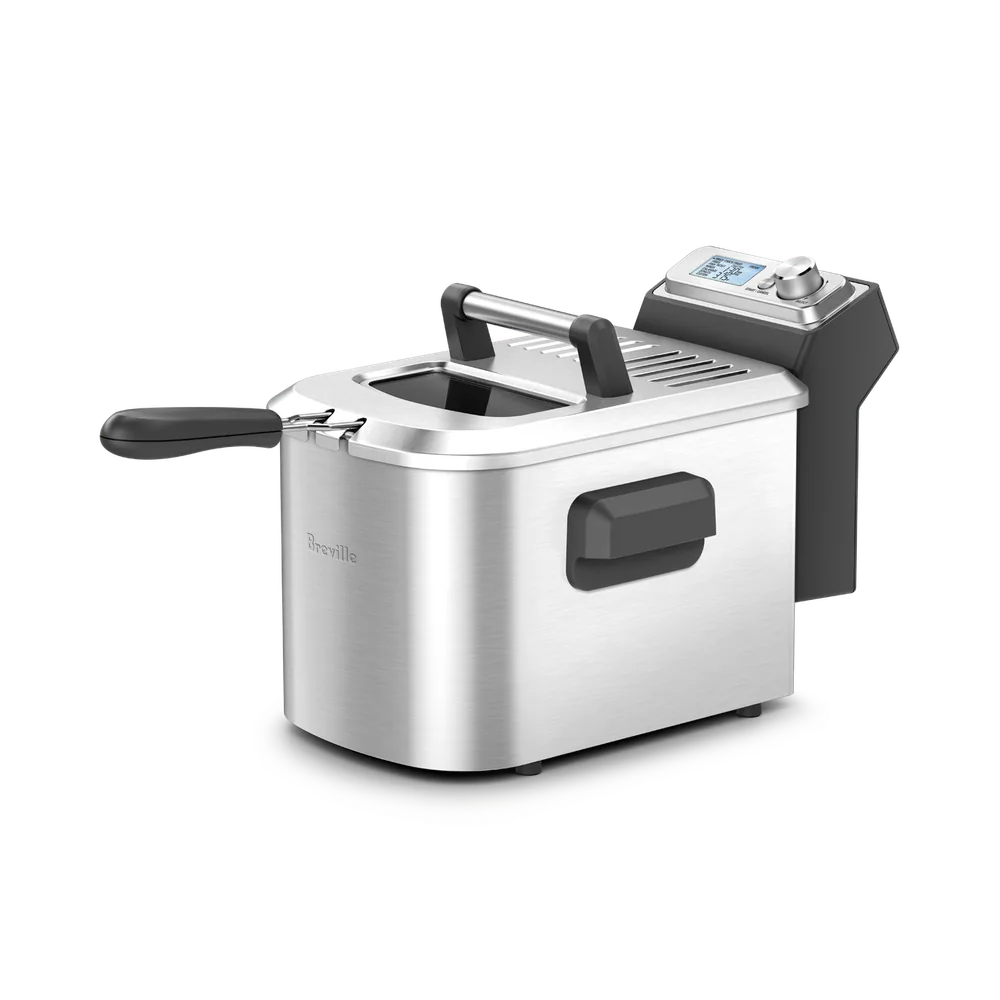
Breville BDF500XL Smart Fryer

Deep fryer size controls how well food stays crisp

Oil capacity is the amount of oil held in the reservoir, usually listed in quarts or liters. More oil gives cold food a larger reserve of heat when it enters the basket. That can help the oil return to its set temperature faster, a process called heat recovery. Better recovery matters when you cook frozen fries, wings, or several batches in a row because a prolonged temperature drop lets food absorb more oil before its surface crisps. Capacity alone does not make a fryer suitable for a large meal. The basket must leave room for oil to circulate around the food, and the heating system must keep up after loading. A wide basket with a modest oil reservoir may be better for a single layer of chicken tenders than a deeper, narrower basket with the same stated food capacity. Read food-capacity claims as an upper limit, then plan to cook less than that for more even browning.

One-person and couple households usually need manageable batches

For one person, a compact electric deep fryer can make sense when fried food is an occasional meal rather than a production. It can handle a serving of fries, a few frozen snacks, or a small portion of wings without requiring several quarts of oil. Smaller models also heat less oil, which can make setup and cooling more manageable. The tradeoff is that a compact basket is easy to overcrowd, especially with frozen food. For two people, look beyond a manufacturer's pound rating and picture the food in the basket. Two portions of fries may fit physically, but a packed basket can trap steam and pull the oil temperature down. Cooking two smaller batches often produces better results than forcing everything into one. A compact fryer works well for couples who do not mind batch cooking, while a standard countertop model is more convenient for people who regularly fry a main dish and a side in the same meal.

Family-size frying needs basket room as well as more oil

A household serving three to five people will usually benefit from a standard countertop fryer with a wider basket, more oil capacity, or both. The goal is not to fill the basket to the rim. It is to cook a practical amount of food without a sharp temperature drop. For example, a family batch of fries may need two rounds even in a larger fryer, but each round can brown more evenly and stay crisp longer when the basket is not crowded. Dual-basket fryers can help when two foods need separate cooking space. Keeping fish apart from fries avoids flavor transfer, and separate baskets can make it easier to remove one food before the other. They also take up more counter space and may require more oil overall. Consider whether you often cook two fried foods at once or simply need a larger single batch. A wide single basket may be the more useful layout for larger pieces such as chicken cutlets or long fish fillets.

Storage, oil handling, and cleanup set the practical size limit

Measure the place where the fryer will live before choosing a larger model. Include the lid, handles, cord, and clearance around the appliance for heat and steam during use. A fryer that fits under a cabinet may still need to be pulled forward while cooking. If it will be stored in a cabinet, account for its weight when full of removable parts and for the space needed to keep the basket, lid, and oil container together. Larger fryers use more oil, and that changes ownership more than many shoppers expect. Used oil should cool completely before it is filtered, stored, or disposed of according to local guidance. Do not pour it down a sink drain. Removable baskets and dishwasher-safe parts can reduce cleanup, but the reservoir, lid, splatter areas, and oil-handling process still need attention. An oil-filtration fryer can make frequent use less messy, but it is usually bulkier, so it suits a household with enough counter or cabinet space to support it.

What this guide helps you understand

Match a deep fryer to the batch size you can cook without crowding, then make sure its oil volume, footprint, and cleanup routine fit your household.

Measure the counter or storage space, including room around the fryer for cooking and cooling.
List the foods and portions you fry most often, then estimate whether they need one uncrowded batch or two.
Decide where cooled oil will be filtered, stored, and disposed of before choosing a larger oil capacity.

Technique notes

A larger basket does not mean every meal should be cooked in one load. Smaller batches usually recover heat faster and crisp more evenly.
If you fry only occasionally, a compact fryer may be easier to own because it uses less oil and takes less space, even if dinner requires a second batch.
Oil-filtration models can simplify used-oil handling for frequent frying, but their larger footprint may matter more than their convenience in a small kitchen.

Safety note: Keep the fryer attended, dry food thoroughly, remove loose ice or frost, and never overfill the oil or basket.

More from Deep Fryers

← Back to Deep Fryers