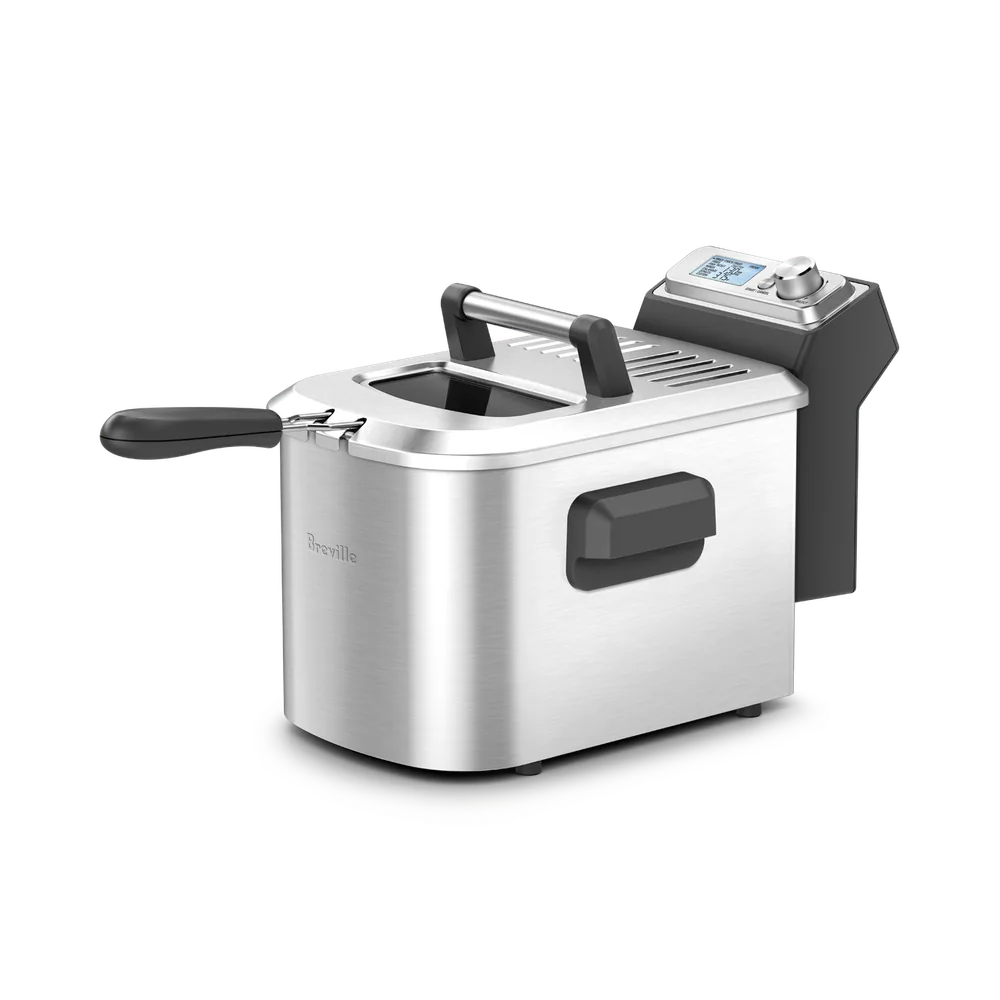
The easiest deep fryer to clean is one whose oil handling, removable parts, and splatter control fit the way you actually cook.
Reading time: 9 minutesBest for: Home cooks who want a fryer they will realistically maintain after regular use
Start With the Oil Reservoir
A removable oil reservoir is the cooking well that lifts out of the fryer body after the oil has cooled. It can make washing easier because you can carry the reservoir to the sink instead of reaching into a fixed housing. It also gives better access to the corners where crumbs and browned residue collect. Check whether the reservoir has a comfortable grip, a stable shape, and a size that fits your sink before treating removability as a major advantage.
A removable reservoir does not make used oil disappear. A full reservoir can be heavy and slippery, and pouring from a wide, shallow container can be messy. If you fry occasionally, you may prefer to cool the oil, strain it into a storage container, then wash the empty reservoir. If you fry often, consider whether the reservoir can be removed without drips crossing the counter or cabinet space where the fryer is stored.
Separate Dishwasher-Safe Parts From Hand-Wash Jobs
Baskets, handles, lids, and some reservoirs may be labeled dishwasher-safe. This is helpful for parts that collect grease and crumbs, especially a basket with many wire intersections. Still, dishwasher-safe does not mean every greasy part will emerge spotless. Thick oil residue may need a wipe or soak first, and food particles should be removed before they can bake onto other dishes during the wash cycle.
The fryer body, heating element area, controls, cord, and electrical connections generally need hand cleaning only. They should never be immersed unless the manufacturer specifically says otherwise. A practical design keeps these nonwashable areas accessible, with few narrow seams that trap oil. Before buying, picture cleaning the underside of the lid, the basket hooks, and the rim around the reservoir. Those small areas often determine whether cleanup feels quick or tedious.
Drain Systems Reduce Pouring, Not Cleaning
A drain valve or spout lets cooled oil leave the fryer through a controlled opening instead of requiring you to lift and tip the reservoir. This can be especially useful on larger fryers, where several quarts of oil are difficult to pour steadily. A covered drain, a secure valve, and enough clearance beneath the fryer for a container are more useful than a drain feature that is hard to reach or leaves oil trapped in the bottom.
Plan for the full draining process. You need a heat-safe container that fits under the outlet, a way to catch crumbs if you are saving the oil, and a place to set the container while it cools or is transferred. The valve and its surrounding area still need wiping, since oil can collect there. Never open a drain while the oil is hot, and do not assume a drain system makes it safe to move a fryer that still contains oil.
Lids and Filtration Help With Different Messes
A lid can limit airborne splatter when the fryer is not actively cooking and can cover the oil while it cools or is stored, if the instructions allow it. It does not make frying fully enclosed. Steam needs to escape, and closing a lid during cooking can affect condensation and splatter depending on the design. The lid itself also collects grease, particularly around vents, filters, hinges, and viewing windows.
Built-in filtration systems move cooled oil through a screen or filter before storing it in a separate container or returning it to the fryer. They reduce the mess of hand-pouring and remove many crumbs, which can help keep reusable oil cleaner. They do not remove every flavor, odor, or sign of oil breakdown. The filter, storage container, drain path, and reservoir still need cleaning, so choose filtration for easier oil management rather than expecting a maintenance-free fryer.
What this guide helps you understand
Choose cleanup features by tracing how you will cool, drain, store, wash, and reassemble the fryer after a normal cooking session.
Open the fryer design and confirm which parts are removable, which are dishwasher-safe, and how cooled oil leaves the reservoir.
Technique notes
Keep a dedicated, sealable container for cooled oil if you plan to reuse it, and wipe splatter from the fryer exterior before it becomes sticky residue.
Safety note: Let oil cool completely before draining, filtering, moving, or cleaning the fryer.