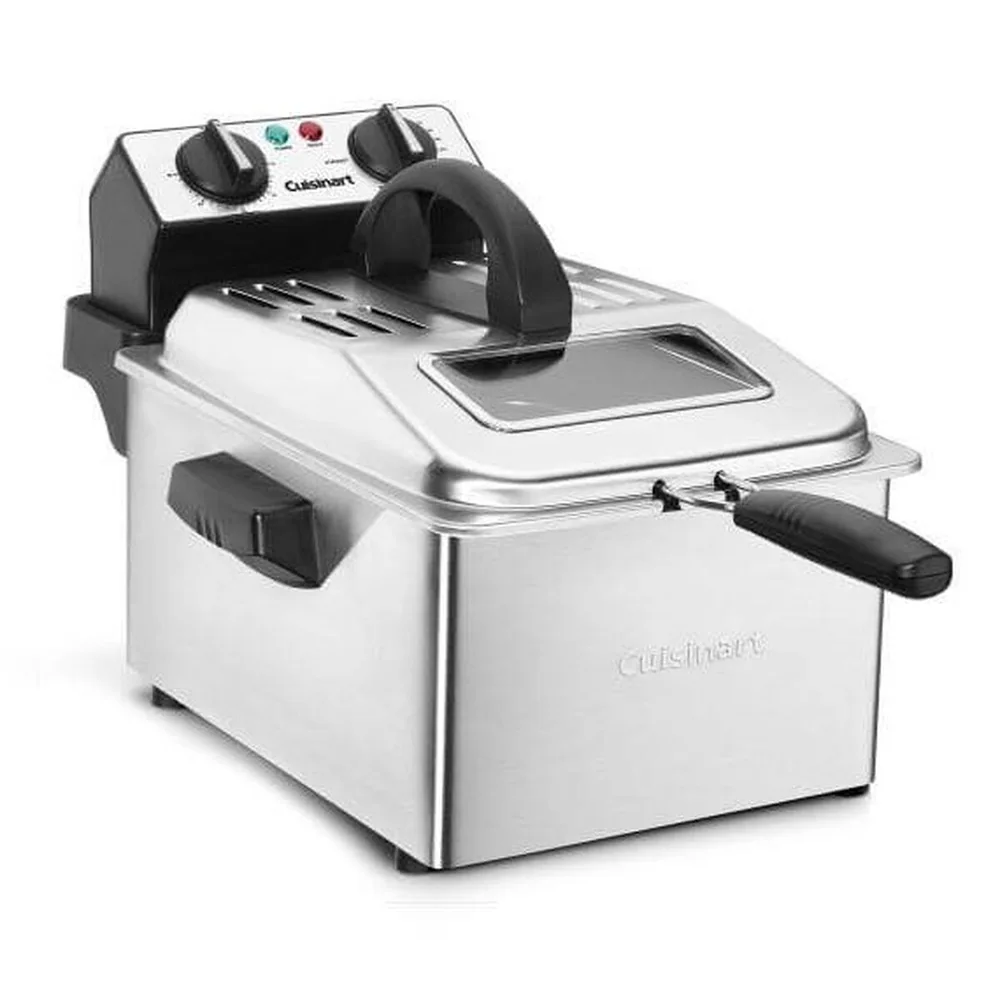
A deep fryer basket controls food spacing, oil circulation, draining, and handling, so its design matters as much as its stated capacity.
Reading time: 9 minutesBest for: Home cooks comparing fryer sizes, basket layouts, and batch-cooking needs
Basket Size Sets a Limit, Not a Batch Goal
Basket capacity is often listed in pounds, but that number does not tell you how crowded the food will be. Fries can settle densely, while wings, onion rings, and breaded chicken take up more space because their shapes leave gaps. The useful capacity is the amount you can spread in a loose layer or with enough room for oil to circulate, not the amount you can physically pile into the basket.
When cold or frozen food enters the oil, the oil temperature drops. A crowded basket causes a larger drop and slows recovery, which is how quickly the fryer returns to its selected temperature. Food may then absorb more oil before its surface crisps. Cook in smaller batches when needed, even if the basket looks underfilled. Better spacing usually produces more even browning and a crisper exterior than one overloaded batch.
Shape Changes What Fits Well
A wide, shallow basket gives more surface area, which is useful for foods that benefit from spacing, such as fries, nuggets, shrimp, and small breaded pieces. A narrow, deep basket may hold a similar volume but encourages stacking. Stacking is not always a problem for sturdy foods, but it can make pieces stick together and can prevent even contact with hot oil, especially when breading is still setting.
Consider the basket opening as well as its depth. Large chicken pieces or long foods may be awkward to lower through a small opening, even if the stated capacity sounds generous. Fine wire mesh helps contain small items, while wider openings may be easier to clean but less suitable for tiny pieces. If you often fry loose battered foods, check whether the basket design supports them without scraping off coating during loading and lifting.
Handles and Hooks Control the Draining Step
A basket handle should feel secure, stay cool enough to grip as intended, and lock firmly into its working position. A loose or poorly placed handle makes it harder to lower food gradually, which can increase splashing. Fold-down handles save storage space, but inspect how they lock and whether they create a comfortable grip when the basket is loaded. The basket should not tilt unexpectedly when lifted from the oil.
Many fryers include a hook that lets the basket rest above the oil after cooking. This is useful because excess oil can drain back into the reservoir instead of onto a plate or counter. The hook needs a stable contact point and enough clearance that food is not pressed against the lid or fryer wall. Let food drain briefly, then transfer it carefully. Leaving it suspended too long can soften crisp food as steam collects around it.
Dual Baskets Add Separation, With Tradeoffs
Dual-basket fryers may have two baskets in one oil reservoir or two fully separate oil wells. Two baskets in one reservoir help you cook foods with different timing, such as fries and nuggets, but both foods still share the same oil. Flavors, crumbs, and allergens can transfer through that oil. The combined food load can also lower the temperature quickly if both baskets are filled heavily at once.
Separate oil wells provide better separation for foods such as fish and fries, and they let you run different temperatures when the fryer supports independent controls. The tradeoff is more parts, more oil to buy, and more surfaces to clean. Smaller individual baskets can also limit the size of each batch. Choose a dual setup when simultaneous cooking or food separation is a regular need, not simply because two baskets sound more productive.
What this guide helps you understand
Choose a basket by the food you cook and the spacing it allows, then treat its stated capacity as an upper limit rather than a target.
Compare the basket's interior width, depth, handle lock, and drain hook with the size and shape of the foods you plan to fry most often.
Technique notes
Shake off loose ice and separate frozen pieces before loading so food does not clump together and force you to overcrowd the basket.
Safety note: Lower the basket slowly, keep food dry or free of excess frost, and never overfill it with food that could cause oil to bubble over.