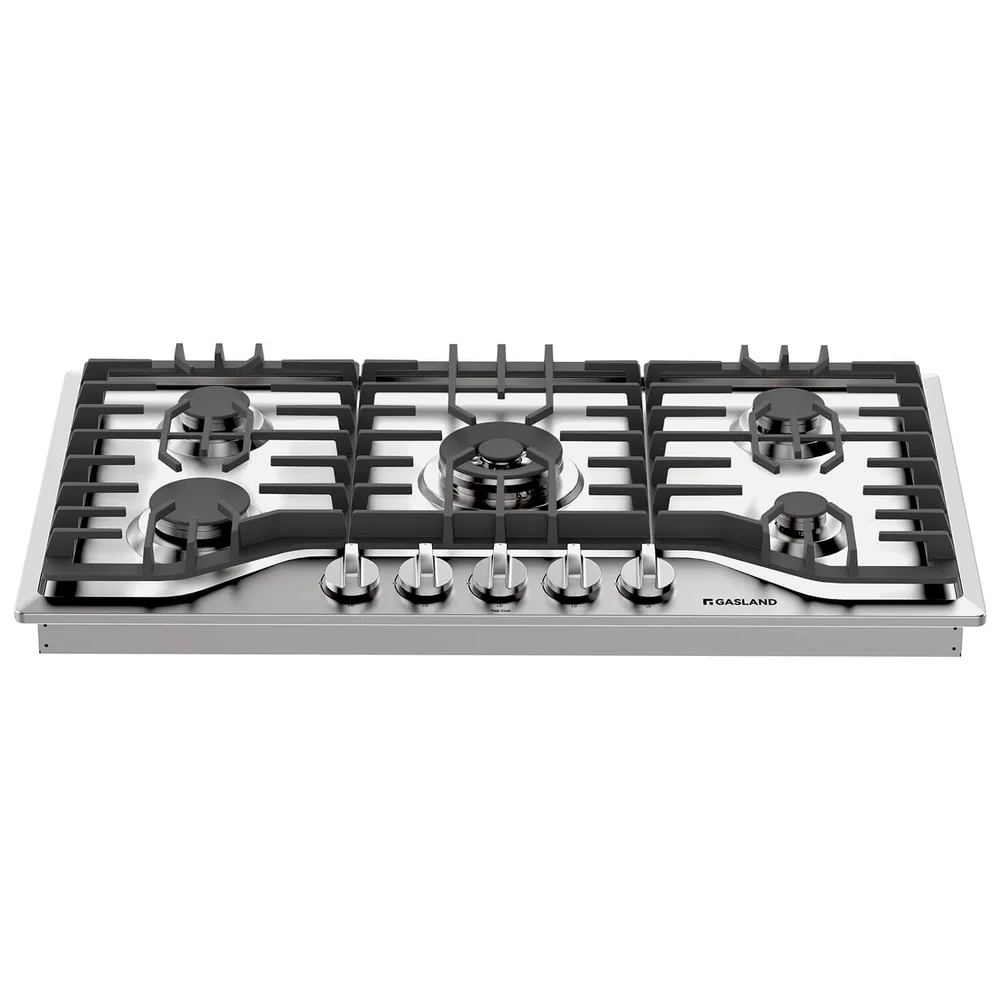
Power burners and simmer burners: how to read a cooktop's heat range
Published Updated
A cooktop's real performance comes from its usable high heat for boiling and searing and its stable low heat for simmering and melting.
Reading time: 9 minutesBest for: Shoppers comparing cooktops who want to understand what "power" and "simmer" mean in everyday cooking.
What "power" really means across gas, radiant, and induction
On gas cooktops, power is often described as burner output. Higher output can mean faster boiling and better wok-style cooking, but it also depends on burner design and how well the flame hits the bottom of your pan. A very powerful burner paired with a small pan can waste heat up the sides and make handles uncomfortably hot.
On electric radiant cooktops, power is about how quickly the element can heat the glass and transfer heat to the pan. Radiant can boil well, but it responds more slowly when you turn the heat down because the glass and element stay hot. On induction, power translates to fast energy transfer into the pan itself. Induction often feels "stronger" at the same stated power because less heat is lost to the surrounding air.
Why simmer performance matters more than most people expect
A simmer burner or low setting is about control, not just minimum output. You want a steady, gentle heat that does not cycle wildly between too hot and too cool. Cycling is when the cooktop turns heat on and off to maintain a setting. Some cycling is normal, but aggressive cycling can make a sauce bubble hard, then stop, then bubble again, which increases sticking and scorching.
Think about the foods you cook that punish poor low-end control: oatmeal, rice, custards, tomato sauce, and anything with sugar or dairy. If you often cook these, prioritize a cooktop that offers a truly usable low setting on at least one zone. For gas, also look for a burner that can hold a small flame without going out. For induction, look for low settings that stay stable without forcing you to use a double boiler.
How to read specs without getting trapped by marketing
A single "power burner" is only helpful if it is placed where you can use it with your largest pan. If the strongest burner is squeezed near the backsplash or next to another large burner, you may not be able to center a wide pot without crowding. Also pay attention to the size of the burner or element. A high number on a small zone can still struggle with a very large pan because the heat is concentrated in the middle.
Look for a spread of zone sizes and outputs, not just one headline number. A practical setup is: one high-power large zone for boiling and searing, one medium zone for everyday sautéing, and one low-control zone for simmering. If you cook with oversized cookware, a cooktop with two large zones can be more useful than one extreme "power" zone plus several small ones.
Matching heat range to your cookware and habits
Your cookware can limit the benefit of high power. Thin pans heat quickly but can develop hot spots and scorch at high settings. Thick, heavy pans handle high heat better but take longer to respond. On induction, cookware must be magnetic (a magnet should stick to the base) and reasonably flat. Warped pans can heat unevenly and may make induction noisier.
Make a quick inventory before you buy. Note your largest pot diameter, your most-used skillet size, and whether you often cook two large items at once. Then compare that to the cooktop's zone sizes and spacing. If you frequently simmer while searing, make sure the simmer-capable zone is not the one you will always need for your biggest pan. The best heat range is the one that fits your routine without forcing constant pan shuffling.
What this guide helps you understand
Choose a cooktop based on a balanced heat range and zone layout that supports both high-heat tasks and stable low-heat cooking you do every week.
List your three most common stovetop tasks (boil, sear, simmer) and confirm the cooktop has dedicated zones that can handle each without crowding your cookware.
Technique notes
If you cook with large pans, zone size and spacing often matter more than the single highest power claim on the spec sheet.
Safety note: High-output zones can overheat empty cookware quickly. Preheat responsibly and keep flammable items like towels and oil bottles away from the hottest area.