
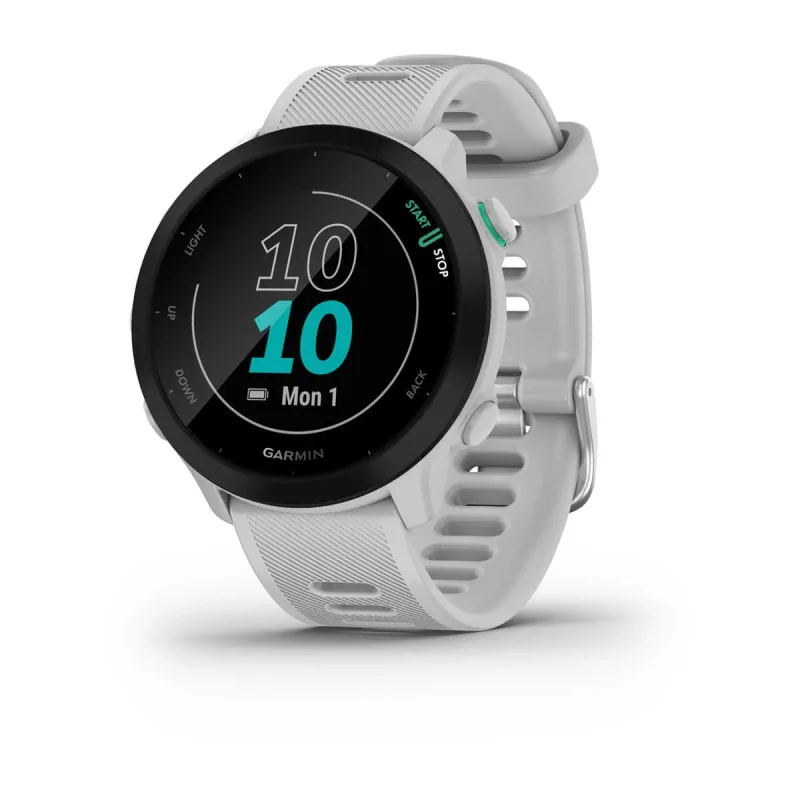
What to know first
- No touchscreen. You control it with buttons, which is great with sweat, rain, or gloves.
- Designed as an entry-level running watch: focused on runs and training basics, not apps.
- Built-in GPS so you can track outdoor runs without carrying your phone.
- A sensible step up from older budget Garmins, with improved battery life versus the model it replaced.
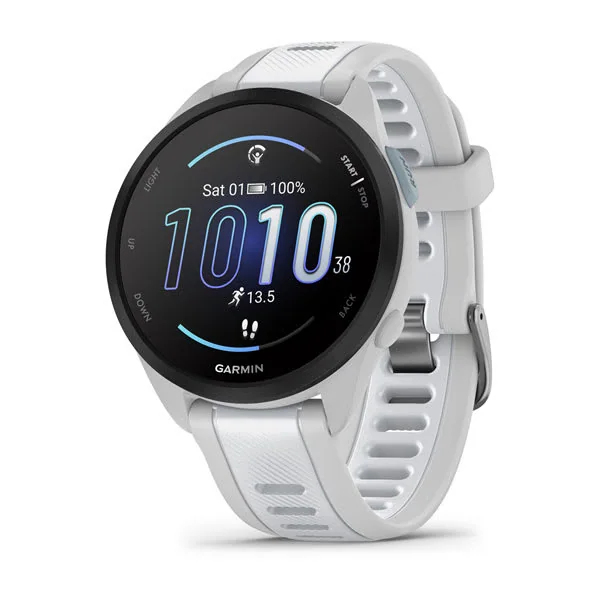
- If you want a more modern display and more features, Garmin Forerunner 165 is the cleaner upgrade path.
What the Garmin Forerunner 55 is
The Garmin Forerunner 55 is an entry-level GPS running watch. It’s meant for people who want to track outdoor runs with pace and distance, see their stats mid-run, and build consistency over time without getting buried in smartwatch features.
The headline design choice is that it’s not a touchscreen watch. You navigate with physical buttons, which is exactly what a lot of runners want when their hands are sweaty, it’s raining, or they’re trying to hit a lap button without looking.
Think of it as a dedicated running tool that happens to live on your wrist all day. It’s not trying to replace your phone. It’s trying to make running easier to start, easier to track, and easier to repeat.
Why it stands out
The Garmin Forerunner 55 stands out because it keeps the experience simple while still giving you the core reason to buy a running watch in the first place: GPS-based pace and distance without needing your phone. For a beginner, that’s the difference between guessing and actually knowing what your easy pace looks like.
The lack of a touchscreen is a feature, not a missing spec. Button control is more reliable during workouts, and it’s easier to build muscle memory for starting, stopping, and marking laps when you’re tired.
Battery life is part of the appeal, too. Compared with the older budget model it replaced, the Forerunner 55 is the better battery choice. In real life, that matters because a watch you don’t have to constantly think about charging is a watch you keep wearing, which is how you get useful trends over time.
If you like the Garmin training ecosystem but don’t want to pay for a more expensive, more smartwatch-like model, the Forerunner 55 is the clean entry point.
What it is like to own
Owning the Garmin Forerunner 55 is mostly about routine. You put it on, you start a run with a couple button presses, and you get your pace and distance tracked by GPS. Afterward, you have a record of the workout you can use to stay consistent and spot progress.
The button-only interface is the biggest day to day difference versus newer touchscreen watches. If you’ve ever tried to swipe a wet screen mid-run, you’ll appreciate how predictable buttons feel. It’s also a nice fit for people who don’t want to fiddle with settings during a workout.
Because it’s a running-first watch, it’s best when you treat it like a training tool rather than a lifestyle smartwatch. If your goal is to run more often, run more evenly, and understand your pace, it fits naturally into that workflow.
What to know before you buy
The Garmin Forerunner 55 is intentionally pared down. If you want a more modern smartwatch vibe, a touchscreen, and a bigger feature set, you’ll probably be happier moving up to the Garmin Forerunner 165.
Also keep your expectations realistic around common wearable claims. Calorie burn numbers are best used for comparing your own workouts over time, not as a precise daily budget. And if you’re buying any watch mainly for sleep stages or readiness-style scores, remember those are inferred from movement and heart rate patterns, not directly measured.
Finally, optical heart rate sensors depend a lot on fit. If the watch is loose or sliding around, readings can get noisy, especially during intervals or strength training. A snug, comfortable fit matters as much as the sensor itself.
The specs that matter
Buttons are easier to use when you’re sweaty, running in rain, or wearing gloves. You can start, stop, and mark laps without fighting a wet screen.
You can track outdoor pace and distance without carrying your phone. That’s the core upgrade from basic fitness trackers for runners.
Heart rate helps you keep easy runs easy and hard runs honest. Fit matters a lot, so wearing it snugly improves the usefulness of the data.
Less frequent charging makes it easier to wear consistently, which is how you get meaningful trends instead of random one-off workouts.
You’re paying for a simpler, more reliable running workflow, not for a full smartwatch app experience.
Who this product fits
You’re training for your first 5K and want to stop guessing your pace
The Garmin Forerunner 55 gives you GPS pace and distance on your wrist, so you can learn what an easy pace feels like and avoid going out too fast. It’s a practical way to build consistency week to week.
You run in bad weather and hate touchscreens
Because it’s button-controlled, you can operate the watch reliably in rain or with sweaty hands. That’s a small thing that makes a big difference when you’re trying to stay focused mid-run.
You want a dedicated running watch, not another distraction
The Forerunner 55 is built around training basics. It’s a better fit if you want your watch to support workouts and habits, not pull you into apps and endless settings.
What else to compare
If the Garmin Forerunner 55 isn’t the right fit, these are the cleaner pivots depending on what you want more of.
Garmin Forerunner 55 FAQ
Is the Garmin Forerunner 55 good for beginners?
Yes. It’s designed as a straightforward entry running watch, with a simple, button-based interface and built-in GPS for pace and distance. It’s a strong choice when you want the basics done reliably.
Does the Garmin Forerunner 55 have a touchscreen?
No. It uses physical buttons instead. For many runners, that’s a benefit because it’s easier to control during sweaty or rainy workouts.
Can I run without my phone with the Garmin Forerunner 55?
Yes. It has built-in GPS, so it can track outdoor runs without relying on your phone for location. You still may want your phone for music or calls, depending on your setup.
Should I buy the Garmin Forerunner 55 or Garmin Forerunner 165?
Choose the Garmin Forerunner 55 if you want a simpler, no-touchscreen running watch and you’re focused on building the habit. Choose the Garmin Forerunner 165 if you want a more modern smartwatch feel and extra features.
How accurate are calorie burn and recovery scores on watches like this?
Treat calorie burn as a trend tool, not a precise number. Recovery or readiness-style scores are also interpretations based on signals like sleep and heart rate trends, and they can be thrown off by stress, travel, illness, or a bad sensor night.
Should you buy the Garmin Forerunner 55?
Buy the Garmin Forerunner 55 if you want a dependable, beginner-friendly GPS running watch and you don’t want a touchscreen. It’s a practical tool for tracking pace and distance, staying consistent, and keeping your runs simple.
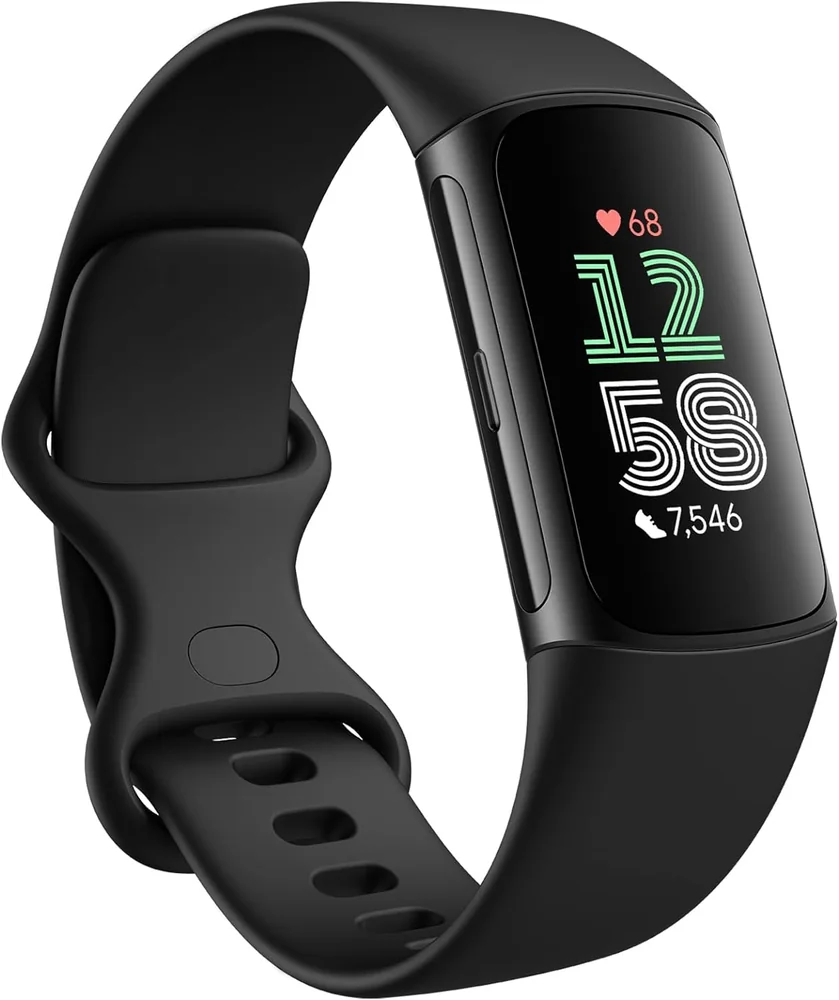
Skip it if what you really want is a modern smartwatch experience on your wrist. In that case, the Garmin Forerunner 165 is the more natural Garmin upgrade, and a slim tracker like the Fitbit Charge 6 can make more sense if you’d rather wear a band than a watch.