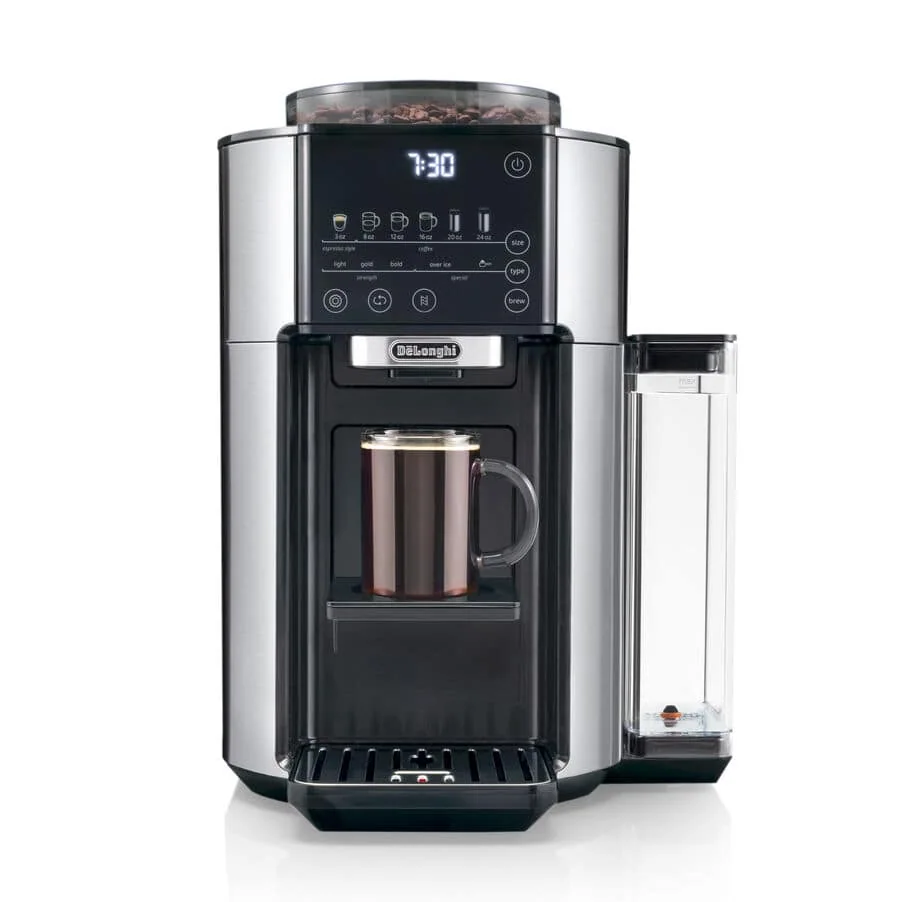
Learn what to clean after each brew, when to descale, and which neglected parts can affect flavor and machine reliability.
Reading time: 9 minutesBest for: Coffee drinkers who want cleaner-tasting brews and a manageable maintenance routine
Coffee oils versus mineral scale
Coffee oils are natural compounds released from roasted beans. They cling to brew baskets, carafes, lids, showerheads, and the inside of espresso parts. Over time, the residue can turn stale and leave a bitter or rancid note in fresh coffee. Fine grounds can also lodge in basket seams, carafe spouts, and grinder chutes, where a quick rinse may not reach them. Mineral scale is different. It is a hard deposit left by water, especially in areas with higher mineral content. Scale commonly forms inside water lines, heating chambers, and steam systems, so it may not be visible. Soap removes oils and coffee residue but does not reliably remove scale. A descaling solution is made to dissolve mineral deposits, while a coffee-equipment cleaner is better suited to oily buildup.
Daily and weekly cleaning
After brewing, discard the grounds and rinse the brew basket, filter holder, and carafe with warm water. Wash reusable filters thoroughly because their fine mesh holds oils and tiny particles. If the machine has a removable water tank, empty standing water when it will not be used for a while, then let the tank air-dry. Wipe spills from the warming plate only after it has cooled. Once a week, wash removable parts with mild dish soap and a nonabrasive sponge. Clean the carafe lid, pouring spout, and basket hinges, since these areas trap residue. For espresso machines, purge and wipe the steam wand immediately after every milk drink, then clean its removable tip as directed. Empty drip trays and used-ground containers before they overflow. Built-in grinders also need loose grounds brushed from the chute and surrounding compartment.
Descaling intervals
Descaling frequency depends mostly on water hardness, which describes how much dissolved mineral is in the water. A machine used daily with mineral-heavy water will usually need attention sooner than one used occasionally with softer water. Follow the brewer's maintenance alert if it has one, but do not assume an alert replaces observation. Slower brewing, reduced water flow, unusual noise, or a machine that runs longer than normal can point to scale. Use the descaling method specified for the machine, particularly for espresso makers and brewers with internal grinders or milk systems. Run the full descaling cycle, then complete every required rinse cycle with fresh water. Skipping the rinse can leave a cleaning taste in the next pot. Avoid improvising with harsh household cleaners, which can damage seals or leave residue. If your water is very mineral-heavy, filtered water may reduce buildup, though it does not eliminate routine descaling.
Parts that are easy to overlook
The visible carafe and brew basket are only part of the cleaning job. Check the showerhead, the piece that distributes water over the grounds, for stuck grounds or oily film. On drip machines, inspect the valve beneath the brew basket and the carafe lid, where coffee can dry into narrow channels. A soft brush or damp cloth can reach these areas without scratching them. For machines with grinders, clean the bean hopper, lid, and ground-coffee path according to the instructions for that design. Old grounds absorb moisture and can become compacted, affecting dose size and flavor. On espresso machines, do not overlook the portafilter basket, group area where the portafilter locks in, drip tray grate, and steam-wand tip. Let all hot parts cool before handling them, and never immerse the main machine body or electrical base in water.
What this guide helps you understand
Choose a cleaning routine that removes coffee residue often and mineral scale before it affects brewing performance.
Rinse the brew basket, reusable filter, and carafe after each use, then check the machine instructions for its approved descaling process.
Technique notes
A removable tank, wide carafe opening, accessible brew basket, and easy-to-empty drip tray can make regular cleaning far more likely to happen.
Safety note: Unplug the coffee maker and allow hot surfaces to cool before wiping the warming plate, steam wand, or other heated parts.