Understand how water temperature, grind size, and brew time shape the taste of coffee.
Reading time: 9 minutesBest for: Coffee drinkers who want to understand why a brew tastes weak, sour, bitter, or inconsistent
What hot water extracts
Ground coffee contains many soluble compounds, meaning compounds that can dissolve into water. Early in brewing, water tends to pull out bright acids and some aromatic flavors. As brewing continues, it extracts more sweetness, body, and bitter compounds. The goal is not to remove everything from the grounds. It is to remove enough of the desirable material in a balanced proportion before unpleasant flavors dominate.
Water that is too cool may not extract enough from the grounds, especially in a fast drip brew. The cup can taste weak, sour, salty, or hollow. Excessive heat or too much contact can contribute to over-extraction, which often tastes bitter, dry, harsh, or woody. These descriptions are useful clues, not fixed rules. A dark roast, for example, can taste more bitter by nature, while a light roast may show more acidity even when brewed well.
Why stability matters
A coffee maker needs more than a high temperature claim. It needs to deliver water at a reasonably steady temperature throughout the brew cycle. If water starts hot and then cools too much, or if it reaches the coffee unevenly, some grounds may be extracted more than others. That can produce a cup that tastes both weak and bitter, because different parts of the coffee bed did not receive the same brewing conditions.
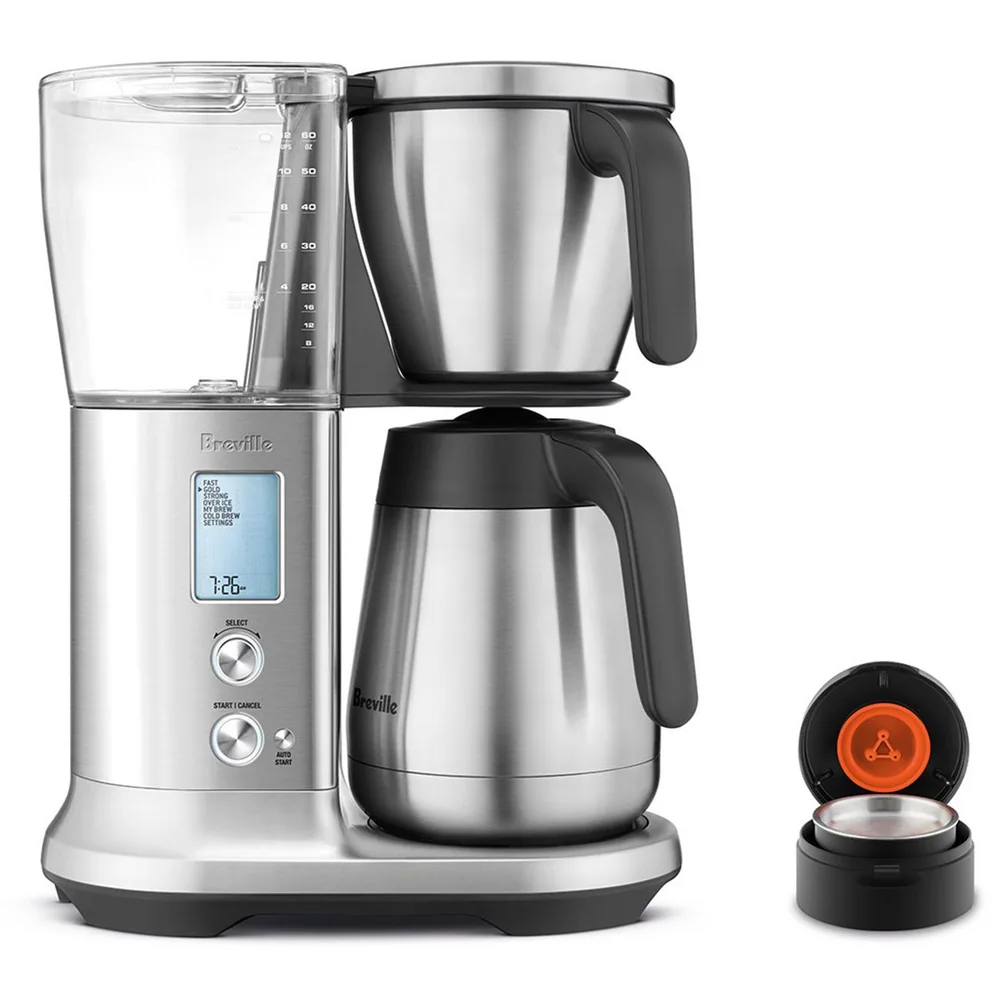
The showerhead, which is the part that distributes water over the grounds, also affects consistency. Water should wet the coffee bed broadly rather than drilling a narrow channel through one spot. A machine can advertise a precise temperature number and still make uneven coffee if water distribution or flow is poor. For everyday buying, prioritize a brewer with a sensible basket design, a stable brew cycle, and a small-batch option if you often make only one or two cups.
How grind and time interact
Grind size changes the surface area exposed to water. Finer grounds have more exposed surface and extract faster. Coarser grounds have less exposed surface and extract more slowly. Drip coffee usually uses a medium grind because water passes through the basket at a moderate pace. Espresso uses a much finer grind because water contacts the coffee for a short time. Using the wrong grind can make a capable machine brew poorly.
Brew time works with grind size. If a drip brew tastes sour or thin, a slightly finer grind can help water extract more, provided the basket does not overflow or drain too slowly. If it tastes harsh and bitter, a slightly coarser grind may help. Change one thing at a time, then taste again. Also check the coffee-to-water ratio before blaming temperature. Too little coffee can taste watery even when extraction is otherwise balanced, while too much coffee can taste heavy and intense.
When temperature controls help
Adjustable temperature controls can be useful when you regularly brew different roast levels or want to fine-tune a machine that already produces consistent results. Lighter roasts can sometimes benefit from brewing conditions that encourage fuller extraction, while darker roasts may taste better when the brew avoids pulling too much bitterness. The control is most useful when it is paired with repeatable water flow, a suitable grind, and a clear way to make small adjustments.
Do not buy a coffee maker solely for a temperature setting. A machine with stable basic brewing and easy cleanup is often more useful than one with many controls you never touch. Start with fresh coffee, clean equipment, an appropriate grind, and a consistent coffee-to-water ratio. If the cup still needs adjustment, then use temperature, grind, or brew strength settings carefully. Keep notes on what changed so you can repeat a good result instead of guessing each morning.
What this guide helps you understand
Use temperature as one part of a brewing system, then adjust grind, dose, and brew time methodically to improve taste.
If your coffee tastes off, first clean the machine and confirm the grind and coffee-to-water ratio before changing several settings at once.
Technique notes
Mineral buildup can interfere with water flow and heating. Follow the machine's cleaning instructions and descale when the brewer indicates it is needed or performance changes.
Safety note: Hot water, steam, and freshly brewed coffee can cause burns. Do not open brew components or move a full carafe during an active brew cycle.