Learn how thermal and glass carafes affect heat retention, flavor, cleanup, and your morning routine.
Reading time: 9 minutesBest for: Households deciding between a thermal-carafe and glass-carafe drip coffee maker
How each carafe keeps coffee hot
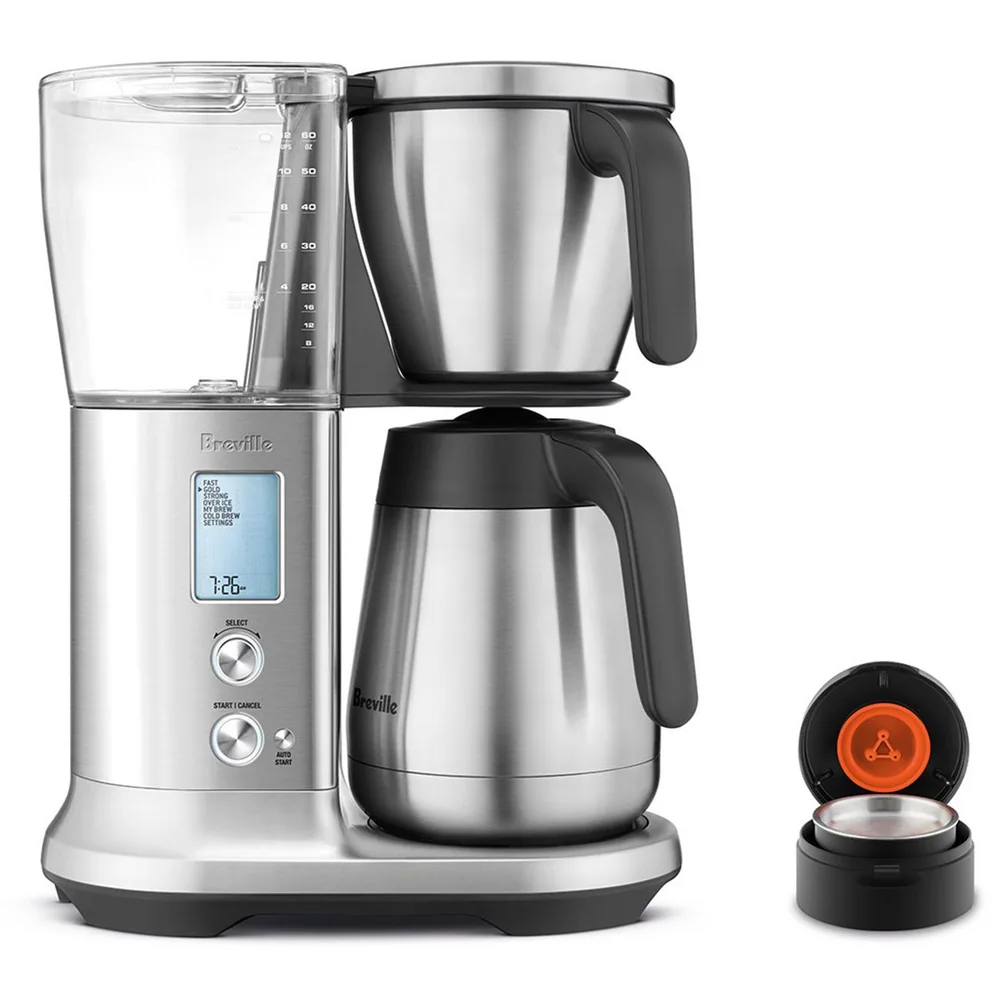
A thermal carafe is insulated, often with double walls, so it slows heat loss without needing a warming plate. Once the coffee is brewed, the carafe is usually removed from the machine and keeps the pot warm on its own. This approach avoids continued direct heating. It is especially useful when people pour coffee over a long breakfast, carry the carafe to another room, or do not want the brewer occupying counter space with a hot plate running.
A glass carafe relies on a warming plate beneath it. The plate keeps supplying heat after brewing, which can make a fresh pot feel hotter for a period of time. It also lets you see the coffee level immediately. The downside is that coffee remains in contact with heat after extraction is finished. If the pot sits for a long time, the flavor can become flatter, harsher, or more bitter than it was when freshly brewed.
Flavor after an hour
Coffee changes as it sits no matter which carafe you choose. Aromatic compounds escape, and the drink gradually loses some of its fresh smell and complexity. A thermal carafe generally slows the flavor damage caused by extra heat because it holds warmth rather than repeatedly heating the coffee. For people who make one pot and return for a second or third cup later, this is often the more forgiving setup.
A glass carafe can still work well when the pot is consumed soon after brewing. If your household pours most of it within a short breakfast window, the convenience of a visible carafe may outweigh the flavor difference. Avoid treating a warming plate as a storage method for all morning. Brew a smaller amount when possible, or transfer leftover coffee to an insulated container if you want to keep it for later without leaving it on heat.
Cleaning and visibility
Glass carafes are easy to inspect because you can see coffee residue, water spots, and the fill level through the sides. Their wide openings are often easier to reach with a brush or sponge. They can be fragile, however, and a replacement may be necessary after a drop or thermal shock. Let a hot carafe cool before rinsing it with cold water, since sudden temperature changes can stress glass.
Thermal carafes are more durable against ordinary bumps, but their opaque metal walls hide residue and make it harder to judge how much coffee remains. Many have narrower openings, which can make hand cleaning awkward. Use a long bottle brush and clean the lid carefully, since coffee oils can collect in pour spouts, seals, and moving lid parts. Rinse promptly after use rather than letting old coffee dry inside, where it can leave odors and stains.
Which one fits your morning
Choose a thermal carafe when coffee is brewed once and poured over time, when you dislike the taste of coffee held on a hot plate, or when you want to move the pot away from the machine. It is also a sensible choice for busy homes where the last person may pour coffee well after the first. Before buying, check that the lid is easy to remove, the carafe pours cleanly, and the opening is wide enough for the cleaning tools you already own.
Choose a glass carafe when you value quick visual checks, usually finish the pot soon after brewing, and prefer a straightforward container that is easy to inspect. It can also suit people who like to see exactly how much coffee remains before deciding whether to brew another batch. Look for a machine with a sensible warming-plate shutoff and a carafe handle that feels secure. A poorly designed pour spout or lid can create drips every morning.
What this guide helps you understand
Pick a thermal carafe for better holding quality over time, or a glass carafe for visibility and short-term serving convenience.
Think about when the last cup from a typical pot is poured, not just when the first cup is ready.
Technique notes
Wash the carafe lid as carefully as the carafe itself. Hidden coffee oils in lid channels can affect the smell and taste of later brews.
Safety note: Glass carafes and warming plates become hot during use. Handle the carafe by its handle and allow it to cool before washing.