Coffee grinders for pour over: clarity, flow, and fine control
Published
Pour over tastes cleaner and more repeatable when your grinder limits fines, offers predictable adjustments, and keeps retention and static from sabotaging your recipe.
Reading time: 9 minutesBest for: Home brewers making V60, Kalita, Chemex, or other pour over who want clearer flavor and steadier drawdown times
How fines change drawdown and flavor
In pour over, grind size controls two things at once: how fast water moves and how much coffee dissolves into the cup. Fines are the troublemakers because they pack tightly, clog filter pores, and create slow zones where water lingers. That can turn a recipe that should finish clean into one that drips forever, tastes bitter, and feels drying. You can also get the opposite problem: a mix of boulders and dust where water channels around larger pieces while fines over extract, giving a confusing cup that is both sour and harsh. A consistent grinder reduces that spread. Burr grinders (two shaped surfaces that crush beans to a set gap) generally produce a narrower range of particles than blade grinders, which chop randomly. For pour over, you are not chasing espresso level precision, but you do need a grinder that does not flood the bed with dust at medium settings. If your brews swing wildly when you change nothing but the day, inconsistent grind and fines are often the reason.
Adjustment control that actually helps you dial in
Pour over dialing in is usually small moves. If your brew tastes sharp and finishes fast, you go a bit finer. If it tastes bitter or drawdown drags, you go a bit coarser. That only works when the grinder’s adjustment steps are small enough to land between -too fast- and -too slow.- Big clicks can force you to choose between two bad options, then you start compensating with water temperature, pouring style, or extra agitation, which makes the process harder to repeat. Pay attention to how the grinder adjusts and how easy it is to return to a setting. Some grinders use numbered collars, some use clicks, some use stepless dials. The best style is the one you can set consistently without guessing. If you switch between beans often, you also want a grinder that does not drift when you tighten or loosen the adjustment. A stable adjustment mechanism saves you from re-learning your recipe every time you clean or change coffees.
Retention, single dosing, and why yesterday’s grounds show up today
Retention is the amount of ground coffee that stays inside the grinder after you finish grinding. In pour over, even a small amount can matter because the cup is transparent. Stale grounds trapped in the chute or burr chamber can mix into your next dose and flatten aroma. Retention also makes dialing in confusing: you change the setting, but part of what lands in the brewer is still from the previous grind size. Think about dosing style. Hopper grinding means you store beans in the grinder and grind what you need. It is convenient, but beans age faster when exposed to air and light, and retention tends to be less obvious because you are always grinding. Single dosing means you weigh beans for each brew and grind that amount. It helps freshness and makes switching coffees easier, but it can be messier and sometimes requires a quick tap or bellows style puff to clear the chute. Choose the workflow you will actually stick with on a weekday morning.
Static, mess, and the small habits that keep results consistent
Static is the cling that makes grounds stick to the exit chute, dosing cup, and counter, especially in dry air. Static is not just annoying. It changes how much coffee makes it into the brewer, which changes strength and extraction. If you weigh beans in but do not weigh grounds out, static can quietly turn a 20 gram dose into 19 grams in the filter and 1 gram on the counter. That is enough to make a recipe taste -off- even when your grind setting is right. Look for practical mess control: a well-shaped chute, a dosing cup that fits closely, and easy access for brushing. Many people also use a tiny drop of water on the beans before grinding (often called the Ross Droplet Technique) to reduce static. The point is not to make grinding perfect. It is to make it predictable. If cleanup is miserable, you will rush, skip weighing, and stop adjusting carefully, which is how pour over results drift over time.
What this guide helps you understand
Choose a grinder that keeps fines under control and gives you small, repeatable adjustments so your pour over drawdown and flavor stay predictable.
Check that the grinder’s adjustment steps are fine enough that you can make small changes without overshooting your target drawdown time.
Products that fit this category guide
As an Amazon Associate I earn from qualifying purchases.
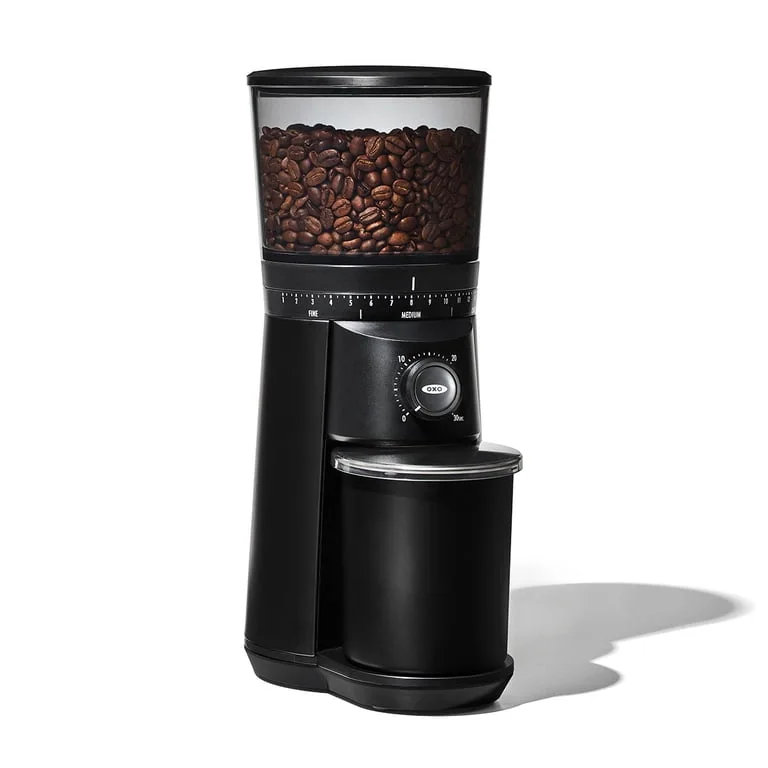
OXO Brew Conical Burr Coffee Grinder fits most home coffee drinkers who want a dependable burr grinder for daily drip, pour-over, and French press without overthinking it.
If your brews taste inconsistent, weigh grounds out (not just beans in) for a week to see whether retention and static are changing your real dose.
Safety note: Unplug electric grinders before cleaning inside the burr area, and keep fingers and tools away from the burrs when the grinder is connected to power.