
What to know first
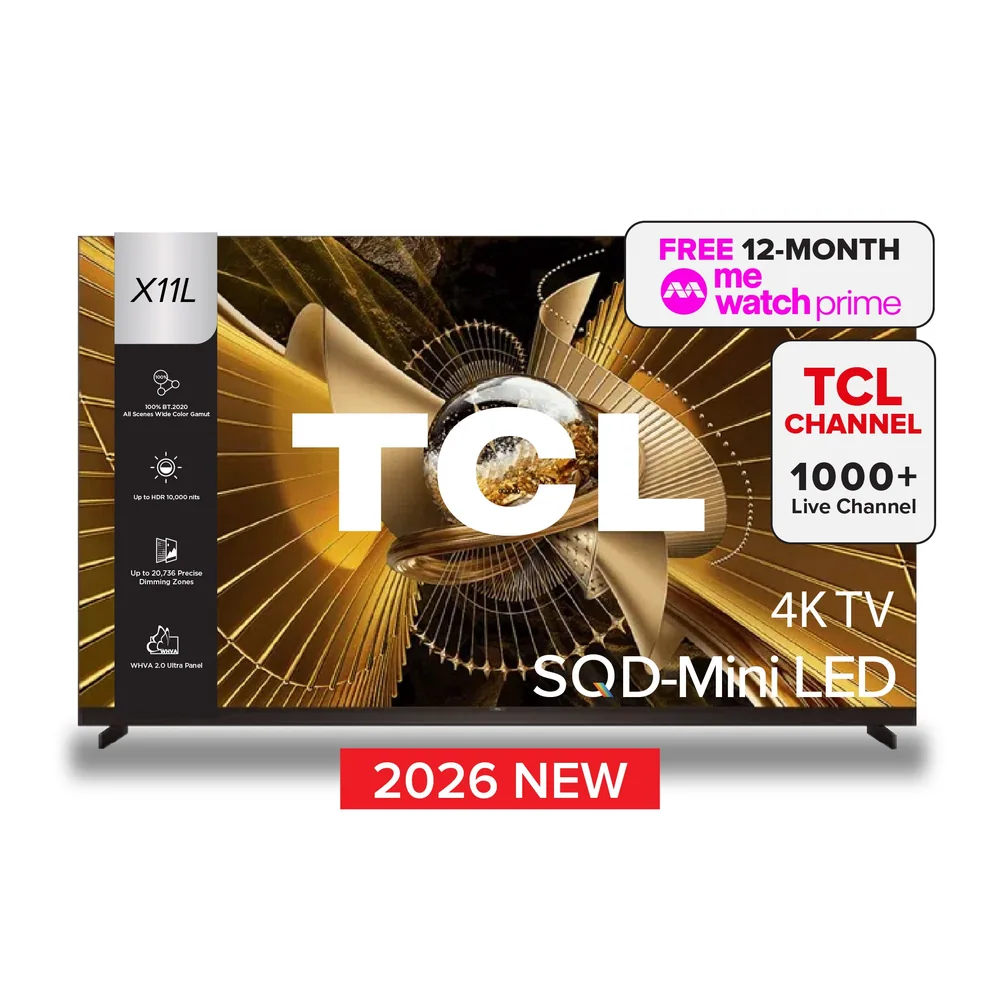
- Dimming zone count and peak brightness scale up with screen size: 75-inch gets 11,520 zones and 9,000 nits, 85-inch and 98-inch get 14,400 zones and 10,000 nits
- Uses TCL's SQD-Mini LED backlight with a WHVA 2.0 Ultra Panel for wide color and contrast
- Runs Google TV with TCL's AiPQ processor handling scene-by-scene picture processing
- Audio is tuned in partnership with Bang & Olufsen rather than relying on generic built-in speakers
- Only available in 75-, 85-, and 98-inch sizes, so it's a large-room TV by design
- Announced in January 2025 as part of TCL's current Mini-LED lineup, with no successor announced yet
TCL's answer to the very-big, very-bright TV question
The X11L sits at the top end of TCL's Mini-LED range, built for buyers who've already decided they want a screen no smaller than 75 inches and are willing to pay for brightness and contrast control that smaller sets can't offer. TCL calls the backlight architecture SQD-Mini LED, a step up from the QD-Mini LED tech used in some of its other current lines, paired with a newer WHVA 2.0 Ultra Panel meant to widen color gamut and cut down on glare.
It isn't trying to be a value pick. TCL sells cheaper Mini-LED and QLED sets elsewhere in its 2026 lineup for buyers who don't need this much backlight precision. The X11L exists for the shopper who wants a Mini-LED TV with a genuinely high zone count and a peak brightness figure that can compete with far pricier flagship sets from other brands, in a size large enough to anchor a real home theater setup.
Google TV runs the software side, which means the interface, voice search, and app ecosystem will feel familiar to anyone who's used a Chromecast, a Google TV streaming box, or another Google TV set. That's a practical plus for households already invested in Google's ecosystem, since profiles, watchlists, and recommendations carry over rather than starting from scratch.
The dimming zone math that actually matters
Dimming zones are the reason Mini-LED TVs can compete with OLED on contrast without the burn-in risk. Each zone is a small cluster of LEDs that can dim or brighten independently, so a scene with a bright window and a dark room can show both correctly instead of one washing out the other. TCL's official numbers put the X11L's zone count at 11,520 on the 75-inch model and 14,400 on the 85-inch and 98-inch models, a real jump that reflects the fact that a bigger panel needs more zones to maintain the same precision per square inch.
Peak brightness follows the same pattern: 9,000 nits on the 75-inch, 10,000 nits on the larger two sizes. For context, most premium TVs in this category top out well below that, and 10,000 nits is far beyond what most streaming content is even mastered to display. The practical benefit shows up in specular highlights, the glint off a car hood or a lit window in an HDR movie, rather than in everyday brightness for casual viewing.
The WHVA 2.0 Ultra Panel adds a nanoscale color filter and a butterfly-wing microstructure in the liquid crystal layer, which TCL says boosts native contrast and cuts reflections. Combined with the higher zone counts, the picture on the 85-inch and 98-inch models should hold up better in scenes with extreme contrast, like a night sky with a single bright moon, than most Mini-LED competitors that use fewer, coarser zones.
Audio tuning by Bang & Olufsen is worth flagging separately from the picture story. Built-in TV speakers are almost always the weakest link in a home theater setup, and a name-brand tuning partnership at least suggests TCL put real engineering time into the sound rather than treating it as an afterthought behind the panel.
Living with a 75-to-98-inch centerpiece
Setting expectations on size matters here more than with most TVs. This isn't a set you slot into a small bedroom or a secondary room. TCL's own package dimensions list the panel at roughly 72.8 by 44.3 by 6.5 inches for shipping, and the TV itself weighs about 89.3 pounds with its stand, so wall mounting or a sturdy media console built for a screen this large is worth planning before delivery, not after.
Day to day, Google TV's interface handles the app switching, and TCL's AiPQ processor adjusts picture settings scene by scene, which should mean less manual fiddling with picture modes than older TCL sets required. Out of the box, expect the default picture mode to lean bright and punchy rather than accurate, which is standard for TVs on a showroom floor; most buyers will want to switch to a calibrated or filmmaker-style mode once it's installed at home.
The X11L's HDR peak brightness is the kind of number that photographs well in a showroom but plays out more quietly at home, since most streaming content isn't mastered anywhere near 10,000 nits. Where it earns its keep is in mixed-lighting rooms during the day, where the higher sustained brightness keeps HDR content watchable even with some ambient light in the room.
The 75-inch buyer's asterisk
The single biggest thing to get right before buying is understanding that the flashiest numbers, the 20,736 zones and 10,000 nits quoted in TCL's marketing copy, describe the top configuration, not every size in the line. Someone buying the 75-inch model is getting 11,520 zones and 9,000 nits, still strong figures for the category, but noticeably below what the larger sizes offer. Read the spec sheet for your exact size before comparing this TV against competitors.
Warranty coverage is another detail to confirm locally rather than assume. Listings for this TV in different markets have quoted different warranty lengths, so it's worth checking the specific terms offered by the retailer or region you're buying from rather than relying on a number seen elsewhere.
There's no size below 75 inches in this series, which rules it out immediately for anyone shopping for a bedroom or a secondary television. TCL sells other Mini-LED and QLED lines at smaller sizes for that use case; the X11L is built specifically for the living room or dedicated theater setup where a screen this large makes sense.
The specs that matter
This is TCL's most advanced current Mini-LED backlight and panel combination, aimed at maximizing contrast and color accuracy over cheaper QD-Mini LED models in its own lineup.
More zones let the TV dim small sections of the screen independently, which keeps dark scenes deep and bright highlights punchy without blooming into surrounding areas.
The larger panels get a real step up in zone density over the 75-inch, which should show up as tighter contrast control especially with high-motion or high-contrast HDR content.
Higher peak brightness helps HDR highlights stand out and keeps the picture watchable in rooms with daytime light, though most content never demands anywhere near this ceiling.
Familiar interface and app ecosystem for anyone already using Google TV or Chromecast devices, with shared profiles and recommendations.
Built-in speakers are usually the weak point on large TVs, so a dedicated audio tuning partnership matters if you're not planning to add a soundbar.
This line starts big and stays big, so it only fits shoppers with the wall space or room layout for a screen this size.
Worth confirming your console or wall mount can handle this before delivery, since a TV this size and weight isn't a two-minute unboxing job.
Who this product fits
Building a dedicated home theater room
The 85-inch or 98-inch X11L makes the most sense here, where the higher 14,400-zone count and 10,000-nit brightness rating get to do real work on a large screen with controlled lighting. Pair it with a dark or dim room and the contrast advantage over lower zone-count TVs should be genuinely visible.
Replacing an aging TV in a bright living room
Daytime glare kills contrast on most TVs, but the X11L's higher sustained brightness keeps HDR content from looking flat even with some ambient light coming through windows. Any of the three sizes will help here, though the 75-inch gives up some peak brightness compared to its bigger siblings.
Deciding between the 75-inch and 85-inch model
The size jump isn't the only difference. The 85-inch and 98-inch models get meaningfully more dimming zones (14,400 versus 11,520) and higher peak brightness (10,000 nits versus 9,000), so the step up buys picture quality gains on top of the larger screen.
What else to compare
Shoppers who don't need a 75-inch-or-larger screen should look at TCL's smaller QD-Mini LED and QLED lines instead.
TCL X11L SQD Mini‑LED 4K TV FAQ
What does SQD-Mini LED mean on the TCL X11L?
It's TCL's designation for its higher-end Mini-LED backlight combined with a quantum dot color layer, distinct from the QD-Mini LED tech used on some of TCL's other current TVs. It's paired here with a newer WHVA 2.0 Ultra Panel aimed at wider color and better contrast.
Does the TCL X11L come in smaller sizes than 75 inches?
No. TCL currently sells the X11L only in 75-, 85-, and 98-inch sizes, so it's built for large rooms or dedicated theater setups rather than bedrooms or secondary TVs.
Is the 10,000-nit brightness figure the same across all sizes?
No. TCL's own specifications list 9,000 nits peak brightness for the 75-inch model, rising to 10,000 nits on the 85-inch and 98-inch versions. Check the exact size you're buying rather than assuming the top figure applies to all of them.
Does the TCL X11L run Google TV or TCL's own software?
It runs Google TV, which gives it the standard Google TV interface, app store, and voice assistant integration rather than a proprietary TCL-only platform.
How many dimming zones does the TCL X11L have?
It varies by size: TCL lists up to 11,520 zones on the 75-inch model and up to 14,400 zones on the 85-inch and 98-inch models. The commonly quoted 20,736 figure represents the top configuration in TCL's broader Mini-LED lineup, not a number every X11L size ships with.
Should you buy the TCL X11L?
Anyone shopping for a large-screen Mini-LED TV with genuine contrast and brightness headroom has a real reason to consider the X11L, provided they buy it for the right size. The 85-inch and 98-inch versions carry the strongest specs TCL offers in this family, with 14,400 dimming zones and 10,000-nit peak brightness backing up a wide-gamut panel and Bang & Olufsen-tuned sound.
The 75-inch model is still a capable TV, just a step down from its larger siblings in the two numbers that matter most for HDR performance. Buy this TV because you want a big, bright, contrast-rich centerpiece for a living room or theater setup, not because a headline spec sheet number promised more than the size you're actually purchasing delivers.