
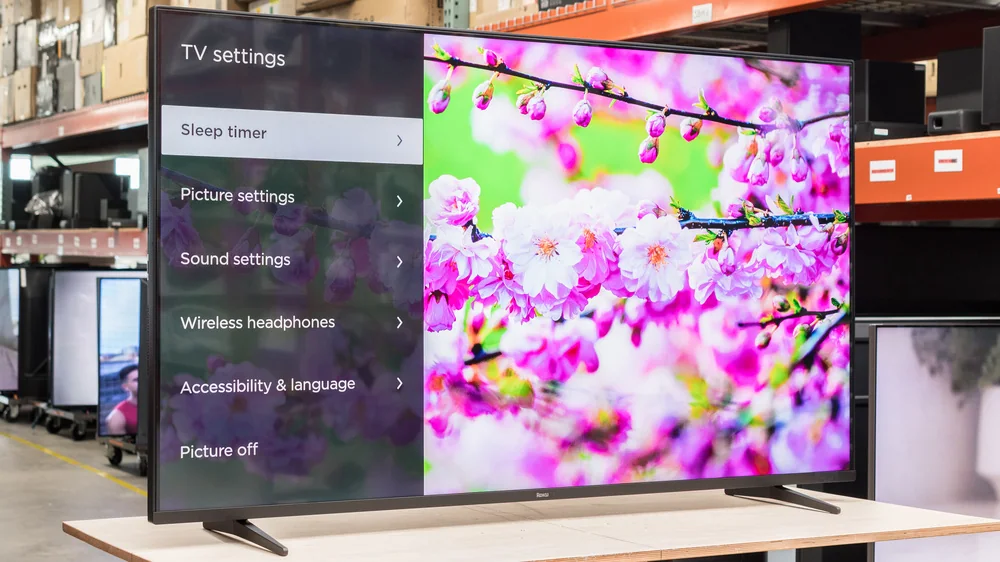
What to know first
- 4K OLED panel with 120Hz refresh rate, available in 55-inch and 65-inch sizes
- Runs Roku OS, the same simple interface used across Roku's cheaper TVs and streaming sticks
- VESA mounting is 300mm x 200mm on the 55-inch and 400mm x 200mm on the 65-inch
- Roku's official wall mount kit weighs roughly 6.5 to 6.7 pounds depending on size
- Positioned above Roku's Select and Plus Series as the company's flagship model
Where the Pro Series sits in Roku's lineup
Roku sells three tiers of its own TVs now: Select Series, Plus Series, and Pro Series, and the naming isn't just marketing dressing. The Select Series is the budget 4K line running 43 to 85 inches. The Plus Series moves up to Mini-LED backlighting in 55 to 75 inches. The Pro Series sits above both as Roku's only 4K OLED option, capped at 55 and 65 inches with a 120Hz panel.
That size ceiling is worth noting before you fall in love with the picture quality. If you've been shopping 75-inch or 85-inch screens from other brands, the Pro Series simply doesn't go there yet, so it's competing for the living room where 55 to 65 inches is the sweet spot, not the media room chasing a projector-sized screen.
The reason to care about which tier you're buying isn't abstract. OLED panels handle black levels and contrast differently than the Mini-LED backlighting in the Plus Series, and that difference shows up most in dark scenes and nighttime viewing, exactly the situations where a cheaper LED TV tends to look flat and gray instead of black.
120Hz OLED is the upgrade Roku owners have been waiting for
Roku built its reputation on interface, not panels. Every prior Roku TV, no matter how good the software felt, was ultimately limited by fairly ordinary LED hardware underneath. The Pro Series is the first time Roku has put a genuinely high-end panel type, OLED, behind its own operating system.
The 120Hz refresh rate matters most if you watch sports or play games. A 60Hz panel shows visible blur during a fast camera pan or a quick pan across a football field; 120Hz cuts that in half, rendering twice as many frames per second so motion stays sharp instead of smearing. For casual viewers who mostly watch sitcoms and news, the difference is smaller, but it's not nothing.
Pairing that panel with Roku OS is the actual differentiator here, not just the hardware spec sheet. Google TV and Tizen can feel cluttered with recommendation rows and ads competing for attention on the home screen. Roku's interface stays close to a grid of app icons, and that simplicity is exactly what got the brand this far in cheaper TVs. Now it's attached to a screen that can actually show off what streaming services are capable of.
Mounting, sizing, and living with the Pro Series day to day
Wall mounting is where Roku's documentation gets specific in a useful way. The 55-inch model uses a 300mm x 200mm VESA hole pattern, while the 65-inch steps up to 400mm x 200mm. If you already own a universal mount rated for those spacings, you're set; if not, check your bracket before ordering, because a mismatch means either drilling new holes or buying a new mount entirely.
Roku also sells its own wall mount kit sized specifically for the Pro Series, and the hardware itself is light: about 6.5 pounds for the 55-inch version and roughly 6.7 pounds for the larger sizes. That's a small, easy-to-handle bracket, which matters if you're installing it solo rather than with a second set of hands holding the TV steady.
Day-to-day navigation should feel immediately familiar to anyone who has used a Roku streaming stick or an older Roku TV. Apps launch from the same grid, search works the same way across services, and the remote layout hasn't been reinvented just because the screen underneath got more expensive. That continuity is a real selling point for households upgrading from an older Roku set who don't want to relearn a new remote or menu structure on top of paying more for the TV.
The size ceiling and the fine print worth checking
The biggest limitation is straightforward: 65 inches is as big as the Pro Series gets. Roku's cheaper Select Series actually goes larger, up to 85 inches, which is a strange inversion where the flagship model is more size-limited than the budget line. Anyone set on a screen larger than 65 inches needs to look at a different Roku tier or a different brand entirely.
Marketing language around premium TVs tends to promise more than the settings menu delivers on day one. Out-of-the-box picture modes on most TVs, this one included, are usually tuned to look punchy in a bright showroom rather than accurate on your living room wall, so budget a few minutes to adjust brightness and color settings once it's mounted rather than trusting the factory defaults.
Universal remote compatibility is also worth a quick check before assuming your existing setup will control everything. Voice features tied to Roku's own remote don't always carry over cleanly to a universal remote or a different brand's control system, so if you're relying on voice search as a daily habit, plan to use the remote that ships in the box.
The specs that matter
OLED handles contrast and black levels better than the LED backlighting used in Roku's cheaper tiers, and 120Hz keeps fast motion in sports and games from smearing the way a 60Hz panel does.
This is the size ceiling for the whole line. If you want something bigger, you'll need to step down to Roku's Select Series, which sacrifices the OLED panel for a larger screen.
Match this against your existing wall mount before buying, since a bracket built for a different hole spacing won't fit without modification.
The larger screen uses a wider mounting pattern, so a mount sized for the 55-inch model won't carry over if you upgrade sizes later.
A lightweight bracket is easier to position and secure alone, which is worth knowing if you're doing the install without help.
The same interface used across Roku's streaming sticks and cheaper TVs, so anyone upgrading from an older Roku device won't have to relearn navigation or search.
Who this product fits
Upgrading from a Roku streaming stick to a real Roku TV
If you already like Roku's interface and just want better hardware behind it, the Pro Series gives you the same home screen and remote logic on top of an OLED panel, so the learning curve is close to zero.
Mounting in a den with an existing wall bracket
Check your current mount's hole spacing against 300mm x 200mm for the 55-inch or 400mm x 200mm for the 65-inch before ordering; if it doesn't match, you'll need Roku's kit or a compatible universal mount.
Weekend sports watching or casual console gaming
The 120Hz refresh rate keeps fast-moving footage, like a soccer match or a racing game, looking smooth instead of blurred during quick camera movement.
What else to compare
A few other paths make sense depending on size needs and budget.
Roku Pro Series QLED TV FAQ
What sizes does the Roku Pro Series QLED TV come in?
It's available in 55-inch and 65-inch models. That's the full size range for this tier; Roku's cheaper Select Series goes larger, up to 85 inches, but drops the OLED panel.
Is the Roku Pro Series TV actually OLED or QLED?
Roku's own product documentation describes the Pro Series as a 4K OLED panel with 120Hz refresh. If you're comparing panel types across brands, treat it as an OLED TV rather than a traditional LED-backlit QLED set.
What VESA mount size does the Roku Pro Series need?
The 55-inch model uses a 300mm x 200mm VESA pattern, and the 65-inch uses 400mm x 200mm. Confirm your existing mount matches before buying, since the two sizes aren't interchangeable.
Does the Roku Pro Series use the same interface as cheaper Roku TVs?
Yes. It runs Roku OS, the same app grid and search system used across Roku's Select and Plus Series TVs and its streaming sticks, so the day-to-day experience feels familiar even though the hardware underneath is higher end.
How much does the wall mount kit weigh?
Roku's own mounting kit runs about 6.5 pounds for the 55-inch size and roughly 6.7 pounds for the 65 and 75-inch versions, based on Roku's published accessory specs. It's a light bracket, easy to manage during a solo install.
Should you buy the Roku Pro Series QLED TV?
Roku spent years earning trust with cheap hardware and a genuinely good interface, and the Pro Series is the first time that interface sits behind a panel worth talking about on its own terms. The 120Hz OLED screen, paired with Roku's usual simplicity, makes a real case against the cluttered home screens on competing platforms.
The catch is size. Capped at 65 inches, this isn't the TV for anyone building a media room around a bigger screen, and the mounting specs mean you'll want to double check your bracket before installation day. For everyone else, especially current Roku users ready to upgrade the screen without relearning the remote, this is the version of a Roku TV worth paying more for.