
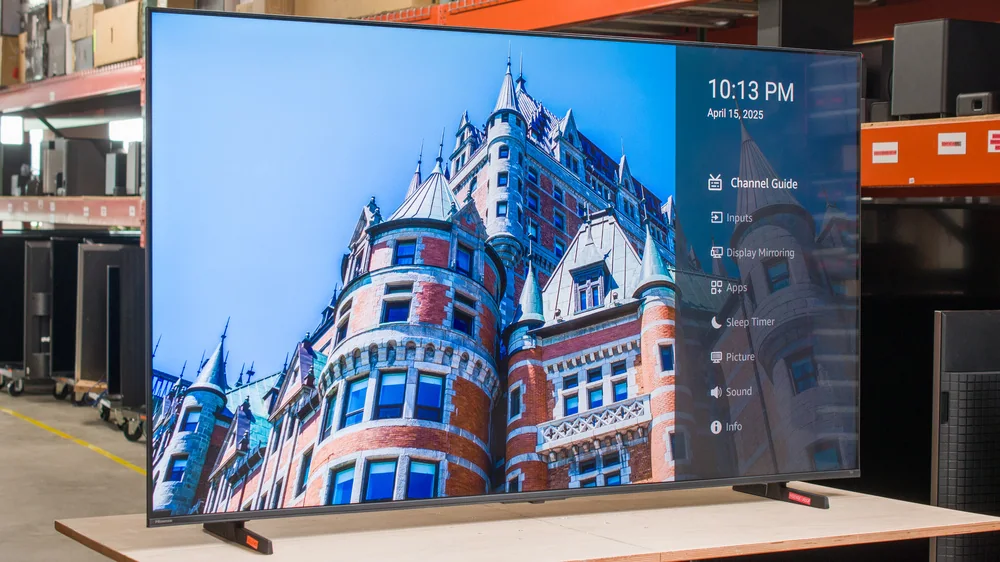
What to know first
- Released in 2025 as part of Hisense's entry-level ULED 4K lineup and still sold as a budget mini-LED option into 2026
- Unusually bright and colorful for a TV in its price bracket
- One independent evaluation flagged the built-in smart platform as underwhelming compared to the picture quality
- Sold in multiple screen sizes, letting shoppers match the panel to their room without changing the core technology
- A reasonable pick for anyone prioritizing image quality over interface polish
Where the U65QF sits in Hisense's lineup
Hisense positions the U65QF as an entry point into mini-LED technology rather than a flagship. It launched in 2025 as part of the company's U6 series aimed at the US market, and it's still turning up in sales and promotions well into 2026, which tells you Hisense sees it as a durable value play rather than a one-season clearance item.
That entry-level framing matters because mini-LED backlighting used to be a feature you paid a premium for. Smaller, more precisely controlled LED zones behind the screen let a TV get brighter in highlights while keeping shadows dark nearby, instead of one dim wash of light bleeding across the whole panel. Putting that technology into a budget-tier series is the reason the U65QF gets attention at all: it's competing with plain LED sets on price while punching into mini-LED territory on picture.
The U65QF comes in a range of screen sizes, which lets it slot into small bedrooms or larger living rooms without changing the underlying panel technology. Buying decision aside, that flexibility is worth noting if you're comparing it against single-size competitors that force you into one room configuration.
Brightness and color that outrun the price tag
The evidence lands on the same conclusion: this TV is brighter and more colorful than its price would suggest. One professional review went as far as calling it the brightest and most colorful budget-friendly TV it had evaluated, which is a meaningful claim given how many sets get lumped into that category every year.
In practical terms, extra brightness means HDR highlights, a sunset in a nature documentary, an explosion in an action movie, actually pop instead of looking washed out, and it means the picture holds up better in a room with lamps on or daylight coming through a window. Cheaper LED TVs often look fine in a dark room and disappointing everywhere else. That's the exact weakness mini-LED backlighting is built to fix, and the U65QF appears to deliver on it more convincingly than most sets at its price.
One professional review also concluded that, compared to higher-end models, the U65QF is a decent but not exceptional TV overall, while still calling it surprisingly good and among the more affordable options worth considering. That framing is useful: nobody is claiming this competes with premium OLED or high-end mini-LED sets on every metric. The claim is narrower and more useful: for the money, the picture outperforms expectations.
Living with the interface day to day
Picture quality is only half of what you interact with. The other half is the home screen you land on every time you turn the TV on, and that's where one independent evaluation specifically called out the operating system as underwhelming, framing it as the main thing holding the U65QF back from a more unqualified recommendation.
In daily use, a sluggish or awkward interface shows up in small annoyances that add up: slower app loading, more taps to get where you're going, a search function that feels like an afterthought. None of that erases the appeal of the picture, but it does mean the ownership experience isn't uniformly excellent. Buyers who stream through a separate device, a Roku stick, an Apple TV box, a game console's apps, can sidestep a lot of this by treating the U65QF's own interface as a fallback rather than the main way they watch.
That workaround is worth planning for before you buy rather than discovering after. If you already own a streaming device you like, budget for keeping it plugged in permanently instead of assuming you'll rely on the TV's built-in apps.
What to verify before you commit
Marketing and third-party sourcing pages sometimes attach specific numbers to the U65QF, like exact backlight zone counts or a particular refresh rate, that aren't confirmed by the independent reviews in wide circulation. Treat aggressive spec claims from resale or wholesale listings with some skepticism, and check Hisense's own current specification sheet for your exact size and region before assuming a number applies to your unit.
Screen size also changes the experience more than shoppers expect. A feature or performance detail measured on one size doesn't automatically carry over to every size in the same series, since panel size can affect local dimming zone density and off-axis viewing. If you're deciding between two sizes, confirm the reviews you're relying on actually evaluated the size you plan to buy.
Finally, remember this is a 2025 entry-level release still being sold into 2026 rather than a brand-new flagship. That's good news for pricing and availability, but don't assume it matches every gaming-specific feature or app option offered by Hisense's higher series within the same lineup.
The specs that matter
Smaller, more numerous LED zones behind the screen let the TV get brighter in highlights while keeping nearby shadows dark, which is the main reason this set's picture quality stands out at its price.
You can match the panel technology to your room without stepping up to a pricier series, useful if you want mini-LED brightness in a smaller bedroom TV as much as a large living room set.
This is what you touch every single day. If the interface feels slow, plan to lean on an external streaming device rather than the TV's own apps.
It's an established entry-level model rather than a brand-new launch, so pricing tends to be more stable and deals show up regularly.
Stand height affects whether the TV clears a media console or blocks a soundbar's remote sensor; measure your furniture before buying rather than assuming it fits.
Who this product fits
Upgrading from an aging LED TV in a bright living room
The jump from a dim, several-year-old LED set to the U65QF's higher brightness and mini-LED contrast is likely to be the most noticeable upgrade in the room, especially with lamps on or daylight coming through a window where older TVs typically wash out.
Buyer who already owns a streaming device
If a Roku, Apple TV, or game console already handles your streaming apps, the U65QF's underwhelming native interface becomes a non-issue. You get the brighter mini-LED picture without leaning on the weaker part of the package.
First smart TV for a bedroom or secondary room
Because the U65QF comes in smaller sizes within the same series, someone furnishing a bedroom or den can get the same brightness and color advantage as the living room buyer, without paying for a screen larger than the space needs.
What else to compare
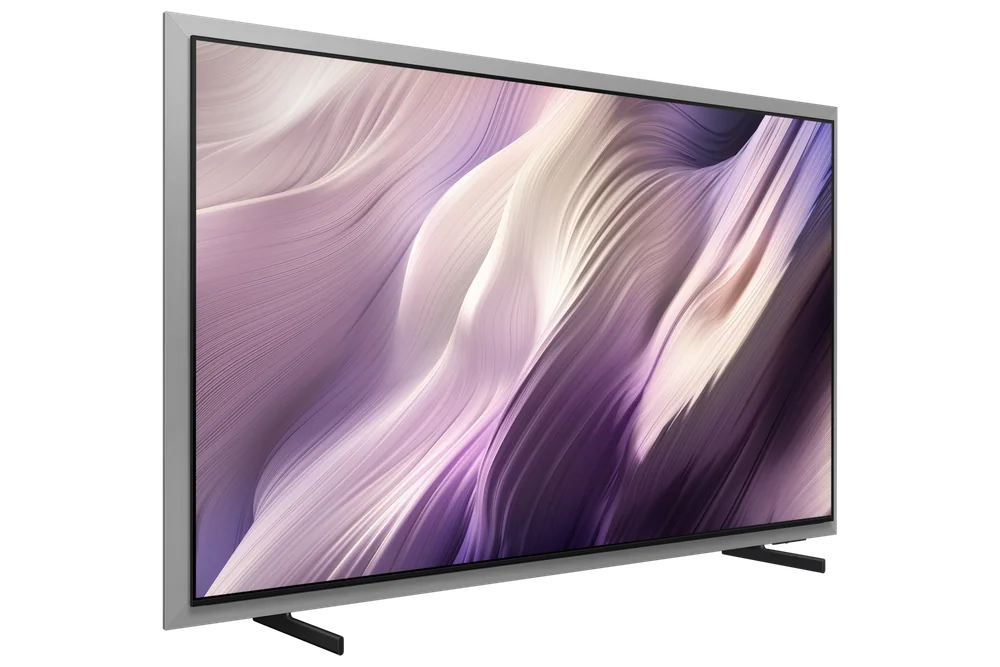
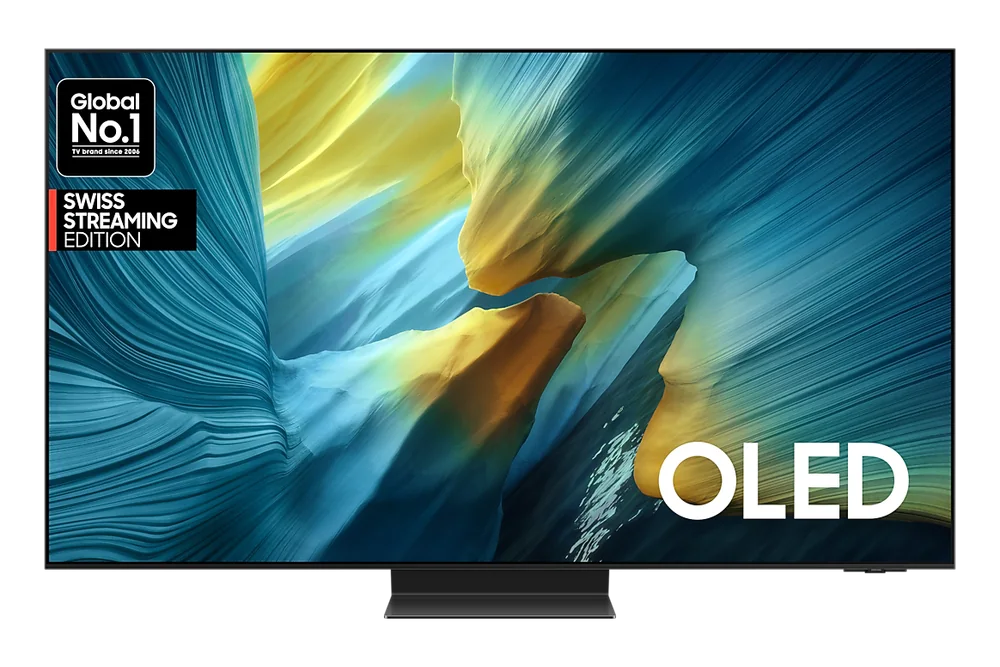
A few other budget mini-LED and standard LED TVs are worth a glance if the U65QF's interface concerns give you pause.
Hisense U65QF FAQ
Is the Hisense U65QF a mini-LED TV?
Yes. It uses mini-LED backlighting with local dimming, marketed under Hisense's ULED branding, which is what lets it hit brighter highlights and darker shadows than a standard LED backlight at a similar price.
Is the Hisense U65QF good for the price?
It is brighter and more colorful than typical budget TVs, and one professional review called it decent overall compared to higher-end models while still standing out as one of the more affordable options worth considering.
What's the biggest downside of the Hisense U65QF?
One independent evaluation specifically pointed to the built-in smart TV interface as underwhelming, calling it the main thing holding the set back. Pairing an external streaming device is a straightforward workaround.
When did the Hisense U65QF come out?
It released in March 2025 as part of Hisense's entry-level U6 ULED 4K series, and it's still being sold and promoted as a budget mini-LED option into 2026.
Does screen size affect how good the Hisense U65QF looks?
The series is sold across multiple sizes, but independent reviews don't confirm that every performance detail carries over identically to each size. Confirm reviews cover the specific size you're considering before assuming results transfer directly.
Should you buy the Hisense U65QF?
Judged purely on what shows up on screen, the U65QF is an easy recommendation: published measurements agrees it delivers brightness and color well above what its price bracket usually offers, and that's the hardest thing for a budget TV to fake. Mini-LED backlighting trickling down into an entry-level series is genuinely useful news for anyone shopping on a tighter budget who still wants HDR highlights that actually look bright.
The interface is the honest asterisk. One independent evaluation flagged it plainly, and it's reasonable to expect some daily friction if you rely on the TV's own apps. Buy it if you're comfortable pairing a streaming stick or keeping a game console handy for navigation, and you'll end up with a picture that punches well above its price with almost none of the software's drawbacks getting in the way.