
Pickori

Cooking Guide

Deep-Fryer Temperatures Explained for Fries, Chicken, and Frozen Foods

Understanding oil temperature and recovery helps you cook crisp food without rushing the outside or leaving it greasy.

Reading time: 8 minutesBest for: Home cooks learning to manage fryer settings, batch size, and browning
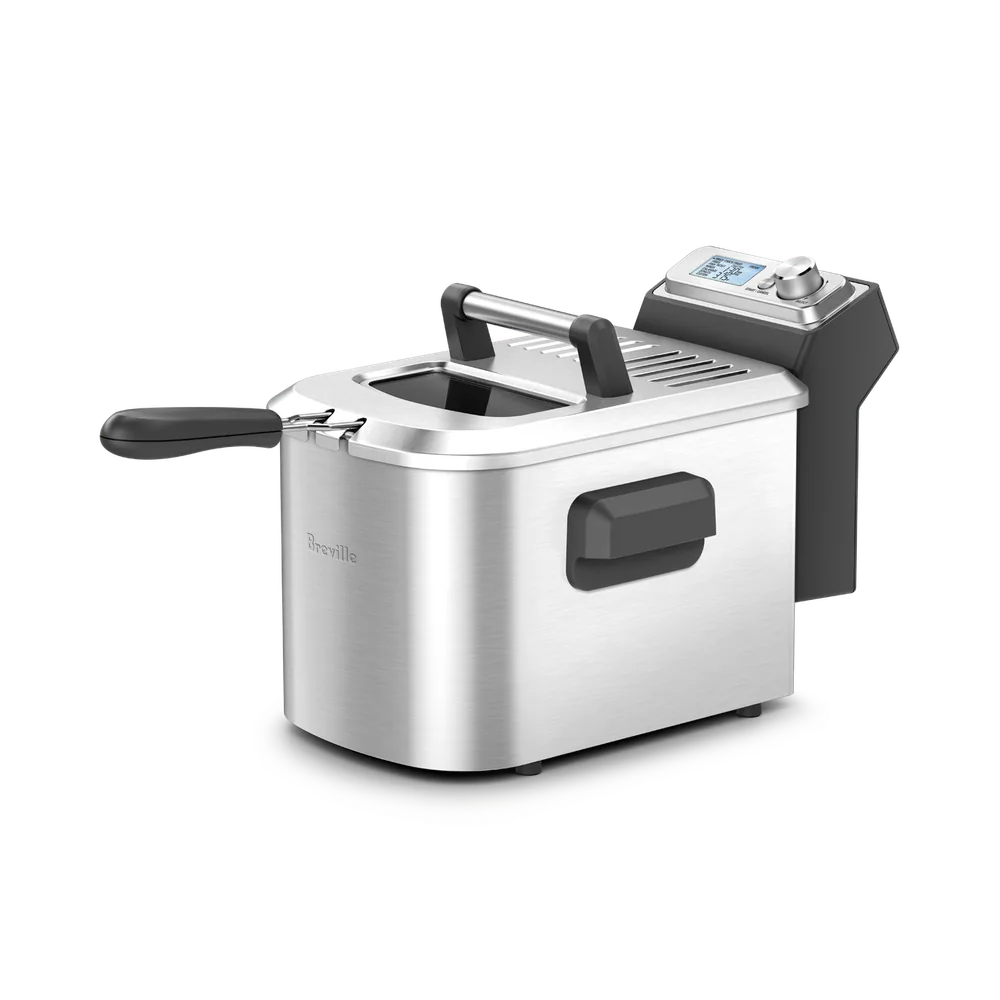
Breville BDF500XL Smart Fryer

Why oil temperature changes texture

At the right temperature, the outside of food cooks quickly enough to form a crisp crust while the inside continues cooking. Steam escaping from the food helps keep the surface from becoming overly oily. When the oil is too cool, that crust forms slowly. Potatoes may turn limp, and breaded foods may absorb more oil before their coating sets.

Excessively hot oil creates the opposite problem. The exterior can become dark or hard while the center remains undercooked, especially with thick chicken pieces or dense frozen foods. Temperature also affects color. A deep golden crust may look done even when the food needs more time, so use the food's instructions and check doneness appropriately rather than judging by color alone.

Common temperature ranges by food type

Fries and many frozen potato products are often cooked around 350 to 375 degrees Fahrenheit. A moderate-to-hot setting helps the outside crisp while the interior warms through. Thin frozen snacks may cook toward the hotter end of that range because they need less time in the oil. Always begin with the package directions when using prepared frozen foods, since coatings and thickness vary.

Breaded chicken and other thicker foods often need a temperature that browns the coating without scorching it before the center cooks. Many recipes use a range around 325 to 375 degrees Fahrenheit, depending on size and whether the food is raw, partially cooked, or frozen. Use a food thermometer when cooking raw poultry, and follow the food's cooking instructions rather than assuming one fryer setting works for every item.

How batch size affects recovery

Every piece of cold food lowers the oil temperature. A large load of frozen fries can cause a sharper drop than a small load of room-temperature snacks, and wet food makes the problem worse by adding moisture that must boil away. Heat recovery is the fryer's ability to bring the oil back to its set temperature after that drop. It is one reason a larger oil reservoir or stronger heating system can help with repeated batches.

Do not fill the basket to its rim just because the food fits. Leave room for oil circulation around the pieces, and cook in smaller batches when crispness matters. Lower the basket gradually to reduce splatter, then give the fryer time to recover between batches. If the first batch is pale and soft, reducing the next batch size is usually more useful than simply turning the temperature higher.

What to do when food browns too fast or too slowly

If food browns too fast, first check whether the selected temperature is too high for that food. Lower the setting for the next batch and avoid using old oil, which can darken food prematurely. Thick foods may also need smaller portions or a lower temperature so heat has time to reach the center. Do not try to solve undercooking by leaving already-dark food in the fryer longer.

If food browns too slowly, look at batch size, food temperature, and oil condition. Overcrowding and heavily frosted food can pull the oil temperature down for too long. Cook less at once, shake off loose ice, and wait for the fryer to return to temperature before starting another batch. If the oil is old, foamy, or full of crumbs, filter it or replace it before assuming the fryer needs a hotter setting.

What this guide helps you understand

Set temperature for the food, cook modest batches, and respond to pale or overdark results by adjusting batch size and oil condition before making large temperature changes.

A fryer with an adjustable temperature control
Package directions or a recipe for the food being fried
A food thermometer for raw poultry and other foods that need an internal doneness check
Enough time between batches for the oil to recover

Technique notes

Frozen food should have loose ice and heavy frost removed before frying.
A ready light may return before the oil has fully stabilized after a large batch.

Safety note: Lower food into hot oil slowly, keep moisture away from the fryer, and never rely on exterior browning alone to judge raw poultry.

More deep fryers help

← Back to Deep Fryers