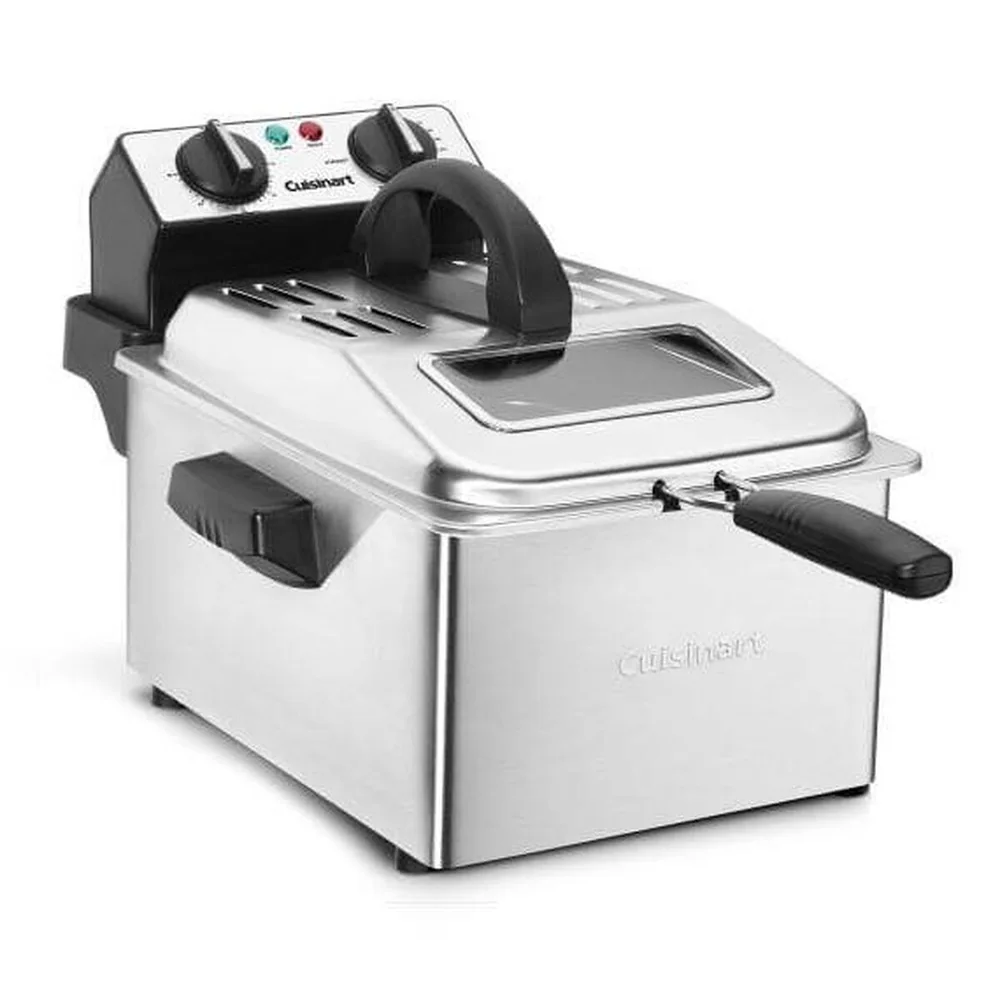
The right oil and a simple filtering routine help a deep fryer produce cleaner flavor, steadier heat, and less waste.
Reading time: 8 minutesBest for: Home cooks choosing frying oil and maintaining it between batches
What cooking oil does in deep frying
Hot oil cooks food by surrounding it with steady heat. As the food's surface moisture turns to steam, it helps create a crust and limits how much oil moves into the food. This works best when the oil is hot enough and the basket is not crowded. When oil temperature falls too far, moisture escapes more slowly and breading or potatoes can absorb more oil before they crisp.
Choose oil based on the foods you make and the flavor you want. Neutral oils let the seasoning and food stand out, which is useful for fries, chicken, and frozen snacks. Oils with a stronger flavor can be appropriate for certain dishes, but that flavor may carry into later batches. If you fry fish, consider keeping that oil separate from oil used for mild foods because odors and flavors can linger.
Smoke point and why it matters
Smoke point is a practical limit, not a marketing badge. Once oil begins smoking, it can develop harsh flavors, darken faster, and leave sticky residue on the fryer. Select an oil whose smoke point is comfortably above the temperature you plan to use. Deep frying commonly takes place at high heat, so oils intended for sautéing at lower temperatures are not always a good fit.
Do not rely on smoke point alone. Refined oils often have a milder flavor and tend to suit high-heat cooking, while unrefined oils may bring more flavor but can be less suitable for repeated frying. Check the oil label and your fryer instructions. If oil smokes before the selected temperature is reached, turn the fryer off, let it cool, and investigate whether the oil is old, the setting is too high, or the thermostat needs attention.
How to filter and store cooled oil
Let oil cool completely before filtering or moving it. Hot oil can cause serious burns, and pouring it too soon makes spills more likely. Once cool, remove loose crumbs with a fine strainer, filter, or the fryer's built-in oil system if it has one. Filtering removes food particles that would otherwise scorch during the next use and make the oil darken and taste stale sooner.
Store filtered oil in a clean, dry, tightly closed container away from heat and direct light. Label the container with the type of oil and the foods cooked in it, especially if it has been used for fish or strongly seasoned foods. Do not pour used oil down a sink drain. When it is time to discard it, seal the cooled oil in a container and follow local disposal options for household cooking oil.
Signs that oil needs to be replaced
Replace oil when it becomes noticeably dark, smells rancid or burnt, smokes at normal frying temperatures, foams excessively, or leaves food with a bitter, stale taste. A few crumbs are normal after frying, but persistent debris and a thick or sticky feel are signs that filtering is no longer enough. Oil also wears out faster after heavily breaded foods because loose coating particles burn in the reservoir.
There is no single number of batches that fits every household. Oil life depends on its type, frying temperature, how long it stays hot, the foods cooked in it, and whether it is filtered after use. Fresh oil is especially helpful when food begins browning before it cooks through. Replacing tired oil can improve results more than raising the temperature or extending the cooking time.
What this guide helps you understand
Use an oil suited to high-heat frying, filter it only after it has cooled, store it sealed and labeled, and replace it when smoke, odor, foam, or flavor show that it has broken down.
A high-heat cooking oil with a flavor appropriate for the food you fry
A clean, dry container with a tight lid for cooled used oil
A fine strainer, filter, or built-in filtering system
A disposal plan for oil that should no longer be reused
Technique notes
Filter oil after it cools, not while it is hot.
Keep fish-frying oil separate if you do not want its flavor transferred to other foods.
Safety note: Allow oil to cool fully before filtering, transferring, storing, or disposing of it.