
Pickori

Compatibility

Induction cookware compatibility: how to check your pans fast

Use a few quick checks to confirm which pans will heat properly on induction before you commit to a new cooktop.

Reading time: 8 minutesBest for: Shoppers considering induction who want to confirm their current pots and pans will work
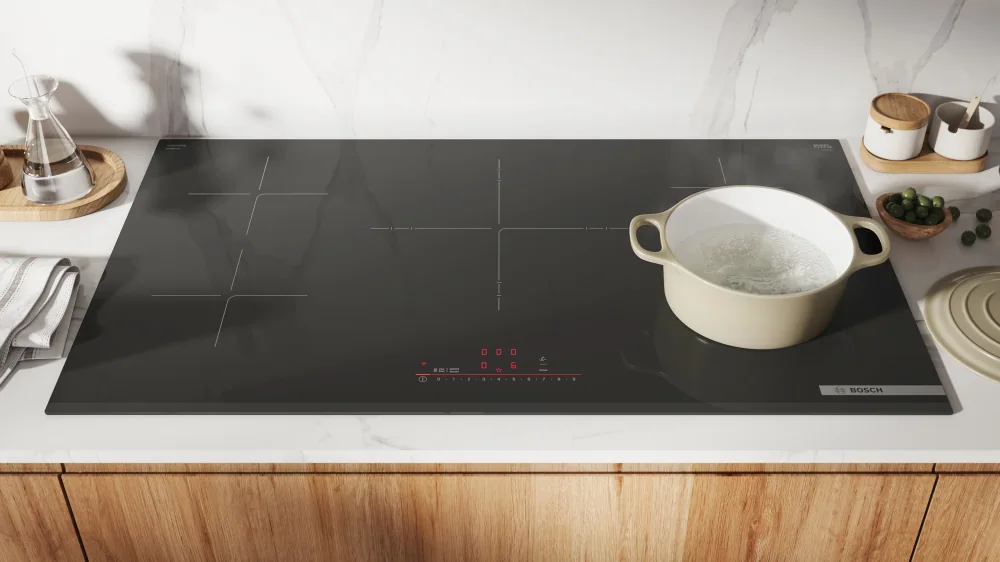
Bosch 800 Series NIT8661UC

What "magnetic" means for induction

For induction to heat a pan, the pan needs a base that a magnet strongly sticks to. That usually means the base contains enough ferrous metal (iron or certain stainless steels). If the base is not magnetic, the cooktop may not detect the pan, or it may detect it but heat weakly and unevenly. This is not about whether the pan is "heavy" or "high quality." It is about the metal in the bottom. Magnetism also affects how stable the heating feels. A pan that barely attracts a magnet can sometimes work, but it may heat slower, cycle more, or be pickier about pan placement. If you want induction to feel like the fast, controlled experience people expect, look for cookware with a base that grabs a magnet firmly across most of the bottom surface.

Quick at-home checks before you buy a cooktop

Start with a simple fridge magnet test. Put the magnet on the center of the pan's bottom. If it snaps on and holds its own weight, that pan is a strong candidate. Then test a few sizes, not just your favorite skillet. Induction performance depends on the contact area and the cooktop's minimum pan size for each zone, so a small saucepan that is "magnetic enough" can still be too small for a particular burner to recognize reliably. Next, check the bottom shape. A flat bottom matters because induction zones heat where the coil is, and a warped or domed pan can reduce contact and cause hot spots. Also look for labels like "induction compatible," but treat them as a starting point, not proof. The magnet test plus a quick look for flatness catches most problems before you spend money.

Common cookware materials that confuse people

Stainless steel is the biggest source of confusion. Some stainless is magnetic, some is not. Many stainless pans use a layered base (often called "clad" or "encapsulated base") that includes a magnetic layer specifically for induction. Others are non-magnetic stainless and will not work. Do not assume stainless equals compatible. Use the magnet. Aluminum and copper are usually not magnetic on their own, but they can be induction-ready if the manufacturer bonded a magnetic stainless layer to the bottom. Cast iron is almost always compatible and heats well on induction, but it is heavy and can scratch glass if you slide it. Enameled cast iron is also compatible, but the enamel can chip if you bang it on the surface or on other cookware.

When an adapter plate helps and when it disappoints

An induction adapter plate is a flat, magnetic disc that sits between the cooktop and a non-magnetic pan. It can be useful if you have one or two specialty pieces you do not want to replace, like a non-magnetic moka pot or a favorite small saucepan. It can also help with very small cookware that a burner struggles to detect, depending on the cooktop and the plate size. The tradeoff is performance. The cooktop heats the plate, and the plate heats the pan, which adds a slower, less responsive layer. You may also get more heat spread and less precise control, and the plate itself gets very hot. If you are planning to use an adapter for most of your cooking, it usually means you will not get the main benefits of induction. In that case, replacing the most-used pans is typically the better long-term fix.

What this guide helps you understand

Before buying induction, do a magnet test on the center of the pan bottom and check that the base is flat. If the magnet holds firmly and the pan sits flat, you are likely to get the fast, steady heating people buy induction for.

Test at least your three most-used pans with a magnet and confirm their bottoms are flat and not warped.

Technique notes

If you are replacing a cooktop, remember that induction zones can have minimum pan sizes. A pan can be compatible but still be too small for a specific zone to recognize consistently.

Safety note: Induction can heat cookware very quickly. Use the same caution you would with any high-heat cooking, and keep metal items like utensils and foil off active zones.

More cooktops help

← Back to Cooktops