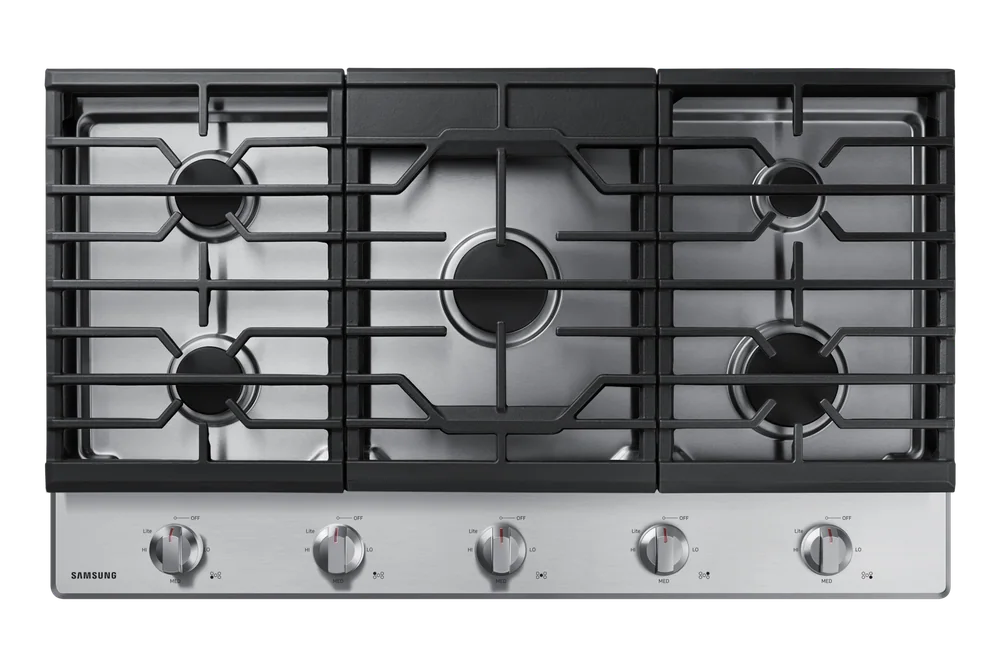
Cooktop burner layout: how to avoid crowding with real cookware
Published Updated
A cooktop can look spacious in photos but feel cramped once you set down your biggest pans, so layout checks matter as much as burner count.
Reading time: 8 minutesBest for: Shoppers choosing between 30 inch and 36 inch cooktops who regularly use large pans or cook multiple dishes at once
Bring your cookware sizes into the decision
Before you compare cooktops, measure the cookware you actually use. Note the diameter of your largest skillet and stockpot, plus any wide pieces like a canning pot or a griddle. Then think about handle sweep. A 12 inch skillet might need more than 12 inches of real estate once the handle is angled for comfort. If you often use two big pans at once, your goal is not "will it fit," it is "will both fit without touching or forcing awkward angles."
Use painter's tape on a counter to mock up the cooktop's usable area, then place your pans on top. This simple check reveals crowding that spec sheets cannot. Pay attention to whether lids bump into knobs, whether a pot blocks access to a rear burner, and whether handles end up over another heat source. If you cannot comfortably stir a front pot while a rear pan is on, that rear burner will become decorative in real life.
Center burner vs side power burner: what changes
A center burner (or center element) can be great for a large pot because it often has the most open space around it. The tradeoff is traffic. A big pot in the center can block access to other burners, and it can make it harder to slide pans on and off without bumping something. If you do a lot of one pot cooking, a center position can feel natural. If you cook multiple dishes, it can become a bottleneck.
A side power burner puts the highest heat on the edge, which can be easier for tossing a skillet or moving a heavy pot. It also keeps the middle more open for other pans. The downside is clearance to the backsplash and to the counter edge. A powerful burner too close to the back can push a large pan forward into the knobs. Too close to the front edge can make handles stick out into walkways. The "best" location depends on your kitchen's clearances and how you move while cooking.
Why knob placement affects usable space
Knobs take up more space than you think because they create a no go zone in front of the burners. If the knobs are on the front, a large pan can overhang and make the controls hard to reach or uncomfortable to turn. If the knobs are on the side, you may gain front clearance, but you need to be sure the side controls will not be bumped by passing hips, towels, or kids leaning on the counter.
Also consider heat and mess. Front knobs on a gas cooktop can collect grease and splatter, and they can be harder to clean if they are tightly packed. Knobs placed too close together can make it easy to turn the wrong burner, especially when you are reaching around a big pot. When you evaluate a layout, imagine turning the correct knob with a mitt on while a pan is steaming. If that feels fussy in your head, it will feel worse in a busy kitchen.
Bridge elements and griddles: when they are worth it
A bridge element is meant to link two heating zones so a long pan or griddle heats more evenly. It is worth paying attention to only if you actually cook with a griddle, fish pan, or long roasting pan on the cooktop. Otherwise, it is just another button. Even when you do want it, the zones need to line up with your cookware. If the bridge spans two small circles that do not match your griddle's footprint, you can still end up with hot spots.
Think about storage and habits. A griddle that lives in a cabinet and is annoying to clean will not get used, which makes the bridge feature irrelevant. If you do use a griddle often, check whether the cooktop gives you enough open space around that bridged area for flipping and draining grease. A bridge that forces the griddle too close to knobs or the backsplash can be more frustrating than helpful.
What this guide helps you understand
Treat cooktop layout like a parking problem: if your two biggest pans cannot sit flat at the same time with comfortable handle angles and reachable controls, the cooktop will feel smaller than its width suggests.
Measure your two largest pans (diameter and handle reach) and confirm they can be used together on the intended burners without overlap or blocked knobs.
Technique notes
When comparing models, look for a diagram that shows burner spacing and control placement, not just burner count and maximum power.
Safety note: Avoid layouts that force handles to point over another active burner or out into a walkway, since that increases the chance of bumps and spills.