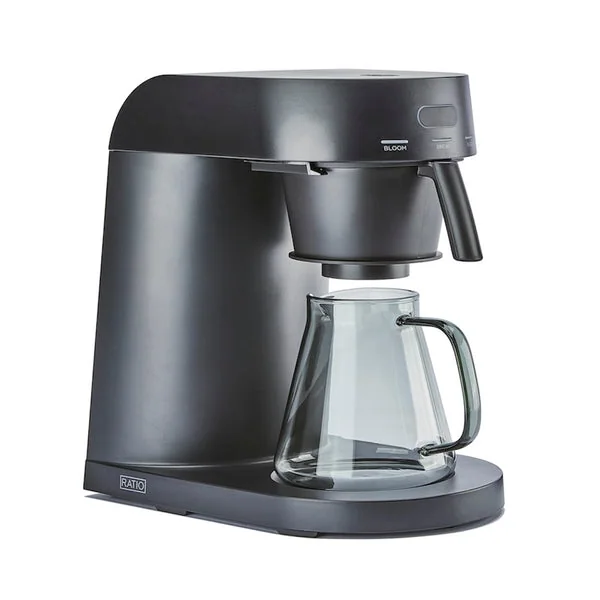
A consistent coffee-to-water ratio gives drip coffee a dependable starting point, then lets you adjust strength without guessing.
Reading time: 8 minutesBest for: Drip coffee drinkers who want repeatable results from any batch size
Start with a reliable baseline
Begin with a 1:16 coffee-to-water ratio. For a smaller batch, use 20 grams of ground coffee with 320 grams of water. For a stronger starting point, move to 1:15, which uses slightly more coffee for the same amount of water. For a lighter cup, try 1:17. Change only one step at a time so you can tell what improved the result.
This ratio controls concentration, meaning how strong or diluted the finished coffee tastes. It does not fix poor extraction by itself. Extraction is the process of dissolving flavor from ground coffee. If coffee tastes both weak and harsh, adding more grounds may not help. The grind may be too fine, the brew may be running too slowly, or the machine may need cleaning.
Measure coffee and water consistently
Use a kitchen scale that reads in grams. Place the empty carafe or a separate container on the scale, tare it to zero, and weigh the water you add. Then weigh whole beans before grinding, or weigh pre-ground coffee before placing it in the filter. Grams make it easy to repeat a recipe and scale it up without relying on inconsistent scoop markings.
If you do not have a scale, use the same scoop and water measure every time until you can get one. Keep in mind that coffee maker cup markings are often smaller than a typical drinking mug. A brewer labeled for several cups may not make that many full-size mugs. Measure the actual water volume you plan to drink rather than trusting the number printed on the machine.
Adjust for roast and taste
Roast level can influence where you begin. Darker roasts are less dense and can taste intense or smoky when brewed too strong, so some people prefer a slightly more diluted ratio such as 1:17. Lighter roasts can have bright, delicate flavors and may benefit from a slightly stronger ratio, such as 1:15, if the cup tastes thin. These are adjustments, not fixed rules.
Taste the coffee before changing the recipe. If it is pleasant but too strong, add more water next time or use less coffee. If it is pleasant but too weak, use more coffee. If it tastes sour, bitter, dry, or hollow, check grind and brewing conditions before making a large ratio change. Strength and extraction are related, but they are not the same thing.
Scale the ratio for a full pot
To scale a recipe, multiply the amount of water by the ratio you want. At 1:16, 500 grams of water needs about 31 grams of coffee, while 1,000 grams of water needs about 63 grams. Rounding by a gram is fine for ordinary drip brewing. Write down the amount that tastes best so a good pot is easy to repeat.
Full pots can brew differently from small batches because water moves through a deeper bed of grounds and the machine may heat differently at low volumes. If you usually make one or two mugs, choose a brewer with a genuine small-batch setting or use its recommended minimum volume. Do not simply fill a large machine with a tiny amount of water and expect the same result as a full pot.
What this guide helps you understand
Start around 1 gram of coffee for every 16 grams of water, measure both ingredients, and adjust the ratio only after you know whether the problem is strength or extraction.
A kitchen scale that measures grams
Fresh coffee, preferably weighed before grinding
A drip brewer and filters suited to its basket
A written note of the ratio and result for future batches
Technique notes
Use water weight as a practical stand-in for water volume because 1 gram of water is close to 1 milliliter.
Keep the grind setting unchanged while testing a new ratio.
A stronger ratio uses more coffee, not a longer warming-plate time.