Grinder sound and timing depend on burr type, motor load, and your workflow, and small setup choices can make mornings calmer in shared spaces.
Reading time: 8 minutesBest for: Apartment dwellers, office brewers, and anyone trying to reduce morning noise without giving up good coffee
Why grinders sound different
Grinder noise comes from three main sources: the motor, the burrs, and the beans. The motor creates a base sound that can be a whine (often higher pitch) or a hum (often lower pitch). The burrs add their own tone as they spin and as coffee passes through. The beans add the sharpest sounds because they crack and snap as they are crushed, especially with lighter roasts that are harder and denser.
The case and countertop matter more than people expect. A grinder on a hollow counter, a thin cart, or a metal shelf can amplify vibration like a speaker. A heavy wood counter tends to absorb more. Even the catch cup can ring if it is thin metal. If a grinder sounds -extra loud- in one kitchen and reasonable in another, the surface and nearby walls are often the reason.
Manual vs electric: what the trade feels like
Manual burr grinders replace motor noise with hand effort. You still hear beans cracking, but the overall sound is usually softer and less sharp. The trade is time and physical work. Grinding for one cup can be quick, but grinding for multiple people, or grinding very fine for espresso, can feel slow and tiring. If you are already rushed in the morning, manual grinding can become the step you skip.
Electric grinders are consistent and fast, but they can be disruptive in quiet homes. The -feel- is also different because electric grinding encourages you to grind right before brewing, which is best for freshness but concentrates the noise into one moment. Manual grinding can be spread out. For example, you can grind while the kettle heats, or even grind in another room without needing an outlet.
Office and apartment tips: timing and placement
Placement is the easiest win. Put the grinder on the most solid surface you have, away from the edge of the counter where it can act like a drum. If you can, avoid placing it directly against a wall that shares a bedroom or a neighbor’s unit. Small changes in location can reduce how much sound travels through cabinets and drywall.
Timing and prep help too. If you single dose, you can portion beans the night before into small containers so the morning is only grinding and brewing. If you use a hopper, you can set up your filter, mug, and scale ahead of time so the grinder runs once, not in multiple short bursts. In offices, consider grinding in a break room with a door, and keep a small brush nearby so cleanup does not become a second noisy event.
When slower grinding is actually a benefit
Slower grinding can be easier to live with because it often sounds less harsh. It can also reduce mess. When grounds exit more gently, they can create less static-driven spray, especially in dry air. That means fewer stray grounds to wipe up, which matters in shared spaces where coffee dust on counters becomes a daily annoyance.
Slower grinding can also support better consistency in some routines. If you are dialing in espresso, a calmer workflow helps you make one change at a time and notice what happened. Rushing encourages sloppy dosing and tamping, which can create channeling (water finding weak paths through the puck) and make you blame the grinder for a problem that started with hurried prep.
What this guide helps you understand
Treat grinder noise as a setup problem as much as a product trait. A solid surface, smart placement, and a routine that reduces repeated bursts can make almost any grinder easier to live with.
Place the grinder on a stable, heavy surface and add a simple vibration-damping mat if the counter amplifies sound.
Products that fit this ownership guide
As an Amazon Associate I earn from qualifying purchases.
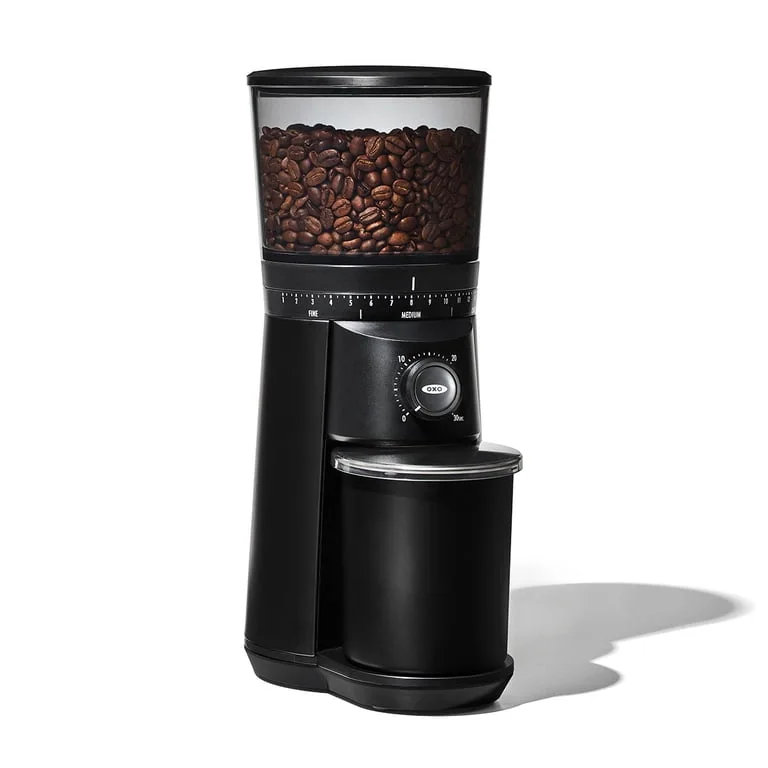
OXO Brew Conical Burr Coffee Grinder fits most home coffee drinkers who want a dependable burr grinder for daily drip, pour-over, and French press without overthinking it.
If noise complaints are about pitch, not volume, changing location and the container you grind into can help more than chasing a different watt rating.
Safety note: Keep fingers, hair, and loose sleeves away from the hopper opening and moving parts, and unplug before clearing jams.