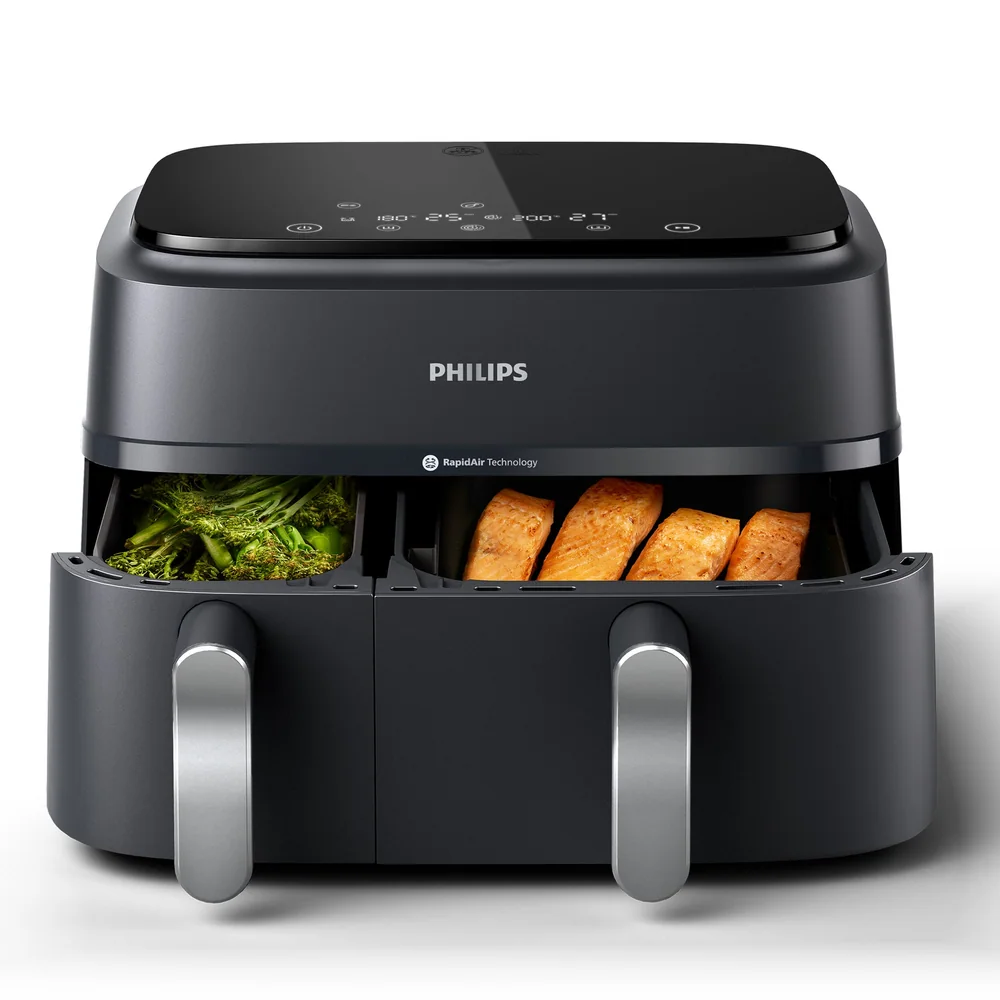
Choose between one larger cooking area and two separate baskets based on the foods, portions, and timing you cook most often.
Reading time: 8 minutesBest for: Households choosing between a single large basket and two independently controlled baskets
How a single-basket air fryer cooks
A single-basket air fryer has one drawer-style basket, usually with a crisper plate that lifts food above the bottom pan. The fan circulates hot air around the food, and the open space between pieces helps moisture escape. With one temperature and timer, every item in the basket follows the same cooking schedule.
This design is simple when you are making one main batch, such as fries, wings, roasted vegetables, or reheated leftovers. A wide basket is especially useful because food can sit in a looser layer. If you cook two foods that need different temperatures, you may need to cook them in stages or choose a compromise setting and add one item later.
How dual-zone cooking works
A dual-zone air fryer has two separate baskets, each able to run at its own temperature and for its own length of time. That separation is useful when foods need different treatment, such as breaded chicken in one basket and vegetables in the other. It also keeps flavors and sauces from mixing between foods.
The tradeoff is that each basket is smaller than the full interior of many large single-basket models. A dual-zone unit can have a high total capacity while still leaving each side too narrow for a broad layer of wings, a larger cut of meat, or a full serving of fries. Check the dimensions of each individual basket, not only the combined capacity.
Cooking area versus total capacity
Cooking area is the flat space where food can spread out with room for air to circulate. It is often more important than total volume for foods that need crisping, including fries, nuggets, wings, and breaded vegetables. A tall, narrow basket may hold a large amount of food, but stacking it deeply can cause steaming and uneven browning.
A single large basket often provides more uninterrupted cooking area for one dish. Dual baskets provide two smaller areas that are useful for separate foods or smaller portions. Think about the shape of what you cook. A family-sized side dish may fit better in one wide basket, while two modest portions with different seasonings may fit better in separate zones.
When synchronized finish times help
Many dual-zone models include a feature that coordinates the two baskets so foods with different cooking times finish together. For example, a side dish can begin later than a protein, even though you set up both baskets at the same time. This can reduce the need to remember when to start the second food.
Synchronized timing is most helpful when both baskets have enough room for the portions you need. It does not make foods cook at the same speed, and it does not remove the need to shake, turn, or check them. Treat it as a scheduling convenience. You still need to account for food thickness, crowding, and whether one basket browns faster than the other.
What this guide helps you understand
Choose a single basket for the largest uninterrupted cooking area, and choose dual zones when separate temperatures and finish times are more useful than one broad cooking surface.
Compare the interior dimensions of one basket or each separate zone, not only total capacity.
Match the appliance to the portions and food shapes you cook most often.
Measure counter width and the space needed to open one or two baskets.
Plan to clean the basket and crisper plate after each use.
Technique notes
Dual-zone capacity is split between two baskets, so each side may be smaller than expected.
Synchronized finish settings help coordinate timing but do not replace checking food for browning and doneness.
Safety note: Use separate utensils for raw and cooked foods, and handle both baskets carefully because each can become hot independently.