
Pickori

Category guide

How Air Fryers Work and Why Food Gets Crisp

Learn how fan-driven heat dries and browns food, plus the arrangement and preparation choices that determine whether an air fryer actually crisps it.

Reading time: 9 minutesBest for: New air fryer owners and shoppers who want to understand what this cooking method can and cannot do
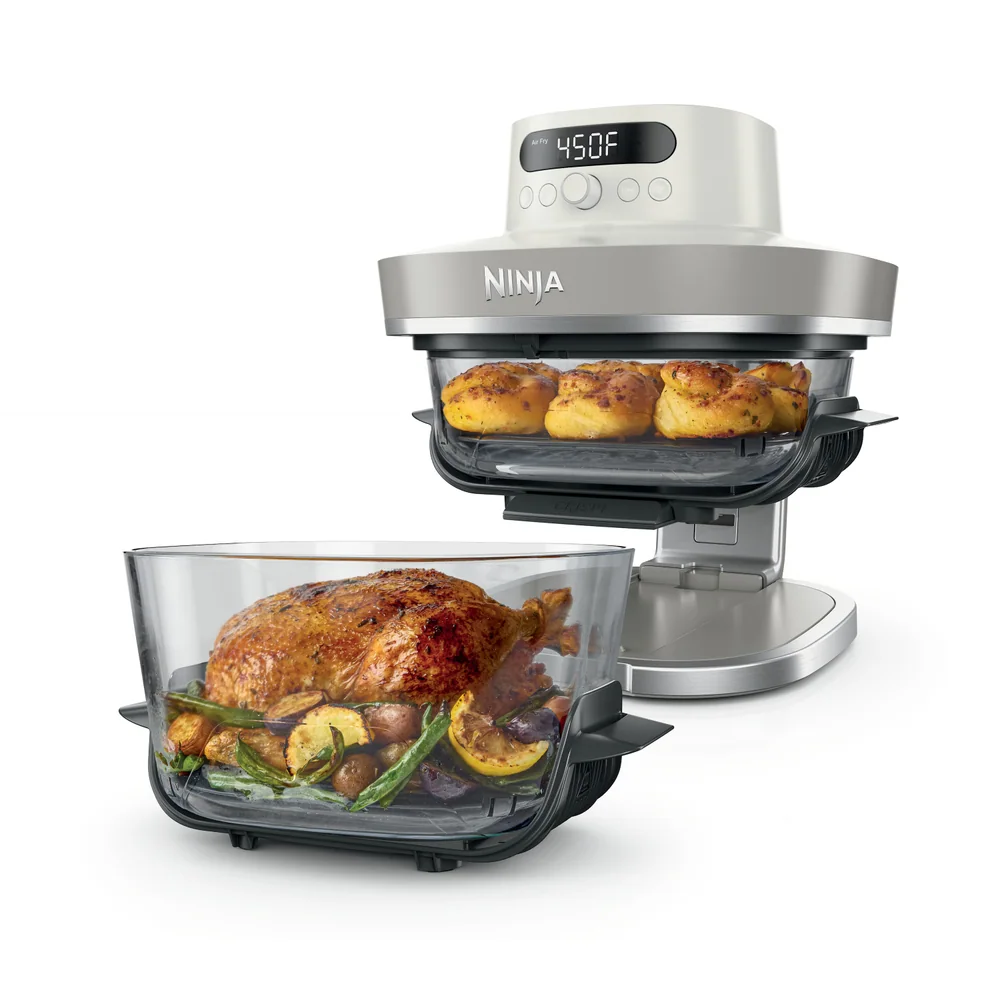
Ninja Crispi Glass Air Fryer

The fan does more than circulate heat

In a conventional oven, hot air naturally moves around the cavity, but it can be relatively still. An air fryer uses a fan to push hot air quickly around a small cooking chamber. Because the chamber is compact and the food sits close to the heat source, the appliance heats up quickly and transfers heat efficiently to exposed surfaces. A perforated basket or crisper plate lifts food above the lower pan so air can reach underneath as well as around the sides. This setup works best when air has a path around each piece. A basket packed to the rim becomes more like a small steamer. Food releases water as it heats, and that moisture gets trapped between pieces instead of escaping. The result can be cooked food with pale, soft spots. Leaving gaps, cooking in batches, and shaking loose foods halfway through restores airflow and gives more surfaces a chance to brown.

Crisping starts with a dry surface

Food gets crisp when its exterior loses enough moisture for browning to take place. As the surface heats, water evaporates. Once the surface is no longer very wet, it can become firmer, darker, and more flavorful. This is why frozen fries, dry-seasoned wings, and breaded cutlets often suit an air fryer. Their surfaces can dry while the inside warms or cooks through. Wet foods need more preparation. Pat raw proteins dry before seasoning, and drain or blot foods that come from a marinade. Add thick sauces near the end when possible, since a sugary or wet coating can darken before the food is cooked and can leave the basket messy. Traditional liquid batter is usually a poor fit because it can drip through the perforations before it sets. Use a dry breading, a coating that has been allowed to firm up, or an oven-safe pan when the recipe requires a wet mixture.

Oil helps, but it is not the heat source

An air fryer can cook many foods with little added oil because the fan and heating element provide the cooking heat. Still, a light coating of oil often improves browning, texture, and seasoning adhesion. Oil helps the surface heat more evenly and can reduce dry, floury patches on breaded food. It is especially useful for fresh vegetables, homemade potato pieces, and foods coated with crumbs or flour. More oil is not automatically better. Excess oil can pool below the food, create smoke from drippings, and leave a greasy finish rather than a crisp one. Toss food lightly so the surface is coated, not soaked. Aerosol sprays can also be a poor choice for some nonstick finishes, depending on the appliance instructions. If you use oil, apply it to the food rather than spraying the basket unless the manufacturer specifically permits that method.

Air frying has useful limits

Air fryers excel at foods that benefit from a dry, browned exterior: frozen snacks, roasted vegetables, crisped leftovers, small cuts of meat, and breaded items. They are less effective for large roasts, very wet dishes, delicate foods that can blow around, and foods that need the even surrounding heat of a full oven. A thick casserole or a crowded pile of food may heat through, but it will not receive the same all-over airflow as a loose layer in a basket. Use the appliance as a fast, high-heat countertop cooker rather than expecting every setting to replace a dedicated oven, toaster, dehydrator, or deep fryer. Check food during the first few uses of a recipe, especially when changing portion size or food thickness. Turn larger pieces, shake smaller pieces, and use a thermometer for meats and other foods that need to be cooked through. Those habits matter more than selecting a preset with a familiar food name.

What this guide helps you understand

Choose and use an air fryer for foods that can sit in an open layer and benefit from a dry, browned surface.

Arrange food in a loose layer, then shake or turn it when the exposed surfaces need more even browning.

Technique notes

Clean grease and crumbs from the basket, crisper plate, and lower pan after the appliance cools. Built-up residue can smoke and make later food taste stale.

Safety note: Place the air fryer on a stable, heat-resistant counter with the clearance specified in its instructions, and keep steam away from cabinets when opening the basket or door.

More from Air Fryers

← Back to Air Fryers