

Pickori's Take
- Pickori recommends the Midea Duo MAP14HS1TBL as the top portable air conditioner for a large enclosed room. It is stronger, steadier, and quieter than typical portables, and its mild-weather heating adds real value when a window unit is not possible. Still, a window unit is the smarter purchase wherever you can install one.
- Trust the 12,000-BTU SACC rating, not the 14,000-BTU ASHRAE figure on the box. SACC accounts for the heat and pressure penalties that portable air conditioners pay, and even on that stricter scale the Duo ranks near the top of the category.
- At $680, the premium pays off only when you use everything it offers: a big room, a noise-sensitive space, no window-unit option, and regular mild-weather heat. For a small room or occasional emergency cooling, you are paying for more machine than you need.
- Heat is a shoulder-season bonus, not winter heating. Output falls as it gets colder outside, operation stops below 41 degrees Fahrenheit, and heat mode needs continuous drainage through the included hose. If you have nowhere practical to run that hose, you won't get much use from the heat.
- Plan around two ownership drawbacks. It weighs roughly 77 pounds, so the casters only solve movement across a level floor, and the one-year warranty is too short for a $680 sealed-system appliance. Buy where returns are easy and put every mode through its paces right away.
When the Midea Duo is worth $680, and when it isn't
The Midea Duo is not a universally better air conditioner. Its premium makes sense when its specific strengths solve the restrictions of your room; elsewhere, a cheaper or simpler machine is usually the smarter buy.
| Situation | Verdict | Why |
|---|---|---|
| A window air conditioner is allowed | Skip it. Buy a window unit. | A window unit puts the compressor and its heat outside the room. Paying $680 for portable flexibility you will not use is hard to defend. |
| Large enclosed room where a window unit is prohibited | Yes. This is its best case. | The integrated dual hose, inverter compressor, and 12,000-BTU SACC rating all earn their keep here. Walls and a door matter because the 550-square-foot claim assumes favorable enclosed conditions. |
| Quiet bedroom use | Yes. A strong reason to buy. | The variable-speed inverter can settle into low output instead of repeatedly switching fully on and off. That steadier sound is one of the clearest reasons to pay more than you would for a basic portable. |
| You will use heat and have a practical drain | Yes. The heat adds real value. | Heat mode operates from 41 to 86 degrees Fahrenheit and requires continuous drainage. With a workable hose route or drain nearby, one machine covers two seasons and makes the price easier to justify. |
| Cooling only, with no need for heat | Get the cooling-only sibling. | Without heat, a meaningful part of what you are paying for sits unused. The cooling-only MAP14S1TBL is the more sensible version of the same core design. |
| Small room or occasional emergency cooling | No. It is too much machine. | A 12,000-BTU unit weighing about 77 pounds is overkill for a small room or a few hot days a year. A smaller, cheaper portable fits that job better. |
| Daily room changes or stairs | No. It is too heavy to roam. | At about 77 pounds, it is portable only in the sense that it is not bolted in place. Moving it between rooms means reinstalling the vent and any drain connection each time. |
| Open-plan apartment | No. The room shape works against it. | The 550-square-foot figure assumes favorable enclosed-room conditions. In an open layout, cooled air spills into kitchens and hallways, so the unit works harder while the occupied area may still feel warm. |
Why this is not a typical portable air conditioner
Most portable air conditioners work against themselves. A single-hose unit uses room air to cool its condenser and then blows that air outside. The room ends up slightly depressurized, so it pulls warm air back in through door gaps, outlets, and the window seal. You pay to cool air that is quickly replaced by hot air.
The Duo avoids that problem with a hose-in-hose design. One thick sleeve holds separate intake and exhaust passages, so the unit draws outdoor air across its condenser and sends that same air back out. You get the pressure balance of a dual-hose unit without two loose hoses snaking across the floor. A leaky window seal will still give back some of that advantage.
The box also needs translating. The 14,000-BTU figure comes from the older ASHRAE method, which ignores the heat and pressure penalties a portable pays. The DOE's SACC rating (seasonally adjusted cooling capacity) accounts for them and lands at 12,000 BTU. Use that number when you compare models. Even on the stricter scale, it sits near the top of the category.
Where the Midea Duo fits, and where it doesn't
The Duo's strengths all point to one scenario. You have a single enclosed room, a window that can take a hose but not an air conditioner, and you care how the room feels at 2 a.m. As much as how fast it cools at 4 p.m. Step outside that scenario and the ratings fall off quickly.
| Workload | Outlook | What to expect |
|---|---|---|
| Large-room cooling | Excellent for a portable | Ignore the 14,000 BTU on the box. That figure comes from the older ASHRAE method. The DOE's SACC (seasonally adjusted cooling capacity) rating counts the heat a portable leaks back into the room and the outside air it pulls in, and it puts this model at 12,000 BTU. That is still near the top of the category. Wirecutter saw the exact model drop a room about 10 degrees in under an hour, and a cooling-only twin moved 389 CFM, well above many rivals. Read the 550-square-foot claim as a best-case ceiling, not a promise. |
| Holding a steady temperature | Excellent | This is where the inverter pays off. A conventional portable runs its compressor flat out, shuts off, lets the room warm up, and starts again. The Duo's variable-speed compressor slows down at the setpoint and keeps supplying a gentle stream of cool air. Wirecutter found only roughly one degree of variation across the exact model's test room, while RTINGS measured excellent setpoint stability and tiny humidity swings on the smaller MAP12S1TBL, a sibling with the same architecture. The room stays comfortable instead of swinging between clammy and chilly. |
| Bedroom use | Very good | Midea's 42 dBA figure is a best-case minimum. You won't hear that during a hard cooldown. Wirecutter measured about 48 dB on average with the exact model, and the compressor added only around 2 dB of low rumble when it kicked in. At full power it still sounds like a portable AC: the cooling-only sibling hit 63.2 dB on high. Cool the room before bed and let it settle to low speed. Light sleepers should know that RTINGS heard occasional inverter chattering on the MAP12 sibling. |
| Shoulder-season heating | Useful with limits | A heat pump pulls warmth from outdoor air, so its output shrinks as the weather cools, and official operation stops below 41 degrees Fahrenheit. That makes it good for chilly spring mornings and October evenings, not a replacement for a winter furnace. Heat mode also needs the included drain hose connected the whole time. If there is no floor drain, bucket spot, or hose route near the unit, you probably won't use the feature much. Owner complaints about heat cluster below that 41-degree floor. |
| Dehumidification | Strong but drain-dependent | Dry mode also runs on continuous drainage, so the same hose question applies. In cooling mode the Duo normally evaporates condensate out through the exhaust. In very humid weather, though, the bottom tray can fill and trigger a P1 shutdown until you empty it. Documentation for the cooling-only MAP14S1TBL sibling puts moisture removal around 124.7 pints a day, which depends heavily on conditions. The inverter helps here too, because long low-speed runs pull humidity out more consistently than short full-power bursts. |
| Moving between rooms | Awkward | Casters make roughly 77 pounds movable across a level floor. That is not the same as portable. To relocate it, you unhook the thick hose sleeve, remove the window kit (it fits openings of about 19.1 to 63.8 inches), reseal the new window, reconnect any drain line, and leave about 20 inches clear around the vents. Stairs make it a two-person job. Treat it as a seasonal installation you might move once, not a unit that follows you around every day. |
| Cooling an open apartment | Poor fit | A portable cools the room it sits in and fights whatever air flows into that room. Put it in an open plan, on a sunny top floor, under high ceilings, or in a room whose door stays open, and 12,000 BTU spreads thin. The inverter then spends its time at full output, which is exactly where its noise advantage disappears. The Duo is among the strongest portables you can buy, but it is still a single-room machine. Several rooms call for several units or a permanent system. |
The Duo is excellent at the one job most portables do badly: keeping a sizable closed room comfortable without sounding like a leaf blower. Much of the credit goes to the hose design. A single-hose portable blows room air outside, which creates negative pressure that sucks hot outdoor air back in through cracks and doorways. The Duo breathes through separate intake and exhaust channels inside one sleeve, so it avoids most of that penalty. That only holds if you seal the window kit carefully, and it does nothing to make one machine cover an entire home.


Cooling power and room-size reality
Capacity only matters if the cold air reaches the whole room, and this unit spreads it well. Wirecutter measured the exact heat model dropping a room about 10 degrees Fahrenheit in under an hour, with only roughly one degree of variation across the space. That uniformity means the couch across the room gets the same treatment as the chair beside the vents.
The cooling-only MAP14S1TBL-A, which Consumer Analysis describes as identical apart from heat, took a 100-square-foot room from 86 to 72 degrees in 12 minutes and moved 389 CFM of air, well ahead of the 200 to 300 CFM typical of that test group. The inverter compressor then slows down near the setpoint instead of cycling on and off at full power. RTINGS saw the payoff on the smaller MAP12S1TBL, with very steady temperature and humidity. Midea's 550-square-foot claim is the best case, not the norm.
The current efficiency figure is 14.2 CEER. Midea's current exact-model EnergyGuide and Natural Resources Canada's current product database agree on that number. An older Midea product sheet listed 12.3, and Consumer Reports' public specification panel still carries the older figure. Midea has not published an explanation for the change, so there is no honest basis for claiming that the hardware, test procedure, or documentation changed. Pickori uses 14.2 because the two current model-specific records agree, but the history is worth noting. Measured power draw also varies with conditions and test method: Wirecutter saw peaks below 970 watts on the exact model, while Consumer Analysis recorded 1,269 watts on the cooling-only sibling.
What quiet actually means at low and high output
Midea's "as low as 42 dBA" claim describes the quietest operating point, not a heat-wave cooldown. The more useful figure is Wirecutter's average of roughly 48 dB on the exact model, with compressor engagement adding only about 2 dB of low rumble. That small step matters at night. Cheaper portables announce every compressor start with a clunk and a roar.
Full power is another matter. Consumer Analysis measured the cooling-only sibling at 52.5 dB on low and 63.2 dB on high. RTINGS recorded 60.0 dBA at maximum and 50.4 dBA at minimum on the smaller MAP12S1TBL. Running flat out, the Duo sounds much like any other high-capacity portable. Its real advantage is how much of its running time it can spend near the bottom of that range.
RTINGS also noticed occasional inverter chattering on that sibling. Light sleepers should expect quieter operation, not silence. Cooling the bedroom before bed gives the compressor time to drop to low output by the time the lights go out.
Heating, drainage, and the limits of four-season marketing
Heat mode runs the refrigeration cycle in reverse. Instead of dumping indoor heat outside, it pulls heat from outdoor air and moves it in. The colder it gets outside, the less heat there is to collect, so output falls as temperatures drop. Midea's official operating range ends at 41 degrees Fahrenheit, and owners who expected help below that point are among the unhappiest reviewers.
Heat mode also requires the included drain hose the entire time it runs. The heat model has three drain outlets, including a dedicated heat-mode connection, and Consumer Analysis measured the included hose at 23.5 inches. That short hose means your nearest drain, a bucket, or a line routed out the window decides whether the heat feature gets used or quietly forgotten.
Cooling is less demanding. In ordinary conditions the Duo evaporates its own condensate, but in high humidity the bottom tray can fill and trigger a P1 shutdown until you drain it. Dry mode needs continuous drainage too. In a muggy climate, set up a drain path on day one rather than meeting the P1 code at 2 a.m.
Installation, controls, and day-to-day ownership
Installation takes more work than a typical portable, mostly for good reasons. The kit fits windows from about 19.1 to 63.8 inches and includes multi-piece sliders, foam, and sealing hardware, which Consumer Analysis rated as unusually comprehensive. Seal the window carefully, because the dual-hose advantage depends on it. Keep the hose short and gently curved, and leave about 20 inches clear around the intake and outlet.
Moving it is where the "portable" label gets optimistic. The cabinet weighs about 77 pounds and measures roughly 19.5 by 16.7 by 32.5 inches (Amazon lists a slightly taller height). The casters handle a level floor fine. Changing rooms still means removing the window kit, sealing a new window, and rerouting the drain in heat season. Stairs are a two-person job. The integrated hose storage at least keeps the hose from getting lost.
Daily use is easy. You get on-unit controls, a remote, the Midea SmartHome app, Apple Watch support, and Alexa and Google Assistant compatibility. The washable filter has a dirty-filter indicator. Plug the unit into a properly grounded, dedicated 115-volt outlet rather than a shared circuit.
Reliability, warranty, and the risk attached to the price
Long-term ownership is the weakest part of the Duo's record. Among the exact-model owner reviews we examined, the unit held a 3.7 out of 5 rating, with 60 percent of buyers recommending it and 19 percent of reviews at one star. The praise centers on strong cooling, quiet low-speed running, a steady setpoint, and a useful app. The complaints center on early loss of cooling, suspected refrigerant leaks, and frustrating warranty service.
Owner reviews are self-selected, may include incentivized posts, and cannot establish a failure rate. The pattern still deserves attention because a refrigerant leak in a sealed system is a repair for the manufacturer, not a weekend project.
The one-year limited warranty is thin coverage for a $680 appliance, so protect yourself at purchase. Buy from a retailer with a simple return window, run the unit hard in cool and dry modes during the first few weeks, register it with Midea, and keep the receipt where you can find it next summer.
Is the MAP14HS1TBL the right size for your room?
For most single enclosed rooms, yes. Judge it by its 12,000-BTU SACC rating and treat 550 square feet as the best case for a well-insulated room with standard ceilings and moderate sun. Large bedrooms, home offices, and conventional living rooms are where its capacity and airflow leave real headroom on hot afternoons.
Lower your expectations for difficult spaces. A sunny top floor, a high ceiling, a kitchen, poor insulation, or a door left open to the hallway can overwhelm it. It will not cool an open-plan apartment. A small bedroom does not need this much capacity either, and a cheaper unit makes more sense there.
Is the heat function worth paying for?
It is worth it where spring and fall bring long stretches of mild weather and your main heat is slow, shared, or controlled by the building. Taking the chill off a room on a cool shoulder-season morning is exactly what this heat pump does well, and it saves you from buying and storing a separate heater.
Skip it if you need winter heat. Official operation stops below 41 degrees, and output fades before that point. It is also a poor fit if no drain path is practical, because heat mode will not run without one. If heat does not fit your situation, the cooling-only MAP14S1TBL-A uses the same cooling design without the feature you would never use.
Should you buy this or a window air conditioner?
Buy a window unit if you can install one. A window air conditioner sits with its hot side fully outdoors, so it avoids the heat and pressure penalties that even a well-designed portable pays. RTINGS found the Duo's dual-hose inverter design efficient for a portable but still less efficient at cooling than a comparable window unit, and window units cost less.
Buy the Duo when a window unit is off the table because your lease or building rules forbid one or your window cannot safely hold one. In that case, the $680 price buys the closest thing to window-unit behavior a portable currently offers, and it adds mild-weather heat as well.
Who this product fits
A renter cooling a large bedroom
This is the Duo's home turf. A lease that bans window units removes the cheaper option, and a bedroom is where the inverter's low, steady running matters most. A big enclosed bedroom sits comfortably within its range. Place it where the hose reaches the window without sharp bends, and seal the kit carefully. A sloppy seal wastes much of the dual-hose advantage.
A home office that gets hot and cold
A spare room that bakes in July and turns chilly in October is where the heat pump justifies choosing this model over the cooling-only MAP14S1TBL. It handles cool shoulder-season days, though output tapers as outdoor temperatures fall toward the 41-degree cutoff. Before you buy, confirm the heat-mode drain hose has somewhere practical to go.
An open-plan apartment
Lower your expectations here. The 550-square-foot figure assumes walls, and a single portable struggles when the kitchen, living area, and hallway share the same air. The Duo can make the zone nearest to it comfortable, but it won't condition the whole apartment. If you want every space cool, plan on a separate unit for each room that matters.
Someone who needs to move the AC upstairs
Skip it. At roughly 77 pounds, the cabinet is a two-person lift on every stair. Each move also means pulling the window kit, resealing a new window, and rerouting drainage. If you want one air conditioner that follows you through the day, a lighter unit you can move alone is the better fit, even with less capacity.
What else to compare
These alternatives show where to step down or sideways: a cheaper cooling-only Duo, a closely related high-capacity inverter, a simpler single-hose option, and a conventional dual-hose design. If your lease and window allow a window air conditioner, that remains the better-value direction even though the comparisons below stay within the portable category.
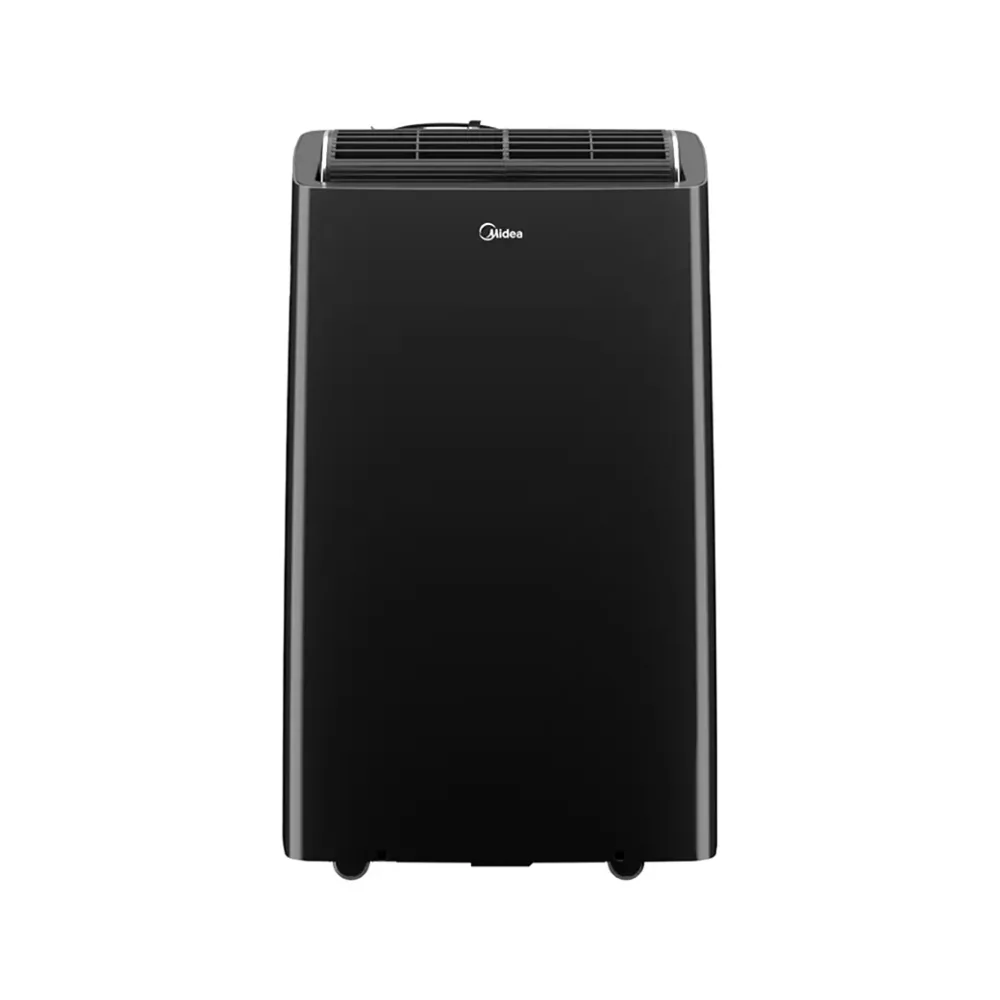 Midea Duo MAP12S1TBLThe cooling-only Duo for a smaller room or a buyer who does not need heat
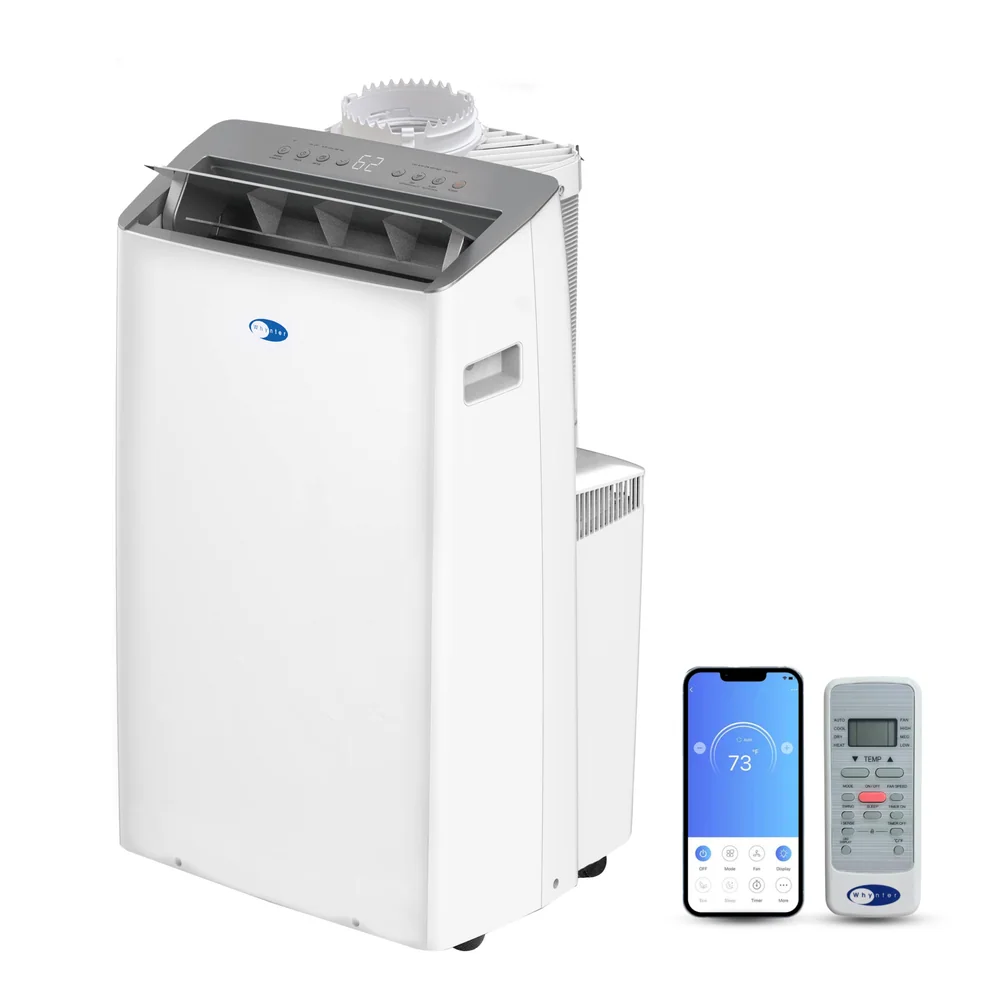 Whynter NEX ARC-1230WNA mechanically related 12,000-BTU DOE dual-hose inverter alternative with strong measured cooling
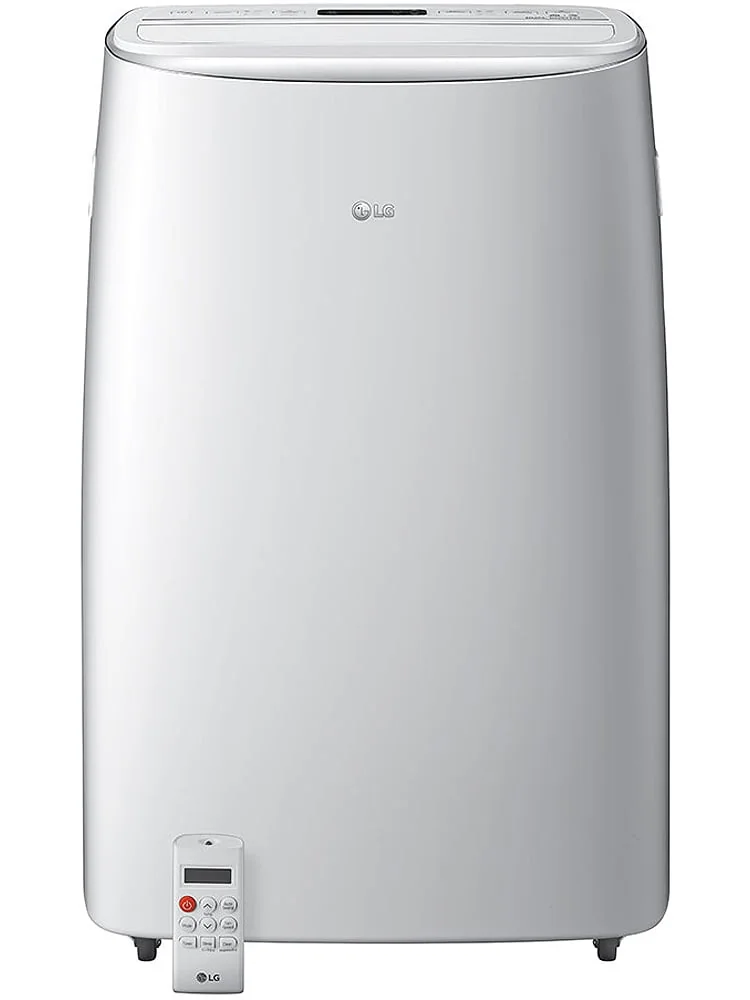 LG Dual Inverter LP1419IVSMA polished inverter portable with a simpler single-hose installation, but lower rated real-world capacity
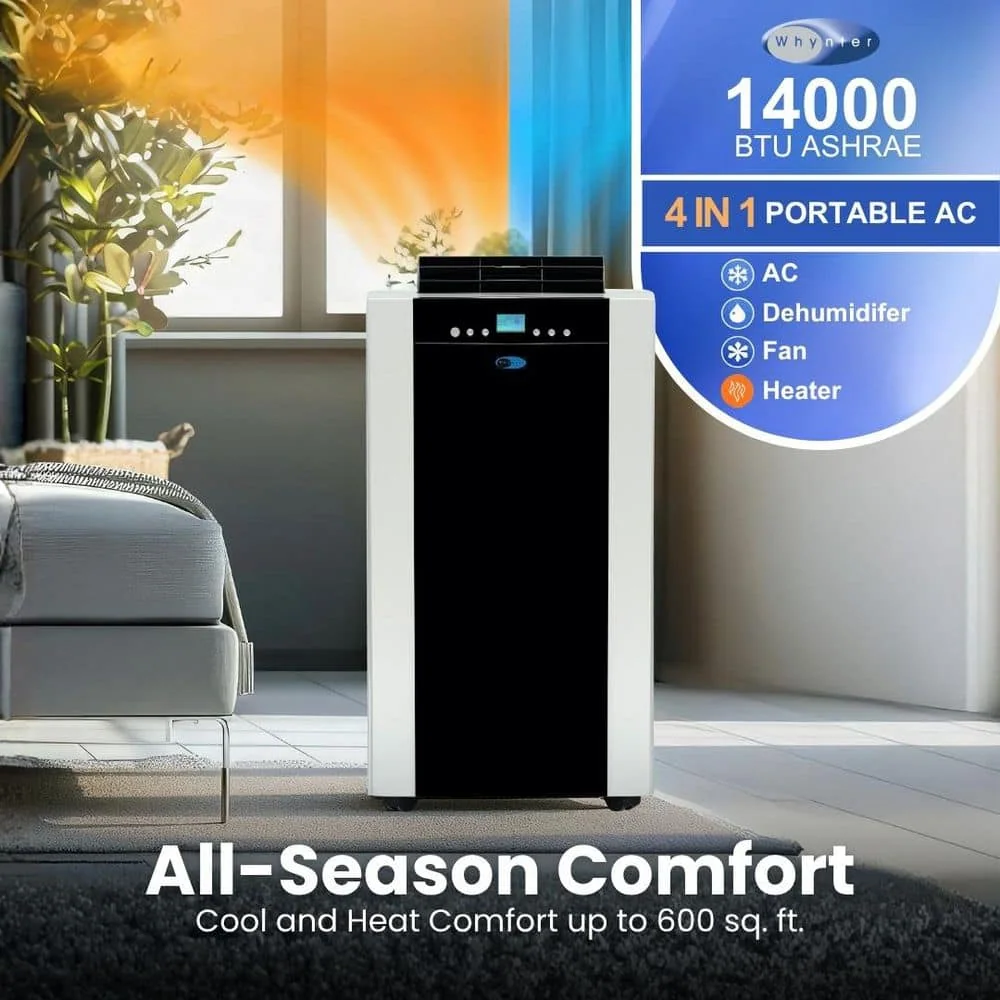 Whynter ARC-14SA conventional dual-hose alternative for buyers who value a simpler design over inverter modulation and smart controls
Midea Duo MAP14HS1TBL FAQ
Is the Midea Duo MAP14HS1TBL worth the money?
Yes, if a window unit is off the table and you'll use its large-room cooling, quiet running, and heat. For a small room or the occasional heat wave, $680 buys capacity you won't use.
What size room can the Midea MAP14HS1TBL cool?
Midea claims up to 550 square feet. It is a confident choice for a large enclosed bedroom, office, or conventional living room. Sunny top floors, high ceilings, and open layouts demand more than that figure assumes.
Is 14,000 BTU or 12,000 BTU the correct rating?
Both, measured different ways. The 14,000-BTU figure uses the older ASHRAE method. The 12,000-BTU SACC rating accounts for heat that portables leak back into the room, so use it for comparisons. It is still high for the category.
How quiet is the Midea Duo MAP14HS1TBL?
It is quiet for a portable during normal running. Wirecutter measured about 48 dB on average. Midea's 42 dBA figure is a minimum, and at full power during cooldown it sounds much like other powerful portables.
Does the Midea Duo MAP14HS1TBL need to be drained?
In heat and dry modes, yes, through the included hose. Cooling normally evaporates its condensate, but high humidity can fill the bottom tray and trigger a P1 shutdown until you empty it.
Can the Midea Duo heat a room in winter?
Not as primary heat. Heat-pump output falls as outdoor temperatures drop, and operation stops below 41 degrees Fahrenheit. Treat it as supplemental heat for mild weather, and remember that heat mode requires continuous drainage.
Is the Midea Duo actually portable?
Across a level floor, yes. At roughly 77 pounds, stairs take two people, and every move means reinstalling the window kit and rerouting drainage. Most owners should pick one room and leave it there.
Is a dual-hose portable AC better than a single-hose model?
Usually. A single-hose unit exhausts room air, which pulls hot outside air back in through gaps around doors and windows. The Duo's separate intake and exhaust channels avoid most of that penalty, as long as the window kit is well sealed.
Sources and research notes
Specifications come from manufacturer documentation. Measured results are attributed to independent evaluations.
- Midea Duo MAP14HS1TBL product page
Official model identity, capacity, modes, noise claim, smart controls, dimensions, weight, and warranty
- Midea Duo portable air conditioner owner manual
Operating ranges, installation, drainage, controls, heat-mode requirements, and maintenance
- Midea MAP14HS1TBL EnergyGuide
12,000-BTU capacity, 14.2 CEER, and standardized operating-cost context
- Natural Resources Canada portable air-conditioner product database
Current exact-model confirmation of the dual-duct design, 12,000-BTU SACC capacity, and 14.2 CEER
- Older Midea MAP14HS1TBL product sheet
Documentation of the older published 12.3 CEER figure
- The best portable air conditioner
Exact-model cooling, noise, power, room-uniformity, installation, and ownership observations
- Midea Duo review and test results
Cooling-only sibling capacity, power, noise, airflow, window kit, controls, and drainage
- Midea Duo MAP12S1TBL air conditioner review
Related dual-hose inverter sibling stability, humidity, efficiency, noise, and size evidence
- Midea MAP14HS1TBL air conditioner test listing
Exact-model public specifications and confirmation of independent lab coverage
- Midea Duo MAP14HS1TBL owner reviews
Longer-term cooling, noise, reliability, warranty, and support patterns
Should you buy the Midea Duo MAP14HS1TBL?
Buy it if your room is large, a window unit isn't an option, and you'll turn on the heat during mild spring and fall weather. In that situation, few portables make the compromise feel this small.
If a window unit fits your window and your lease, buy that instead. If you'll never use heat, look at the cooling-only MAP14S1TBL. Whichever you choose, buy it from a store that makes returns easy.