

What to know first
- The green laser on the cleaner head reveals dust invisible under normal lighting on hard floors
- The 60-minute runtime claim applies to the lowest suction mode, not the high-power setting most carpets need
- An LCD screen shows real-time suction power and countdown runtime instead of a blinking light
- Suction is engineered to stay strong as the bin fills, which cuts down on mid-clean stops
- It's on the heavier end for a cordless stick, which shows up most when reaching overhead
- Two cleaner heads are included, one built for deep carpet cleaning and one tuned for pet hair
Where the V15 Detect sits in Dyson's cordless lineup
The V15 Detect is Dyson's flagship cordless vacuum, positioned above the V8 and V12 lines and priced accordingly. Its defining feature is the laser embedded in the cleaner head, which lights up hardwood and tile so you can see exactly where dust has settled instead of guessing based on a quick once-over.
It comes with an LCD screen mounted on the body that reports suction strength and remaining battery time as you clean, a level of feedback that most cordless vacuums simply don't offer. Rather than a vague battery light, you get a number that tells you whether you'll finish the room before the vacuum dies.
Two cleaner heads are included, one designed for embedded dirt in carpet and rugs, the other tuned to resist pet hair tangling around the roller. That second head matters more than it sounds: a vacuum can have strong suction and still lose to a clogged brush bar.
The laser changes what 'clean' means to you
Most cordless vacuums ask you to trust the machine. The V15 Detect shows its work. Angling a laser across the floor reveals fine dust and debris that room lighting hides completely, and once you've seen a hardwood floor lit up that way, going back to guessing feels careless.
The other advantage is suction consistency as the bin fills. A lot of cordless vacuums lose real pickup power once the canister is half full, which forces more stops to empty it mid-clean and defeats the point of going cordless in the first place. Dyson's engineering keeps airflow steadier through more of the bin's capacity, so you're not chasing diminishing suction on the back half of a cleaning session.
The rubber-finned roller on the pet-specific head is the other quiet win. Bristled rollers dig into carpet more aggressively but wrap pet hair fast; rubber fins resist that wrap-around, which means fewer stops to cut hair out of the brush bar by hand.
What a cleaning session actually looks like
The LCD gives you a number instead of a vague battery indicator. You know your suction mode, your remaining minutes, and whether you'll clear the hallway and the living room before needing to plug back in. That number becomes part of how you plan a cleaning session rather than something you check after the fact.
On hard floors, the laser head turns a five-minute wipe-down into something closer to spot-checking. The beam can reveal dust along baseboards and corners, potentially reducing wasted passes over already-clean spots.
Emptying the bin is a one-handed motion by design, and switching between the two cleaner heads takes a few seconds. The tradeoff is holding position: this isn't the lightest stick vacuum on the market, and you'll feel the weight after a couple of minutes with your arm extended overhead for blinds or stair edges.
The runtime number you should actually plan around
Dyson advertises up to 60 minutes of runtime, but that figure is measured on the lowest suction setting, the one that does almost nothing on carpet fibers. Switch to high power for real pickup on rugs or pet hair and expect the runtime to drop substantially. Budget your cleaning route around short, focused bursts rather than assuming you can clean an entire house on one charge at full strength.
The weight is the second honest catch. It's not heavy sitting on a floor, but weight distribution matters more than the number on a scale once you're holding it above your head to clean stairs, ceiling fans, or curtain rods. If overhead cleaning is a regular part of your routine, test the feel before committing.
Powerful suction alone doesn't solve pet hair. Suction is only half of that equation; the roller brush design determines whether hair wraps around the bar or slides off it. Dyson's pet-specific head addresses this directly, but it means picking the right attachment for the job rather than assuming one head does everything.
The specs that matter
The 60-minute figure is measured on the lowest suction setting. High power, the mode you'll actually use on carpet, drains the battery much faster, so plan cleaning sessions around shorter bursts.
A vacuum that fades at half-full forces more mid-clean stops to empty it, which undercuts the whole point of going cordless.
Reveals dust invisible under normal room lighting on hardwood, tile, and LVP, so you clean based on what's actually there instead of a visual guess.
Gives you a real number to plan a cleaning session around instead of a vague battery indicator.
Rubber-finned rollers resist hair wrap-around; bristled rollers dig deeper into carpet but tangle faster. Having both means picking the right tool per room.
Feels manageable pushing across floors but tiring during extended overhead cleaning like stairs or blinds.
Who this product fits
You just refinished hardwood floors
The laser head will show you exactly how much fine dust settles between cleanings, which is useful information right after a refinish when you're trying to protect a new floor from grit.
You have a shedding dog and wall-to-wall carpet
The pet-specific cleaner head with the rubber-finned roller resists hair wrap-around better than a standard bristled brush, and the strong high-power suction pulls embedded hair out of carpet fibers instead of just skimming the surface.
You clean stairs and ceiling fans every week
The V15 Detect's weight and top-heavy balance will be more noticeable here than on flat floors. A lighter cordless model built specifically for overhead work may suit this routine better.
What else to compare
A few situations point toward a different cordless vacuum entirely.

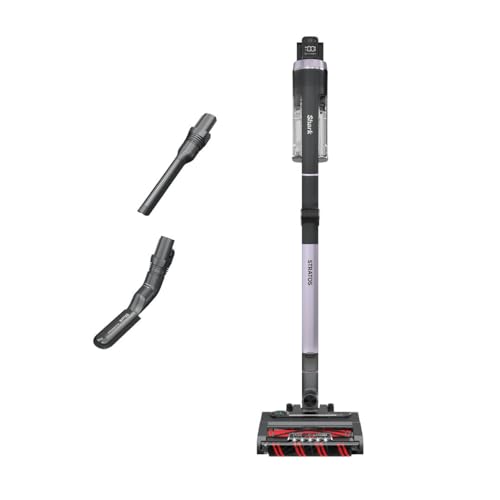


Dyson V15 Detect FAQ
Does the Dyson V15 Detect really run for 60 minutes?
Only on its lowest suction setting, which isn't strong enough to pull embedded dirt out of carpet. On high power, the mode you'll use most on rugs and pet hair, expect noticeably less runtime.
Is the laser dust detection actually useful or just a gimmick?
It's genuinely useful on hard floors like hardwood, tile, and LVP, where it reveals fine dust invisible under regular lighting. It doesn't work the same way on carpet, since the laser is designed to show dust sitting on a flat surface.
Is the Dyson V15 Detect good for pet hair?
Yes, with the included pet-specific cleaner head. Its rubber-finned roller resists hair wrap-around better than a standard bristled brush, and the vacuum maintains suction well as the bin fills, which matters when you're picking up a lot of hair in one session.
How heavy does the V15 Detect feel in actual use?
It's on the heavier side for a cordless stick vacuum, and that weight is most noticeable when holding it overhead for stairs, blinds, or ceiling fans rather than pushing it across a floor.
Does suction stay strong as the bin fills up?
Yes. Dyson's engineering is built to maintain airflow through more of the bin's capacity, which means fewer stops to empty it mid-clean compared to vacuums that lose power once the canister is half full.
Worth the price if you actually use what it shows you
The Dyson V15 Detect isn't the lightest cordless vacuum you can buy, and its real-world runtime on high power falls well short of the number printed on the box. Neither of those facts should surprise anyone who's owned a cordless vacuum before. What sets it apart is the feedback loop: a laser that shows you dust you'd otherwise miss, and an LCD screen that replaces guesswork with an actual number.
Buy it if your home is heavy on hard floors, you deal with pet hair regularly, and you'd rather clean based on evidence than assumption. Look elsewhere if you need long uninterrupted runtime at full power or you're doing constant overhead work where every ounce counts. For most households with mixed flooring and a pet or two, the V15 Detect earns its higher price by actually changing how thoroughly you clean, not just how the cleaning feels.