
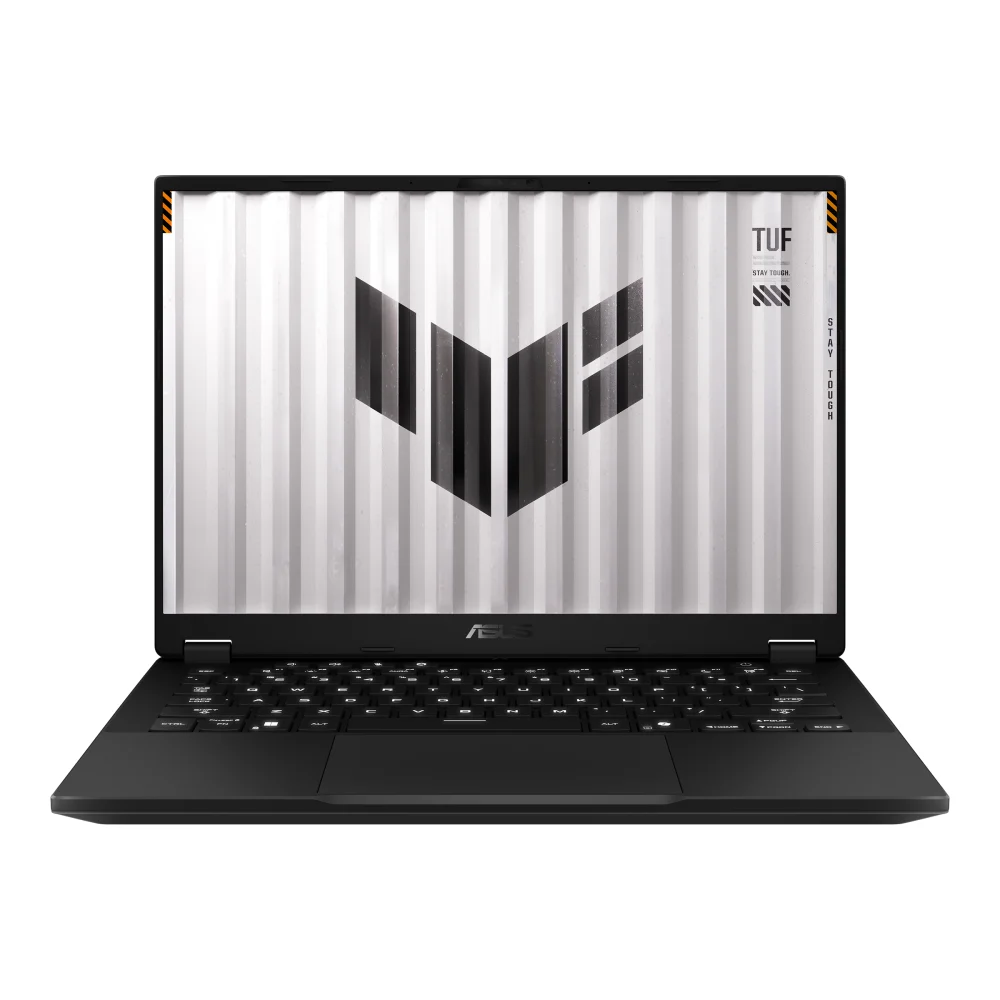
What to know first
- AMD's Ryzen AI Max+ 392 replaces a discrete GPU with 40 integrated RDNA 3.5 compute units and unified memory, letting the system reassign RAM as VRAM on the fly
- At 1.48 kg and 1.69 cm thick, it's built more like a slim productivity laptop than a typical gaming rig
- One independent test measured about 7 hours of real-world battery use, well above what most gaming laptops manage
- One independent evaluation clocked 48 fps at 1200p Ultra in Cyberpunk 2077, playable but not a discrete-GPU replacement at max settings
- The 14-inch, 2560x1600 165Hz display covers 100% sRGB and stays sharp for both gaming and everyday work
- Sustained CPU load pushed temperatures near 95°C in one test, a sign this chassis trades some headroom for its size
The TUF that stopped needing a GPU slot
Every prior TUF Gaming A14 followed the same recipe: CPU here, discrete GPU there, both competing for space and heat inside a 14-inch shell. The FA401EA breaks that formula by putting the entire graphics pipeline onto the same chip as the processor. AMD calls it Ryzen AI Max+ 392, and it packs 12 Zen 5 cores, 40 RDNA 3.5 compute units, and a 50 TOPS NPU onto one die that shares memory instead of splitting it between system RAM and dedicated VRAM.
That's a meaningfully different laptop than the FA401GM configuration sold alongside it, which keeps an Nvidia RTX card and a traditional CPU/GPU split. Shoppers comparing TUF A14 listings should check which chip they're actually buying, because the two machines behave very differently under load and serve different buyers.
Asus lists this generation as current, with an A18 model designed as the larger sibling rather than a direct replacement. For a 14-inch chassis, that leaves the FA401EA without much direct competition: few laptops this light and this thin are trying to run modern games at all.
One chip, no VRAM ceiling
Unified memory is the real story here. Instead of a fixed VRAM allocation like a typical discrete GPU laptop, the system can hand more of its LPDDR5X pool to graphics when you're gaming, or claw it back for a memory-hungry editing project. The US configuration lists 32GB total, and the memory is soldered, so buyers should choose with their long-term workload in mind.
On the gaming side, one independent evaluation recorded 48 fps at 1200p Ultra settings and 71 fps at Medium in Cyberpunk 2077, using the integrated Radeon 8060S alone. That's a genuinely usable frame rate for a chip with no dedicated graphics card behind it, though it's not going to match a laptop built around a discrete RTX GPU at the same settings. Buyers chasing maximum frame rates at high resolution should still look at a discrete-GPU machine; buyers who mostly play at 1200p and value portability get a real trade here, not a compromise.
The same chip carries a 50 TOPS NPU built for local AI workloads, letting the machine run assistants and generative models without sending data to the cloud. Whether that matters day to day depends entirely on whether you use apps that take advantage of on-device AI acceleration; plenty of buyers won't touch it, and that's fine, because the rest of the machine doesn't depend on it either.
A gaming laptop that behaves like a work laptop
Day to day, the FA401EA reads less like a gaming rig and more like a well-built productivity machine that happens to game. The 14-inch, 2560x1600 display runs at 165Hz with 100% sRGB coverage, sharp enough for spreadsheet work and color-sensitive editing, and fast enough for competitive titles when you dial settings down. At 1.48 kg and 1.69 cm thick, it slides into a bag the way a MacBook does, not the way a typical 14-inch gaming laptop with a discrete GPU does.
Two M.2 PCIe slots mean you can add a second SSD later even though the RAM itself is locked in at purchase, a small but real nod to serviceability that's increasingly rare in thin laptops. Port selection covers the basics: two USB-A, a USB-C with DisplayPort, and a USB4 port that also handles charging, so you're not stuck plugging in from only one side of the machine.
Battery life is where this chip earns its keep. One independent test measured roughly 7 hours of real-world use, a number that would be unremarkable on a plain office laptop but stands out on anything that can also run modern games. If you've owned a discrete-GPU gaming laptop and watched the battery meter drop the second you open a browser, this is the trade-off working in your favor.
Where the integrated approach shows its limits
Push the chip hard and the chassis has to work to keep up. One independent evaluation recorded sustained CPU temperatures near 95 degrees Celsius under heavy Cinebench-style load, an indication that this thin, light frame throttles performance during long, demanding sessions rather than sustaining peak output indefinitely. Short bursts of gaming or rendering should be fine; hour-long export jobs or marathon ray-traced sessions are where you'll feel the ceiling.
Pricing is the other real catch. If your priority is frame rate above everything else, that's a fair point worth sitting with before you buy.
Smaller compromises stack up too: no Ethernet port, an average webcam that struggles in backlit rooms, and memory that's soldered in at time of purchase rather than upgradeable later. None of these are surprising for a 14-inch chassis this thin, but they're worth planning around rather than discovering after the fact.
The specs that matter
This single chip replaces both a standard CPU and a discrete GPU, which is why the laptop can be this light while still running modern games.
Instead of a fixed VRAM allocation, graphics memory is pulled from the same pool as system RAM, which flexes based on what you're doing but caps out with the RAM you buy.
There's no upgrade path after purchase, so buyers planning to keep this machine for years should size up at checkout rather than assume they can add RAM later.
High resolution and refresh rate together mean the screen handles both fast-paced gaming and detail-heavy work like photo editing without needing an external monitor.
This is closer to an ultraportable's footprint than a typical gaming laptop's, making it genuinely comfortable to carry daily rather than reserve for trips.
Most gaming laptops struggle to clear a few hours away from an outlet. This one can realistically get through a workday of mixed use before needing a charge.
You get fast boot and load times out of the box, and room to add a second drive later without opening the case and finding no space left.
Who this product fits
The developer who wants local AI without a desktop tower
The 50 TOPS NPU and unified memory pool let this machine run on-device AI models without relying on cloud processing, and the light chassis means it's practical to carry between a desk and a coffee shop. If your workflow already uses local AI tools, this hardware gives you real headroom that a thinner ultrabook can't match.
The student who wants one laptop for class and casual gaming
At 1200p settings, Cyberpunk 2077 ran at a playable 48 fps on Ultra in one independent test, and the machine handles note-taking, browsing, and video calls without breaking a sweat. For someone who games occasionally rather than competitively, this covers both jobs in one 1.48 kg bag.
The frame-rate chaser deciding between generations
If maximum frames per dollar is the only priority, last year's discrete RTX 5060 configuration reportedly outperforms this one for similar money. Buyers focused purely on gaming benchmarks should compare that older model directly before paying a premium for the integrated chip's portability and battery life.
The road warrior who hates hunting for outlets
With one independent measurement putting real-world battery life around 7 hours, plus a USB4 port on the right side that handles charging, this laptop is built for someone who wants to leave the charger at home for a normal workday and still have game-ready hardware in the bag.
What else to compare
A few other paths are worth weighing before you commit to the integrated-graphics approach.
ASUS TUF Gaming A14 FA401EA (2026) FAQ
Does the Asus TUF Gaming A14 FA401EA have a discrete graphics card?
No. It uses AMD's Ryzen AI Max+ 392 chip, which handles CPU and graphics processing on a single die with the integrated Radeon 8060S. This is different from the FA401GM configuration, which keeps a separate Nvidia RTX GPU, so check the model suffix before buying.
How is the battery life in real use?
One independent evaluation measured about 7 hours of real-world use off the 73Wh battery, which is strong for a laptop capable of running modern games. Actual results will vary with brightness, workload, and whether you're gaming or doing light productivity work.
Can I upgrade the RAM later?
No. The listed US configuration has 32GB of memory soldered at the factory, so buy with your long-term needs in mind. Storage is more flexible because the chassis includes two M.2 slots.
Is this a good laptop for gaming compared to a discrete-GPU model?
It's capable but not a frame-rate leader. One independent test recorded 48 fps at 1200p Ultra settings in Cyberpunk 2077, and that same review noted last year's discrete RTX 5060 configuration may offer better gaming value per dollar at similar pricing.
Does it get hot under heavy load?
Yes, under sustained demanding workloads. One independent evaluation recorded CPU temperatures near 95 degrees Celsius during extended heavy use, which points to thermal throttling in this thin chassis rather than continuous peak performance.
Who actually needs the integrated approach
This laptop makes the most sense for someone who values portability, battery life, and local AI capability as much as raw gaming performance, and who is willing to pay a premium at the checkout line for that combination in a 1.48kg chassis. It's a genuinely different kind of gaming laptop, not a lesser version of the discrete-GPU formula, and it should be evaluated on those terms.
If frame rate per dollar is your only metric, the math currently favors last year's RTX 5060 configuration, and there's no shame in buying the older, cheaper machine that games harder. But if you want one laptop that handles class, work, local AI experimentation, and casual gaming without weighing down your bag or dying by lunchtime, the Asus TUF Gaming A14 FA401EA earns its price by doing all of it reasonably well at once.