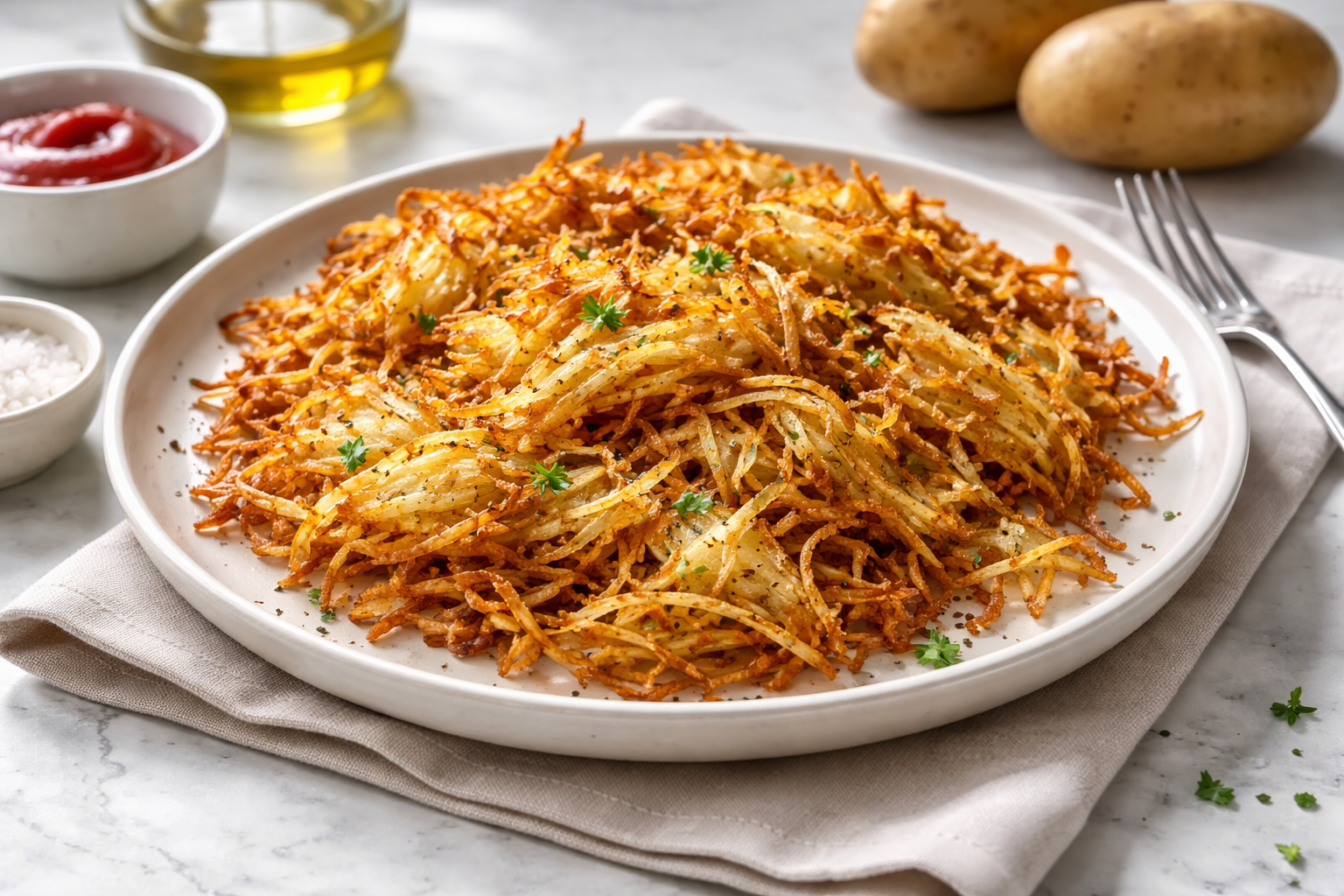
Why shredding disc hash browns cook better than hand-grated
A shredding disc makes strands that are consistent in thickness, so they cook at the same rate. That consistency is why you get fewer burnt wisps mixed with undercooked chunks, especially when you are making a full skillet.
Uniform shreds also pack together more predictably. When you press them into a layer, they form a flatter "potato pancake" that browns evenly because more surface area stays in contact with the hot pan.
Ingredients and pan options (butter vs oil, skillet size, add-ins)
Oil handles higher heat and helps the potatoes crisp without scorching. Butter adds great flavor but can brown quickly, so using oil plus a little butter gives you both crisping power and taste.
A 10 to 12 inch skillet is the sweet spot for 2 pounds of potatoes. If you crowd a smaller pan, the layer gets too thick and the center steams. Onion adds sweetness but also adds moisture, so squeeze it dry with the potatoes if you shred it.
Step-by-step: shred, rinse, squeeze dry, then form and fry
Rinsing is about starch management. Excess surface starch can turn gummy and gluey, which traps moisture and slows browning. A quick rinse and thorough drain keeps the texture more lacy and crisp.
Squeezing dry is the ownership step that matters. If you can wring out a noticeable amount of liquid, you are on the right track. Pressing the potatoes firmly in the pan then creates a tight contact layer that browns instead of frizzing and breaking apart.
Common problems and fixes (soggy center, sticking, uneven browning, holding for a crowd)
Soggy center usually means the layer was too thick or the shreds were not dry enough. Fix it by squeezing harder, using a larger skillet, or cooking in two batches. If the outside browns too fast, lower the heat so the center can heat through.
Sticking often comes from flipping too early. Let the crust form until it releases more easily. For holding, keep finished hash browns on a rack over a sheet pan in a 200 degrees F oven for up to 30 minutes. They will stay crispier on a rack than on a plate, where steam softens the bottom.
What this guide helps you understand
This recipe teaches a simple texture rule: water is the enemy of crispness. The more moisture you remove before cooking, the less time the potatoes spend steaming and the faster they can brown. That same idea applies to many food-processor jobs, like shredded zucchini or sliced eggplant, where a quick salt-and-squeeze can turn watery vegetables into better browning, better texture, and less splatter.
Food processor with a shredding disc
Clean kitchen towel (or sturdy paper towels) for squeezing the potatoes
10 to 12 inch skillet (cast iron or nonstick)