Pickori

Recipe

Creamy Cilantro Lime Dressing

A spoonable cilantro lime dressing made stable by processing aromatics first, then streaming in oil to emulsify.

Prep time: 10 minutesTotal time: 10 minutesYield: About 1 1/4 cupsDifficulty: Easy
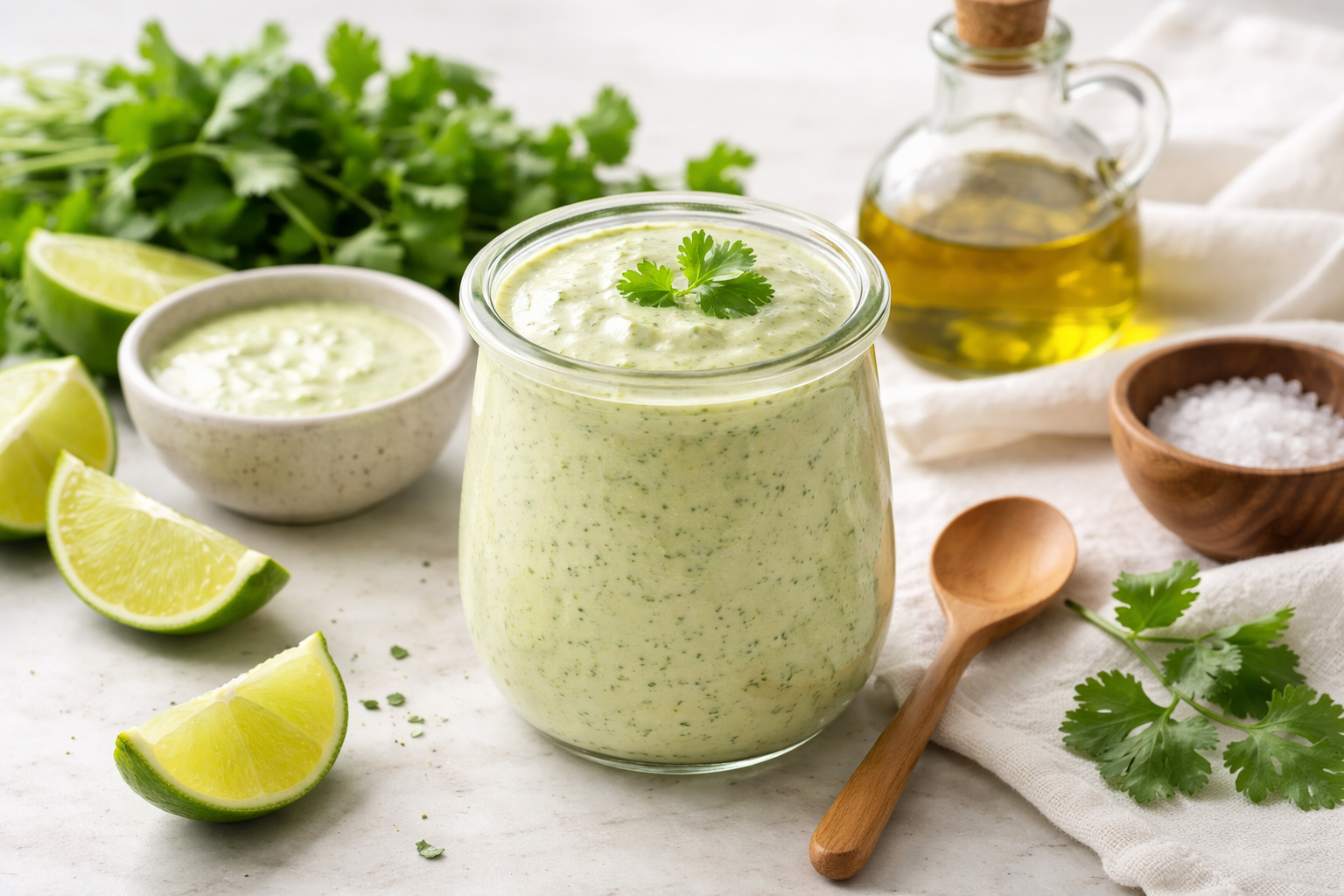
Creamy Cilantro Lime Dressing prepared and ready to serve

What you need

  • 1 packed cup cilantro leaves and tender stems (about 1 bunch), rinsed and well dried
  • 2 tablespoons fresh lime juice (from 1 to 2 limes)
  • 1 teaspoon finely grated lime zest (optional, for extra lime aroma)
  • 1 small garlic clove, peeled
  • 2 tablespoons chopped white onion or scallion
  • 1/2 jalapeno, seeded if you want it mild (optional)
  • 1/2 teaspoon kosher salt, plus more to taste
  • 1/4 teaspoon ground cumin (optional)
  • 1/2 cup plain Greek yogurt (or 1/3 cup mayonnaise, or 1/2 ripe avocado)
  • 1/3 cup neutral oil (such as avocado, canola, or grapeseed)
  • 2 to 4 tablespoons water, as needed to thin
  • 1 teaspoon honey or sugar (optional, to soften acidity)

Method

  1. Chop the aromatics first. In the food processor bowl, add cilantro, lime juice, lime zest (if using), garlic, onion, jalapeno (if using), salt, and cumin (if using). Pulse 8 to 12 times, then scrape down the bowl.
  2. Build the creamy base. Add the yogurt (or mayonnaise, or avocado). Process until mostly smooth, about 20 seconds. Scrape down the bowl again so you do not end up with leafy bits stuck to the sides.
  3. Emulsify by streaming in oil. With the processor running, slowly pour in the oil in a thin stream through the feed tube. Keep it slow, especially at the start, so the oil breaks into tiny droplets and the dressing turns creamy instead of slick.
  4. Adjust thickness and flavor. Add 2 tablespoons water and process 5 seconds. Add more water 1 tablespoon at a time until it is pourable or spoonable, depending on how you plan to use it. Taste and adjust with more salt, lime juice, or a little honey if it is too sharp.
  5. Rest (optional) and serve. For the best flavor, let the dressing sit 10 minutes in the fridge so the garlic and lime mellow slightly. Stir before serving.

Flavor goal and best uses (tacos, grain bowls, salads, roasted veg)

This dressing is bright, herby, and tangy, with enough creaminess to cling to food instead of sliding off. The lime and cilantro read freshest when the dressing is kept cold and used within a few days.

Use it as a taco sauce, a drizzle for grain bowls, a salad dressing, or a dip for roasted vegetables. If you make it thicker (less water), it works like a spread for sandwiches. If you thin it more, it becomes a pourable dressing for slaws and chopped salads.

Ingredients that change the texture (yogurt, mayo, avocado, water)

Yogurt makes a tangy, lighter dressing that stays creamy but can loosen over time as it sits. Mayonnaise makes the most stable, classic creamy texture and usually needs less oil to feel rich. Avocado makes it thick and spoonable with a soft, buttery body, but it can darken as it sits.

Water is your main texture dial. Add it after emulsifying so you do not make the base too thin to hold the oil droplets. If you want it extra thick without more fat, use thicker yogurt and reduce water. If you want it extra smooth, process longer and scrape the bowl once or twice.

Step-by-step: chop, emulsify, and adjust thickness

Processing the cilantro with the lime juice first helps it break down evenly and reduces the chance of stringy bits. Scraping the bowl matters because cilantro likes to stick to the sides, which can leave you with a dressing that looks smooth but tastes uneven.

The oil stream is what makes it creamy and stable. If you dump the oil in all at once, it tends to separate into a slick layer because the droplets stay large. After the oil is incorporated, adjust with water in small amounts so you land on the texture you want for dipping, drizzling, or dressing greens.

Make-ahead notes and troubleshooting (bitter cilantro stems, broken dressing, too sharp)

Tender cilantro stems are fine, but thick lower stems can taste bitter and can make the dressing more fibrous. If your bunch has thick stems, strip more leaves and use only the thin top stems. For make-ahead, store in a sealed container in the fridge and stir before using. The flavor is best in the first 2 to 3 days.

If the dressing breaks (looks oily or separated), process it again while streaming in 1 to 2 tablespoons water, or add 1 to 2 tablespoons more yogurt or mayo and re-process to bring it back together. If it is too sharp, add a pinch of salt, a small amount of honey, or a little more yogurt to round the acidity. If it tastes flat, add a bit more lime juice or zest.

What this guide helps you understand

This recipe teaches that temperature and dilution change how an emulsion behaves: a cold, thicker base (yogurt or mayo straight from the fridge) helps oil stay suspended, while adding water too early or too much at once can thin the base and make separation more likely. Serving it cold also makes it feel thicker on the spoon, so you may want to thin slightly more than you think if you plan to drizzle it.

Use cold ingredients (especially yogurt or mayo) and stream the oil slowly through the feed tube while the processor runs to form a stable emulsion.

Technique notes

Dry the cilantro well after rinsing. Extra water clinging to leaves can make the dressing thinner than expected and can mute flavor.

Safety note: Refrigerate promptly and keep chilled. Use within 3 to 4 days, and do not leave dairy-based dressing at room temperature for extended periods.

More food processor recipes

← Back to Food Processors