What to Do When an Electric Kettle Will Not Heat or Shut Off
Published
Use a careful, unplugged inspection to rule out simple power, water-level, scale, and steam-path problems before replacing an electric kettle.
Reading time: 8 minutesBest for: Electric kettle owners dealing with heating or automatic shutoff problems
Unplug first and let the kettle cool completely
Disconnect the power plug before touching the kettle, base, cord, lid area, or filter. A kettle that has boiled or run unusually long can remain hot at the body, lid, spout, and metal interior. Let it cool on a dry, heat-resistant counter, then pour out any remaining water. Never immerse the kettle body, power base, cord, or plug in water. The electrical connections under a cordless kettle and in its base must stay dry.
Do not attempt to defeat the shutoff by holding a switch down, wedging a control, or repeatedly lifting and replacing the kettle while it is heating. Those actions can allow the kettle to continue heating when it should stop. If it boiled dry, wait until it is fully cool before adding water. Some kettles have dry-boil protection, but that feature is a backup, not a reason to operate below the minimum fill line.
Check the outlet, power base, cord, and kettle-to-base contact
First, check whether the outlet supplies power by trying another ordinary household device you know works. Then inspect the kettle cord and plug for cuts, crushed sections, loose parts, discoloration, or heat damage. Make sure the base sits flat on a dry counter and that the cord is not pulling it sideways. If the kettle uses a removable 360-degree base, place the kettle squarely on it rather than setting it down at an angle.
With everything unplugged and cool, wipe the underside of the kettle and the top of the base with a clean dry cloth. Water droplets, spilled sugar, dust, or residue can prevent solid electrical contact. Do not scrape, bend, or poke the metal contacts. If the kettle still does not heat after a dry, secure connection and a confirmed working outlet, the internal switch, thermostat, heating element, or wiring may have failed. Stop troubleshooting if there is any sign of electrical damage.
Confirm the water level is above the minimum fill line
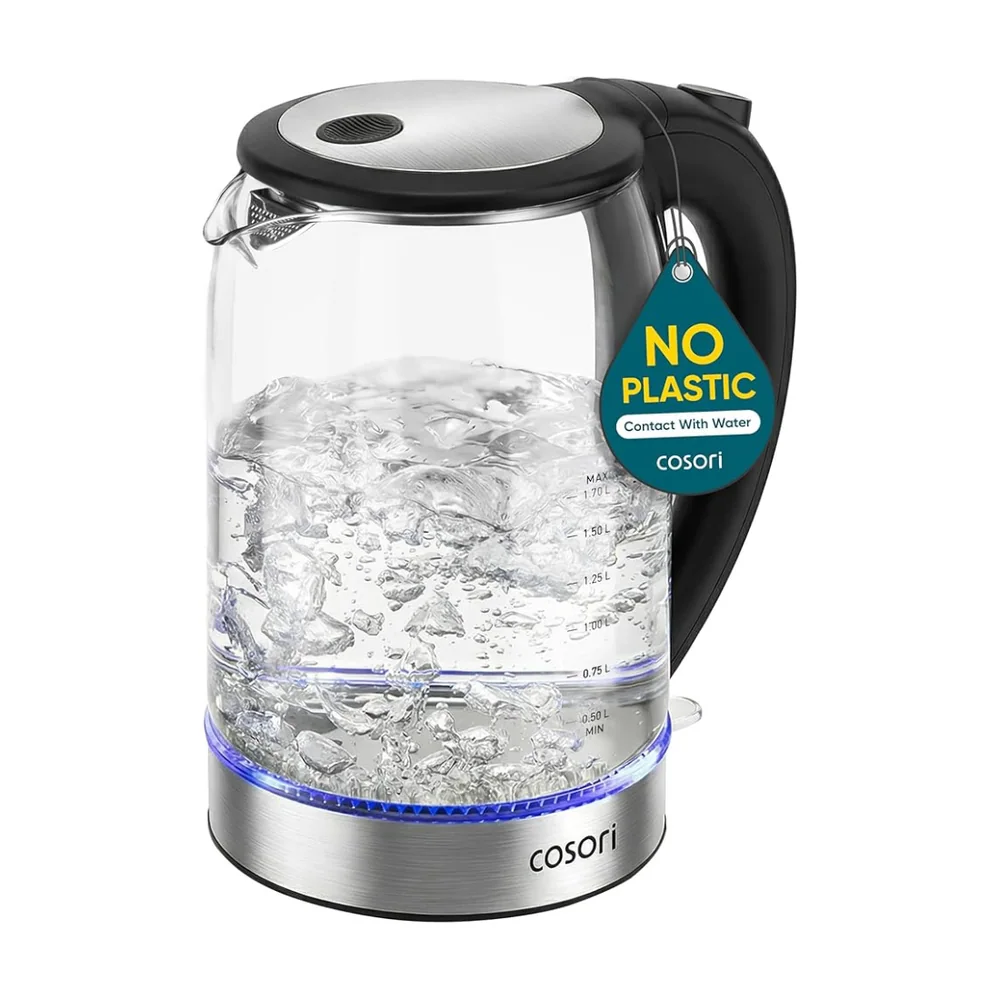
Fill the kettle above its marked minimum line and below its maximum line. The minimum fill is not just a suggestion. It is the least amount of water the kettle is designed to heat without exposing the heating system to excessive heat. A very small amount of water may trigger dry-boil protection, cause an early shutoff, or heat so quickly that the kettle behaves inconsistently.
Use fresh water for the check, then close the lid fully. A lid that is partly open can send steam in the wrong direction and affect automatic shutoff. Do not overfill to compensate. Water can surge from the spout when it boils, especially if the kettle is moved or poured immediately. If your usual need is one mug at a time but the kettle's minimum fill is much higher, that mismatch can make daily operation inconvenient and waste water.
Remove scale and check the lid, filter, and steam path for blockage
Scale is the chalky mineral deposit left behind when water evaporates. It can coat the interior, collect around the lid and spout, and interfere with the steam route used by many automatic shutoff systems. Follow the kettle's care instructions for descaling. In general, use a kettle-safe descaling method, rinse thoroughly afterward, and boil and discard fresh water if the instructions call for it. Never scrub a concealed heating plate with a sharp tool or abrasive pad.
After descaling and cooling, inspect the lid, spout opening, and removable limescale filter if your kettle has one. Clean away loose mineral flakes and make sure the lid closes normally. A filter is meant to catch particles while pouring, not to replace descaling. If the kettle repeatedly fails to shut off even when clean, filled correctly, and closed properly, the steam-sensing mechanism may not be working as intended. That is a reason to retire the kettle rather than continue using it under supervision.
What this guide helps you understand
A kettle that will not heat may have a simple outlet, contact, water-level, or scale issue, but a kettle that repeatedly fails to shut off should be removed from service because its automatic safety control is no longer dependable.
Unplug the kettle and let it cool completely before inspection or cleaning.
Check that the outlet works, the base and kettle contacts are dry, and the kettle is seated flat.
Fill above the minimum line and close the lid fully before testing normal operation.
Stop using the kettle if it repeatedly boils without shutting off or shows electrical damage, leaks, or overheating.
Technique notes
Do not immerse the kettle body or power base in water.
A removable spout filter catches particles but does not prevent mineral scale inside the kettle.
Safety note: Never bypass an automatic shutoff or continue using a kettle that repeatedly fails to switch off after boiling.