Pickori

Recipe

Silky homemade mayonnaise and aioli

A blender makes thick, stable mayonnaise fast by keeping the oil droplets small and evenly dispersed.

Prep time: 10 minutesTotal time: 15 minutesYield: About 1 cupDifficulty: Easy
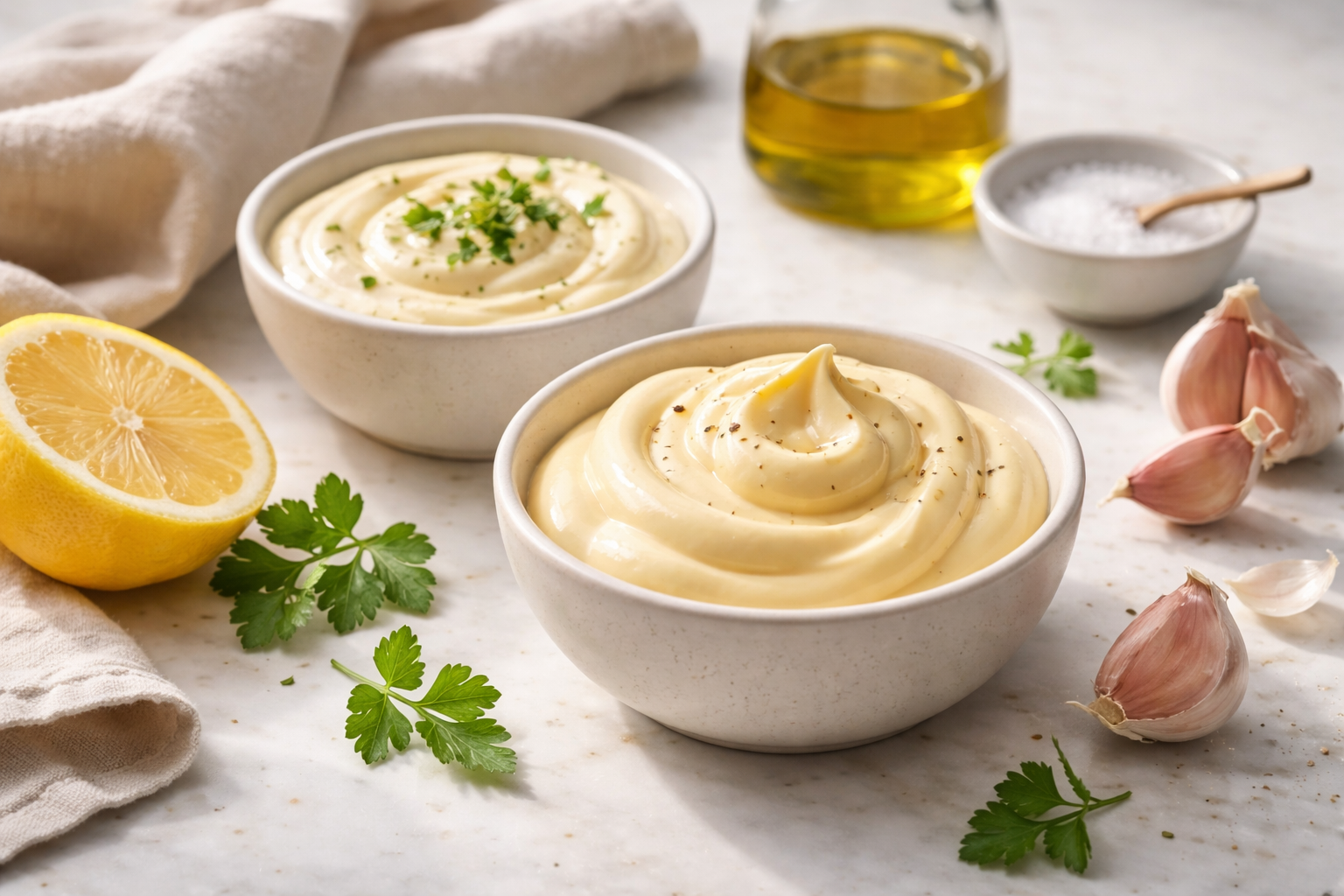
Silky homemade mayonnaise and aioli prepared and ready to serve

What you need

  • 1 large egg, room temperature
  • 1 tablespoon fresh lemon juice
  • 1 tablespoon white wine vinegar (or more lemon juice)
  • 1 teaspoon Dijon mustard
  • 3/4 teaspoon kosher salt
  • 1/4 teaspoon freshly ground black pepper
  • 1 cup neutral oil (avocado, grapeseed, or canola), plus more as needed
  • 1 small garlic clove, finely grated (optional, for aioli)
  • 1/2 teaspoon water, as needed to loosen (optional)

Method

  1. Set up the blender: Use a clean blender jar. Add the egg, lemon juice, vinegar, Dijon, salt, and pepper. Blend on low for 10 seconds to combine.
  2. Start the emulsion: With the blender running on low, begin adding the oil in a very thin stream (think drops at first). Keep the stream steady and slow for the first 1/4 cup of oil so the mixture can thicken and turn pale.
  3. Build thickness: Once the mixture looks creamy and starts to mound slightly, you can increase the oil stream to a thin ribbon. Continue blending and adding oil until you have used 1 cup and the mayo is thick and glossy.
  4. Adjust texture: If the mayo is thicker than you want, blend in 1/2 teaspoon water at a time until it loosens. If it is thinner than you want, blend in 1 tablespoon oil at a time until it thickens.
  5. Turn it into aioli (optional): Stop the blender. Add the grated garlic clove. Blend on low for 5 to 10 seconds, just until evenly mixed. Taste and adjust salt, lemon, or vinegar.
  6. Store: Scrape into a clean container, cover, and refrigerate. Stir before using if it sits for a while.

What you're making and why a blender helps

Mayonnaise is an emulsion: oil is broken into tiny droplets and suspended in a water-based phase (egg, acid, and a little water naturally present in the egg). When the droplets are small and evenly distributed, the mayo looks lighter in color, feels thick, and stays together instead of weeping oil.

A blender helps because it creates strong shear, which is the cutting and swirling action that breaks oil into fine droplets quickly. The tradeoff is that a blender can also overwhelm the mixture if you dump the oil in too fast, so the key is controlling the oil stream until the emulsion has "caught."

Ingredients that control thickness and flavor (egg, acid, mustard, oil)

The egg is the main emulsifier. Its lecithin helps oil and water stay mixed, and starting with a room-temperature egg makes the mixture come together more predictably than a cold egg that can slow thickening.

Acid (lemon juice and vinegar) brightens flavor and helps the mayo taste less greasy. Mustard adds flavor and also supports emulsification, which is why a small amount makes the process more forgiving. Oil choice changes the final taste more than people expect: neutral oils keep it classic, while strongly flavored oils can dominate and sometimes taste bitter when blended hard.

Step-by-step blender method for a stable emulsion

The first minute is where stability is decided. Adding oil slowly at the start gives the egg and mustard time to surround and stabilize each new droplet. If you rush this stage, the oil droplets stay too large, and the mixture can look loose or separate.

Jar circulation matters with thick mayo. If your blender tends to leave ingredients stuck above the blades, stop and scrape down once early on, then continue. Keeping the mixture moving through the blade path is more important than using a higher speed, which can warm the mayo and make it taste slightly flatter.

Variations and fixes (aioli, spicy mayo, too thin, too thick, broken mayo)

For garlic aioli without bitterness, use one small clove and grate it finely so it disperses quickly. Blend only briefly after adding garlic. Long blending can make garlic taste harsh, and using too much raw garlic can overpower the mayo as it sits.

If the mayo is too thin, keep blending and add oil in small amounts until it thickens. If it is too thick, blend in water 1/2 teaspoon at a time. If it breaks (looks oily and separated), start over in a clean jar with 1 egg yolk or 1 tablespoon mustard, then slowly blend the broken mayo into it in a thin stream, treating it like the "oil" you are adding.

What this guide helps you understand

This recipe does not use ice, but it teaches the same temperature control principle you use in blended drinks: heat changes texture. A blender can warm mixtures through friction, which can loosen an emulsion and dull flavor. Keeping ingredients cool (but not icy cold) and blending only as long as needed helps the mayo stay thick and clean-tasting.

No ice required. Use a room-temperature egg so the emulsion forms quickly, and keep the oil at cool room temperature for predictable thickening.

Technique notes

If your blender has a wide jar and struggles with small volumes, double the batch for better circulation, then store the extra in the fridge.

Safety note: Mayonnaise made with raw egg should be kept refrigerated and used within a few days. Use clean utensils each time to avoid introducing bacteria.

More from Blenders

← Back to Blenders