Keeping a portable AC window setup secure in storms and on ground floors
Published
A secure, weather-resistant window kit prevents shifting, leaks, and unwanted access while keeping your portable AC working efficiently.
Reading time: 8 minutesBest for: Ground-floor renters, storm-prone households, and anyone whose window kit loosens, leaks, or shifts over time.
What can go wrong in wind and rain (panel shift, hose pull, water intrusion)
Wind can push and pull on the exhaust hose like a lever. If the hose connection is loose or the panel is only lightly wedged in place, the panel can slide, tilt, or pop out of its track. Even a small shift can open gaps that dump hot outdoor air into the room, which makes the AC run longer and feel weaker.
Rain problems usually come from water following surfaces. If the window is open in a way that creates a flat ledge, water can pool and then run inward. Splashing rain can also hit the panel and find its way through seams. Once water gets inside, it can damage window sills, swell wood trim, stain drywall, and create a musty smell that is hard to get rid of.
Simple security upgrades that do not damage the window (stops, locks, brackets, straps)
The simplest security improvement is a window stop. A stop is any device that limits how far the window can open, so the window cannot be raised beyond the height needed for the kit. Many windows can use a removable stop that wedges in the track. The goal is to prevent someone from lifting the window higher and pushing the panel inward.
Next, reduce the chance the panel can be pushed or pulled out. Add support so the panel is held firmly in the frame, not just by friction. Depending on your window style, that can mean using removable brackets that press the panel into place, or a strap that takes the weight and tug of the hose so the panel is not carrying that stress. Also make sure the window's own lock is engaged whenever possible, even with the kit installed.
Weatherproofing for storms (drip paths, splash protection, keeping the hose connection tight)
Think in terms of drip paths. Water will follow gravity and surfaces, so you want the outside side of the setup to shed water outward, not inward. Make sure the window closes down tightly onto the top of the panel so rain cannot blow under the sash. If your kit leaves small seams, seal them with removable weatherstripping so wind-driven rain has fewer entry points.
The hose connection is another common leak point. If the hose collar is not fully seated, wind can rattle it loose and open a gap that leaks hot air and can admit water. Tighten the connection, avoid twisting the hose so it is constantly trying to rotate the fitting, and support the hose so its weight is not hanging off the window. A supported hose moves less in gusts and keeps the seal intact.
Routine checks that prevent surprises (after a storm, after cleaning, after moving the unit)
After a storm, do a fast inspection: confirm the panel is still square in the frame, the window is still pressed firmly against it, and the hose is still locked in place. Put your hand near the panel edges while the unit runs. If you feel warm air coming in, you have a gap that will hurt cooling and can pull in humidity.
After cleaning or moving the unit, re-check the hose route. It is easy to create a kink, a sharp bend, or a partial disconnect when you slide the unit to vacuum. Also check the bottom of the window area for dampness. Catching a small leak early prevents swollen trim and hidden moisture. A two-minute check beats discovering water damage weeks later.
What this guide helps you understand
A portable AC window kit should be treated like a small exterior opening. Prevent movement with stops and support, block gaps with removable sealing, and check the setup after storms and after any time you move the unit. A stable, tight kit improves both security and cooling performance.
With the unit running, feel around the window panel edges and hose connection for warm air leaks, then add removable weatherstripping or reposition the panel until leaks stop.
Products that fit this practical guide
As an Amazon Associate I earn from qualifying purchases.
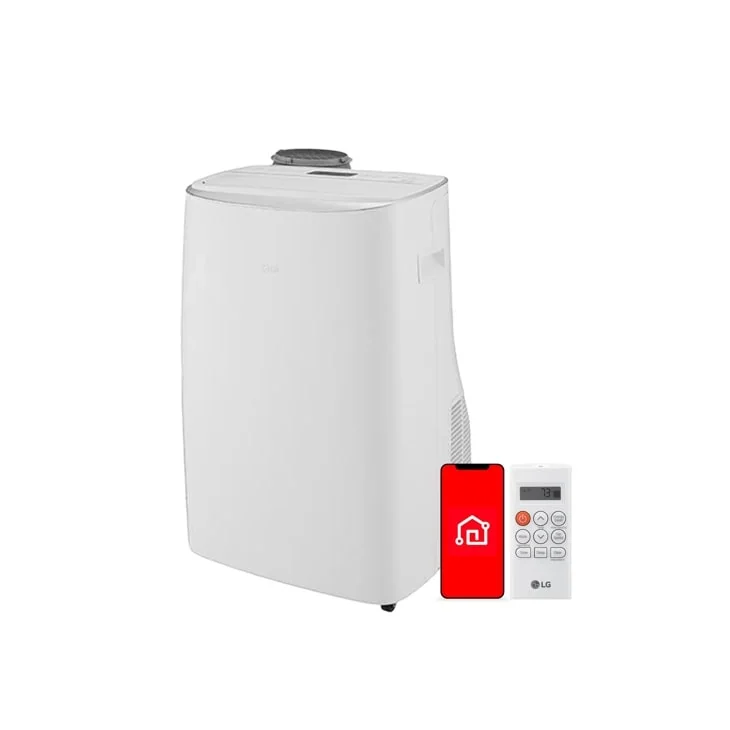
LG Wi-Fi Connected Portable Air Conditioner fits anyone who wants to control a portable air conditioner from their phone and keep day to day adjustments simple.
If the hose tugs on the panel when you bump the unit, the hose needs support. Reducing that tug prevents both security issues and gradual seal failure.
Safety note: Do not route the exhaust hose where it can trip someone or pull the unit over. A tip-over can damage the window setup and the unit.