Portable air conditioners that trip breakers: what to check and fix
Published
Most portable AC breaker trips come from high current draw, shared circuits, or unsafe power setups that you can identify and correct step by step.
Reading time: 8 minutesBest for: People whose portable AC trips a breaker, resets a GFCI outlet, or overheats a plug and want a safe, practical checklist.
Know what the unit is asking from the outlet (amps, watts, startup surge)
Look for the electrical ratings on the unit's nameplate (often on the back or side). You will usually see amps (A) and sometimes watts (W). Amps tell you how much current the unit pulls while running. Watts are the power draw, and watts roughly equal volts times amps. In most homes, a portable AC is a high-draw appliance, so it does not take much else on the same circuit to push things over the edge.
The tricky part is startup surge, which is a short burst of higher current when the compressor starts. Breakers are designed to tolerate brief surges, but if the circuit is already near its limit, that surge can be enough to trip it. This is why a unit may run for a while, shut off, then trip right when it tries to restart. If your unit has an inverter compressor (variable speed), it may surge less than a basic on off design, but it can still overload a weak setup.
Check the circuit you are actually on (shared loads, GFCI/AFCI behavior, old wiring)
Figure out what else shares the same breaker. "Same room" does not always mean "same circuit," and one breaker can feed multiple rooms. Common hidden loads include refrigerators on the other side of a wall, a microwave, a toaster oven, a space heater, a dehumidifier, or a desktop computer and monitor. If the portable AC trips only at certain times of day, it is often because another appliance is cycling on and stacking load at the wrong moment.
Also pay attention to the type of outlet protection. A GFCI outlet (often in kitchens, baths, garages, basements) trips when it senses current leaking where it should not, which can happen with moisture, damaged cords, or certain electrical noise. An AFCI breaker (common in bedrooms and living areas) is designed to detect arcing faults, and it can trip if a plug is loose, an outlet is worn, or a cord is damaged. Older wiring, backstabbed outlets, and loose connections can make nuisance trips more likely and more dangerous.
Fix the common causes (cord length, plug heat, loose outlets, power strips)
First fix is simple: plug the portable AC directly into a properly grounded wall outlet. Avoid power strips and most extension cords. They add resistance, which causes voltage drop (less voltage reaching the unit) and heat at the plug. Voltage drop can make the compressor work harder and draw more current, which increases the chance of a trip. If you must use an extension cord temporarily, it should be heavy duty, as short as possible, and fully uncoiled so it can shed heat.
Then check for heat and looseness. With the unit running, carefully feel the plug and the outlet faceplate area. Warm is a warning, hot is a stop. A loose outlet that cannot hold the plug firmly can arc under load, which can trip an AFCI and can damage the outlet. Replace a worn outlet rather than "making it work." Finally, reduce the AC's workload so it cycles less aggressively: seal the window kit tightly, keep the hose as short and straight as possible, and close doors to the space you are cooling.
When to stop troubleshooting and call an electrician (repeat trips, burning smell, hot plug)
Stop if the breaker trips repeatedly after you have removed other loads and plugged the unit directly into a good outlet. Repeated trips are not just annoying, they are a sign that something is overheating or that the circuit cannot support the load. Do not keep resetting the breaker and trying again, because each attempt can worsen heat damage at a weak connection.
Call an electrician immediately if you notice a burning smell, discoloration around the outlet, buzzing, crackling, a plug that is hot to the touch, or a breaker that feels hot. Also get help if the outlet is loose in the wall, if the breaker trips instantly when the compressor starts, or if multiple outlets on the same circuit act flaky. If the portable AC trips GFCI outlets in damp areas, address moisture and placement, and have the circuit checked for proper grounding and wiring integrity.
What this guide helps you understand
A portable AC that trips breakers is usually telling you the circuit, outlet, or power path is marginal. Fixing the power setup (dedicated load, direct-to-wall plug, tight outlet, short straight hose and sealed window kit) often solves the problem more reliably than chasing "more BTUs."
Confirm the unit's nameplate amps and plug it directly into a grounded wall outlet with no power strip.
Identify what else is on the same breaker and turn off or move other high-draw appliances before running the AC.
Check the plug and outlet for looseness or heat while the unit is running, and stop if anything is hot.
Products that fit this practical guide
As an Amazon Associate I earn from qualifying purchases.
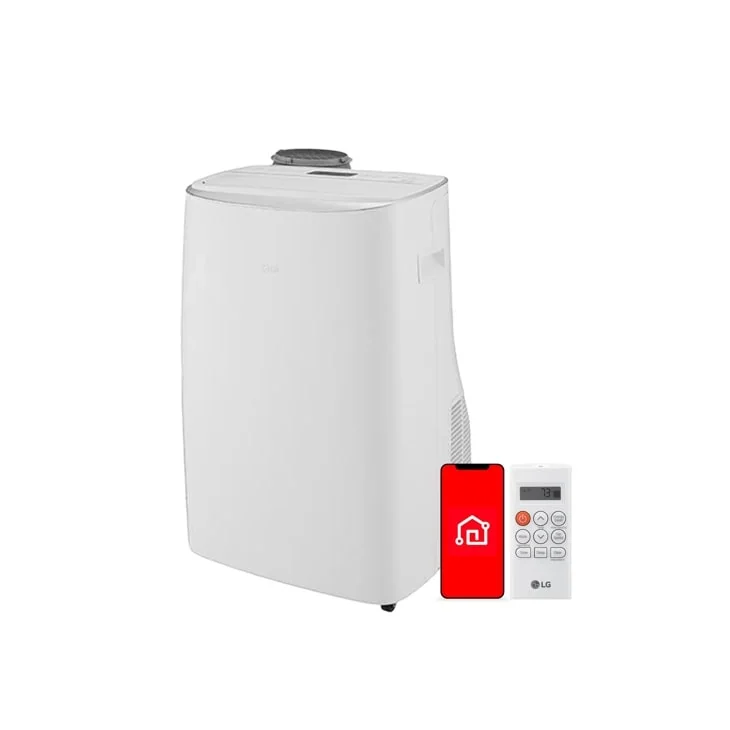
LG Wi-Fi Connected Portable Air Conditioner fits anyone who wants to control a portable air conditioner from their phone and keep day to day adjustments simple.
If trips happen mostly when the compressor restarts, reduce cycling by improving the window seal and keeping the set temperature reasonable for the room.
A leaky window kit can make the unit run harder and longer, which increases electrical stress even if the breaker does not trip immediately.
Safety note: If you smell burning, see discoloration, hear buzzing or crackling, or feel a hot plug or outlet, turn the unit off, unplug it, and do not use that outlet until it is repaired.