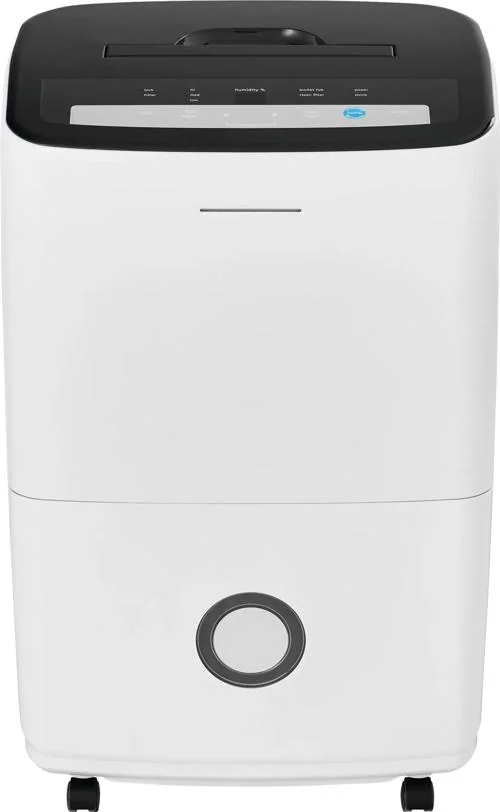
Frost on a dehumidifier usually means its cold coil is operating in conditions where moisture freezes before it can drain away.
Reading time: 8 minutesBest for: Homeowners using a portable dehumidifier in a cool basement, laundry room, garage, or damp living area
What frost on a dehumidifier coil means
Inside a compressor dehumidifier, refrigerant cools the evaporator coil, which is the part that pulls moisture from the air. In a warm, humid room, condensed water stays liquid and runs into the bucket. In a cooler room, the coil can fall below freezing and the water turns to frost. As frost builds, it blocks air from passing through the coil and reduces the machine's ability to collect water.
A small amount of frost that later disappears may simply mean the unit has entered its normal defrost cycle. Thick ice, frost that returns quickly, or a machine that runs for hours with little water collection deserves attention. The problem may be room temperature, airflow, or a mechanical fault. Do not judge performance by a single short period, especially when the room is cool and the unit is periodically defrosting.
How room temperature and humidity affect freezing
Compressor dehumidifiers work best when the air is warm enough for moisture to condense and drain from the coil. As room temperature drops, the coil is more likely to frost and the unit removes less water. A cool basement can feel damp even when it holds less moisture than a warm room, because cool surfaces and limited air movement make the dampness more noticeable.
Humidity also changes what happens at the coil. Very humid air gives the machine more moisture to remove, while cooler air makes that moisture more likely to freeze on a cold coil. Check the dehumidifier's stated operating temperature range before placing it in an unheated basement, garage, crawlspace, or seasonal room. If the room often stays below that range, a standard compressor unit may spend too much time defrosting to be useful.
What automatic defrost does and why water collection pauses
Automatic defrost is a control feature that protects the coil when frost begins to form. Depending on the design, the dehumidifier may pause the compressor while the fan continues, or it may use another method to warm the coil. The frost melts, water drains away, and normal moisture removal resumes. During this period, the bucket may not fill even though the machine still appears to be running.
Defrost cycles are a tradeoff, not necessarily a failure. The colder the room, the more often they may occur and the less water the unit can remove over a day. If a dehumidifier repeatedly enters defrost in a cool space, raising the room temperature when practical can help. It can also make sense to use a dehumidifier designed for cooler conditions rather than expecting a typical basement unit to perform like it would in a warm, humid room.
Airflow, dirty filters, and clearance problems that can worsen frost
A dehumidifier needs a steady supply of room air. Its air filter catches dust, lint, and pet hair before they reach the coil, but a clogged filter restricts airflow. With less warm room air moving across the coil, the coil can become colder and frost more easily. Laundry areas are especially prone to this problem because lint can load a filter quickly.
Keep the intake and exhaust openings clear, and follow the clearance directions in the owner's manual. Do not wedge the unit between storage boxes, curtains, or furniture, and do not place it directly against a wall. Vacuum or rinse the removable filter as directed, then let it dry fully before reinstalling it. Also inspect the grille for dust buildup. Better airflow improves moisture removal and reduces the conditions that encourage ice.
What this guide helps you understand
Frost is most often a sign that a compressor dehumidifier is operating in air that is too cool or moving too slowly across the coil. Thaw the unit safely, restore airflow, verify the room temperature, and treat repeated icing in suitable conditions as a reason to seek repair or choose equipment better suited to the space.
Check the room temperature against the dehumidifier's stated operating range, clean the air filter, and leave the required clearance around the intake and exhaust before restarting a thawed unit.
Technique notes
Water collection can pause during automatic defrost, so a temporarily empty bucket does not always mean the dehumidifier has stopped working.
Safety note: Unplug the dehumidifier before thawing or cleaning it, and never scrape ice from the coil with a sharp tool.