
Pickori

Practical guide

Deep Cleaning Wall-to-Wall Carpet Without Overwetting It

A whole-room routine that focuses on controlled water use, thorough extraction, and fast drying so your carpet feels clean instead of sticky.

Reading time: 8 minutesBest for: Homeowners cleaning wall-to-wall carpet with an upright carpet cleaner who want faster drying and fewer residue issues
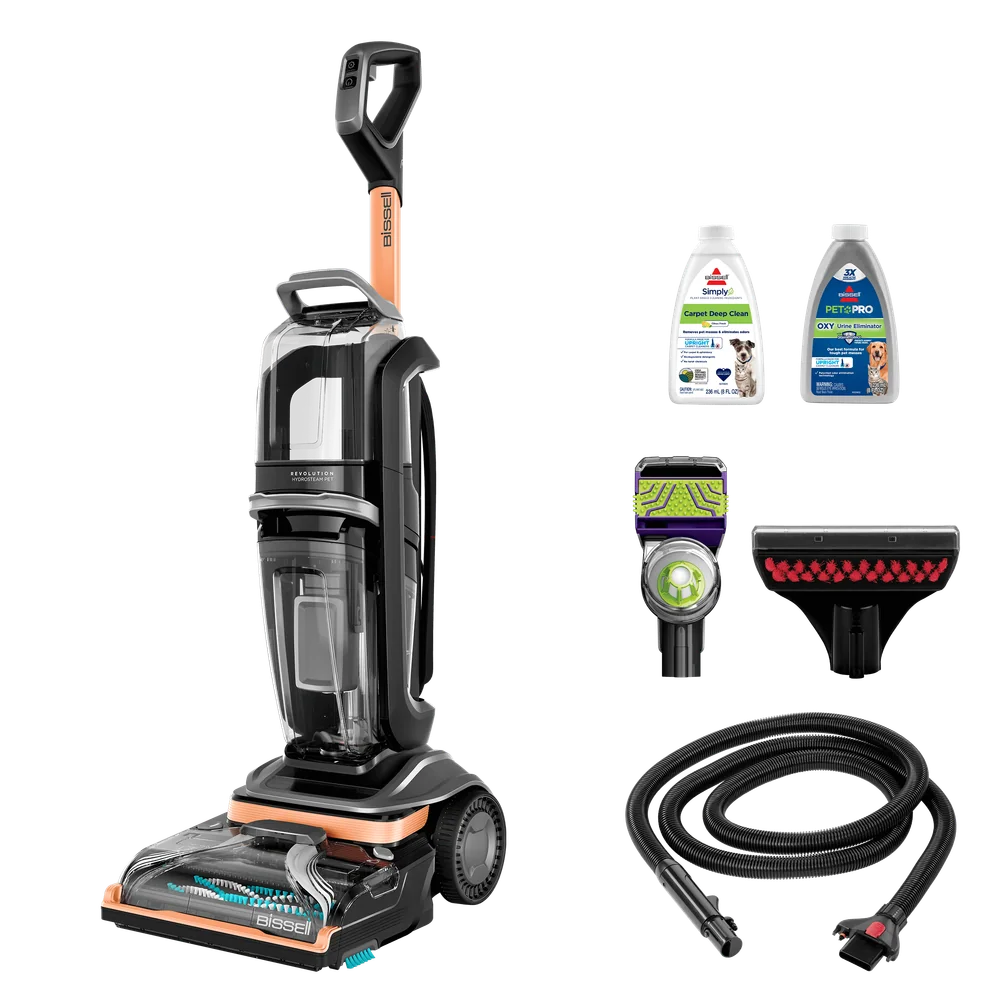
Bissell Revolution HydroSteam Pet Carpet Cleaner

Prep that changes results: vacuuming, moving furniture, and protecting wood and baseboards

Start with a slow, thorough vacuum. Upright carpet cleaners are not designed to pick up dry grit the way a vacuum does, and that grit turns into muddy slurry once you add water. Pay extra attention to edges and traffic lanes, and use a crevice tool along baseboards if you have one. If your vacuum has height adjustment, set it so it lifts debris without bogging down. The cleaner the carpet is before washing, the less solution you need to use to get results. Move small furniture out of the room when possible, and plan what stays. Anything with bare wood, metal, or unfinished legs can stain or rust when it sits on damp carpet. Set those pieces on plastic or foil squares, or move them to a dry area until the carpet is fully dry. Protect nearby wood floors by placing a towel or mat where you will park the machine and where you will empty tanks. Keep the cord and hose (if your model has one) from rubbing against baseboards to avoid scuffs while you work.

Mixing and filling without guesswork: water temperature, dilution, and when plain-water rinsing helps

Use warm tap water unless your carpet or cleaner instructions say otherwise. "Heated cleaning" on many machines means it helps maintain warmth or blows warm air. It usually does not turn cold water into hot water, so starting with warm water matters. Measure detergent carefully. More soap does not mean more cleaning. It often means more foam, more residue, and more time spent trying to rinse it out. If your machine has a measuring cap or tank markings, use them. If it does not, use a kitchen measuring cup and be consistent each time. Consider a plain-water rinse pass when residue is a concern. Residue shows up as a slightly sticky feel, faster re-soiling, or dull traffic lanes that look dirty again soon. A rinse can be done by refilling the clean tank with warm water only and making one wet pass followed by dry passes. This helps remove leftover detergent, especially if you previously used too much solution or if the carpet has had repeated cleanings over time. If you are using a formula designed for your machine's automatic mixing system, follow that system's directions rather than trying to "improve" it with extra concentrate.

A pass pattern that actually extracts: slow wet passes, extra dry passes, and overlapping lanes

Work in straight, overlapping lanes so you do not miss strips. A good starting pattern is to clean along one wall, then move across the room with each lane overlapping the last by a couple inches. Go slower than you think on wet passes. The brushes need time to agitate and the suction needs time to recover water. If your machine has separate triggers or modes for spraying and suction, treat spraying as controlled dosing, not continuous flooding. On heavily soiled traffic lanes, it is usually better to do two controlled wet passes than one soaking pass. Dry passes are where drying time is won or lost. After each wet pass, release the spray and pull the machine back over the same lane slowly with suction only. Do at least one extra dry pass per lane, and do more in humid weather, on thicker carpet, or if you used a pre-spray. You will often hear the suction sound change as less water is being recovered. If the dirty tank fills quickly, stop and empty it. A full dirty tank can reduce recovery and can cause messy blowback in some designs. The carpet should feel damp, not squishy, when you press a clean towel into it.

Aftercare: grooming the pile, putting furniture back safely, and spotting residue before it becomes a problem

When you finish, help the carpet dry evenly. Open windows if outdoor humidity is reasonable, run the HVAC fan, and aim a box fan across the room rather than straight down at one spot. If your carpet has a visible nap (the direction the fibers lay), lightly groom it with a carpet rake or a clean, stiff brush. Grooming lifts the pile so air moves through it and it reduces track marks while the carpet is drying. Keep foot traffic low until the carpet is dry to the touch, because damp fibers crush more easily and can hold onto soil. Put furniture back only when the carpet is truly dry. If you must return pieces sooner, keep protective squares under legs until everything is dry to prevent staining and rust transfer. Check for residue the next day by rubbing a clean, slightly damp white cloth over a traffic lane. If it picks up suds or feels slippery, do a targeted plain-water rinse on that area and follow with extra dry passes and airflow. Finally, clean the machine right away: empty and rinse both tanks, flush the nozzle area if accessible, and run clean water through the system briefly so detergent does not dry inside and cause clogs or odors.

What this guide helps you understand

Use detergent like seasoning, not like fuel. Controlled wet passes followed by multiple slow dry passes, plus airflow afterward, is the simplest way to get a cleaner carpet that dries faster and does not feel sticky.

A vacuum strong enough to remove dry grit before washing
Correct detergent for your machine and a way to measure it consistently
Fans or HVAC airflow to speed drying after extraction
Plastic or foil squares to protect furniture legs on damp carpet

Technique notes

If your carpet stays wet for many hours, reduce spray, slow down dry passes, and empty the dirty tank more often. Long drying time is usually an extraction and airflow problem, not a need for more soap.
For recurring pet odor, surface cleaning may not reach the pad. If odor returns after drying, you may need a deeper treatment plan beyond a standard upright cleaning routine.

Safety note: Keep electrical cords and plugs away from wet areas, and do not leave a running machine unattended while tanks are open or being emptied.

More carpet cleaners help

← Back to Carpet Cleaners